
Piaggio Ape 150 AC Calessino
Piaggio stretched a scooter idea into a tiny three-wheel taxi and delivery helper for Italy's narrow streets.
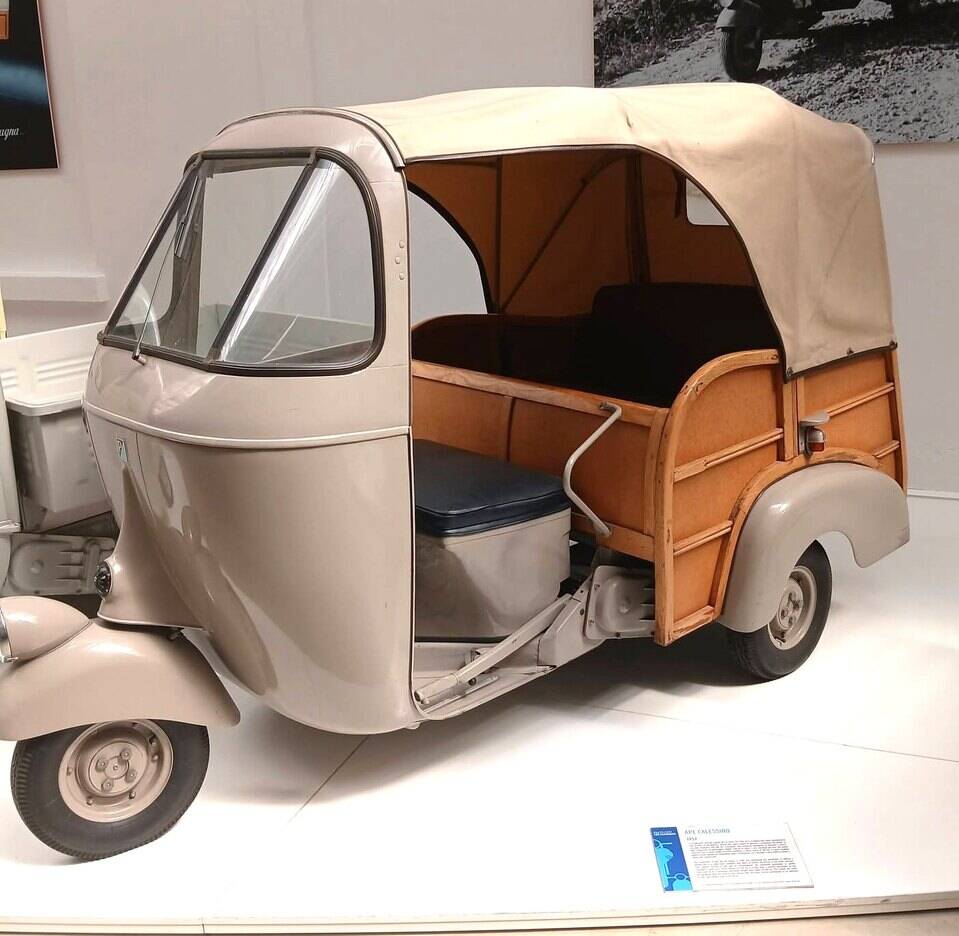
1957 Piaggio Ape Calessino · Guzzista76 · CC BY-SA 4.0
Research pending
A matching completed auction sale has not been verified for this exact year, body, trim, engine, transmission and market.
Joyride shows this gap instead of substituting an asking price, unsold bid or mismatched special vehicle.
More than a set of wheels.
Corradino d'Ascanio sketched a light goods carrier while the first Vespa appeared in 1946. The Ape family reached the 150 AC series in 1956. This Calessino could carry people or goods, and the AC introduced the choice of a windscreen or a protective cabin with doors. Its compact two-stroke engine and handlebar controls kept the machine close to its scooter roots.
Look a little closer.
The Ape's name means 'bee' in Italian—a working companion to Piaggio's Vespa, or 'wasp.'
Photos show an example of the model or generation. The pictured vehicle’s year, equipment, or modifications can differ from the specification described here.
The correct code is AC
Museo Piaggio identifies the 1956 series as Ape AC, not simply Ape C. Its preserved Calessino was homologated for combined passenger or goods transport. This packet uses the museum's exact name so it is not confused with a different generation or later Ape C designation.
Source: Museo Piaggio · Ape 150 AC Calessino ↗A tiny machine with separate brake systems
The single front wheel uses an expanding brake worked mechanically by a hand lever. The two rear wheels use hydraulic foot control, and a separate parking brake acts at the differential. That mixed system shows how Piaggio combined scooter controls with the extra load and stability needs of a cargo tricycle.
Source: Museo Piaggio · Ape 150 AC Calessino ↗Where these facts come from
- Museo Piaggio · Ape 150 AC Calessino
- Museo Piaggio · Ape 150 Cassone history
- Museo Piaggio · Museum collection overview
Selected facts checked for this edition. Some source pages link to broader model families. Last reviewed September 30, 2026.