
Jaguar XJ6 4.2 Series 1
The first XJ6 replaced a crowded saloon range with one quiet, fast design built around independent suspension and the XK six.
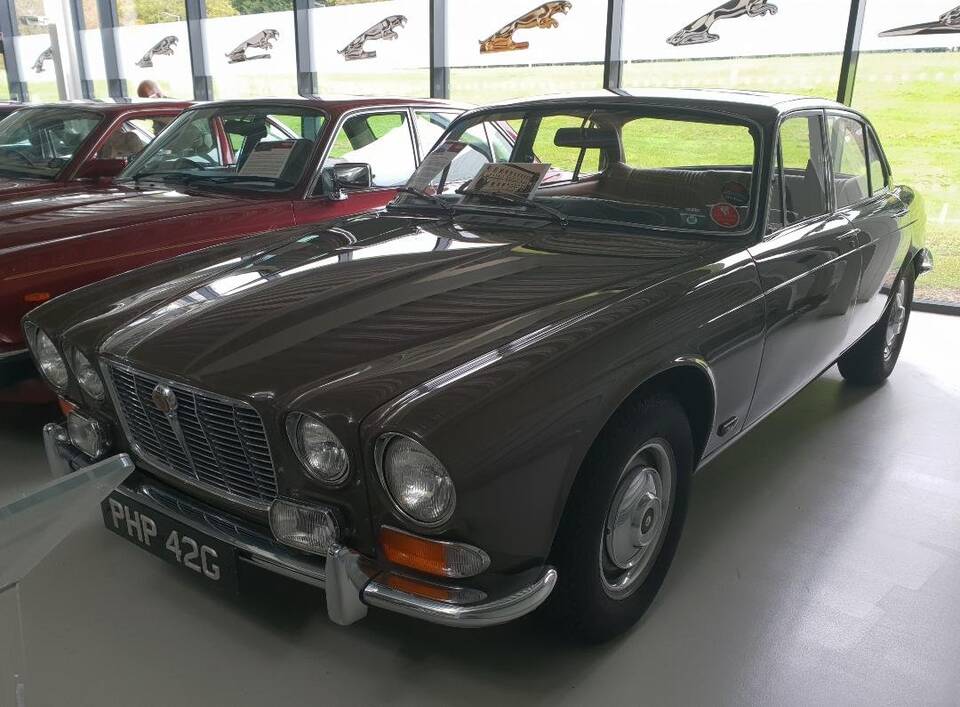
Jaguar XJ6 Series I (1968).jpg · andreboeni · CC BY 2.0
Research pending
A matching completed auction sale has not been verified for this exact year, body, trim, engine, transmission and market.
Joyride shows this gap instead of substituting an asking price, unsold bid or mismatched special vehicle.
More than a set of wheels.
By 1967 Jaguar was selling several overlapping saloon families. The XJ4 project replaced that complexity with one new body and a choice of 2.8- or 4.2-litre six-cylinder engines. Launched on 26 September 1968, the XJ6 paired William Lyons' low, restrained styling with Bob Knight's suspension work. The 4.2-litre car offered sports-car speed, a refined ride and a £2,258 launch price. Strong demand produced waiting lists and established the shape and engineering pattern that later XJ generations would develop.
Look a little closer.
Sir William Lyons' own early 4.2-litre XJ6 was the 370th right-hand-drive example built.
Photos show an example of the model or generation. The pictured vehicle’s year, equipment, or modifications can differ from the specification described here.
One car replaced a maze of saloons
Jaguar's 1967 range included 240/340, S-Type, 420G and Daimler models in nine combinations. XJ4 was not simply another addition: the strategy was to consolidate most of those roles around one new shell, two six-cylinder engines and Jaguar or Daimler identities. That rationalisation helps explain why the first XJ mattered beyond its styling.
Source: Jaguar Daimler Heritage Trust · 1968 XJ6 4.2 ↗Comfort came from controlled isolation
The launch brochure describes independent suspension at both ends, mounted on subframes that were rubber-isolated from the body. The front geometry resisted dive under braking, while the rear assembly separated wheel movement from the cabin. This was not soft suspension in place of handling; it was a deliberate attempt to deliver steering control and passenger comfort at the same time.
Source: Jaguar · 1968 XJ6 launch brochure scan ↗Where these facts come from
- Jaguar Daimler Heritage Trust · 1968 XJ6 4.2
- Jaguar · XJ Series 1 history
- Jaguar · 1968 XJ6 launch brochure scan
- Jaguar Daimler Heritage Trust · Series 1 chassis research guide
Selected facts checked for this edition. Some source pages link to broader model families. Last reviewed October 1, 2026.