
Nissan Prairie 1800 JW-G (M10)
The Prairie used a flat floor, sliding doors on both sides and no center pillars to turn a low family car into a room with wheels.
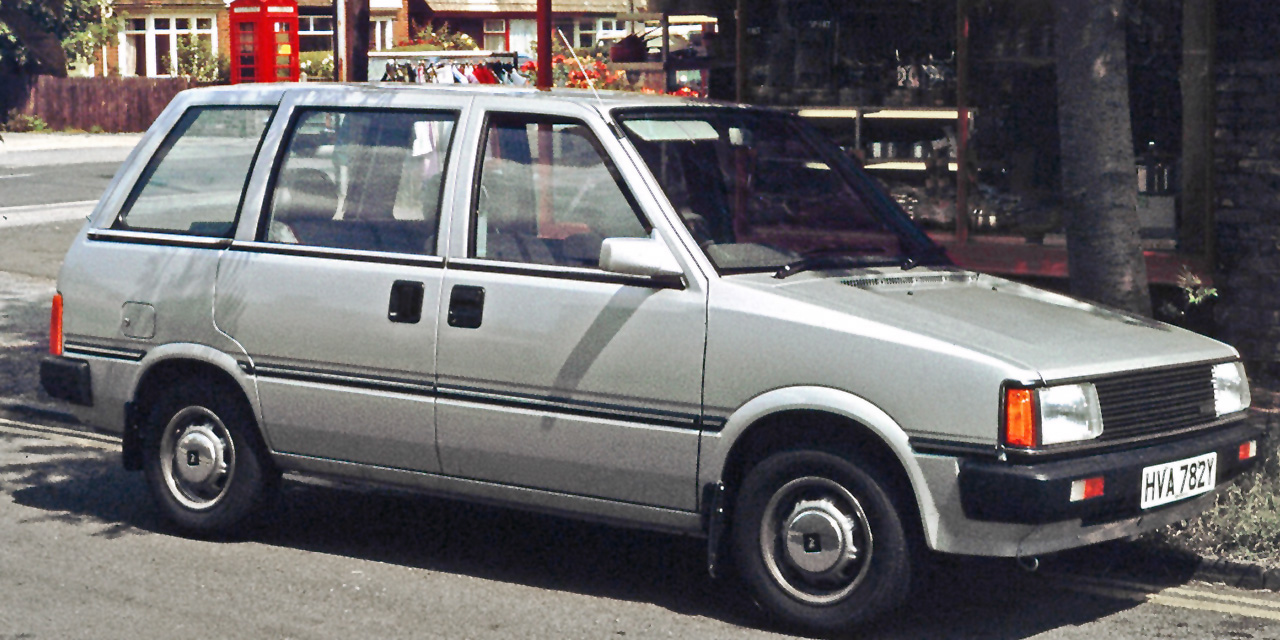
1981 Japan Nissan Prairie M10 · Charles01 · CC BY-SA 3.0
Research pending
A matching completed auction sale has not been verified for this exact year, body, trim, engine, transmission and market.
Joyride shows this gap instead of substituting an asking price, unsold bid or mismatched special vehicle.
More than a set of wheels.
Nissan launched the first Prairie in August 1982 as a 'future sedan' or multi-use sedan before minivan was an established category in Japan. Front-wheel drive allowed a low, flat floor. Two sliding doors and a center-pillarless opening made it unusually easy to climb inside, and movable seats let one body carry people or cargo. The JW-G could be configured for eight or five passengers, while estate versions traded seats for payload.
Look a little closer.
Nissan even offered a second-row option whose two seats rotated to face backward, turning part of the parked cabin into a conversation area.
Photos show an example of the model or generation. The pictured vehicle’s year, equipment, or modifications can differ from the specification described here.
Why the missing center pillars mattered
Most cars use a strong vertical pillar between the front and rear doors. The Prairie removed that obstruction from its big side openings, then paired the idea with sliding doors on both sides. With the doors open, passengers gained a broad, low doorway that worked especially well for children, older riders and bulky cargo.
Source: Nissan Heritage Collection · Prairie JW-G ↗A sedan category stretched into a minivan
Nissan did not launch the Prairie as a tall commercial van. Its heritage account calls it a future sedan or multi-use sedan, using passenger-car front-wheel-drive architecture to create a flat-floor family space. That helps explain why the Prairie belongs in minivan history even though its roof was lower and its label less settled than later examples.
Source: Nissan Global Heritage · Prairie JW-G ↗Where these facts come from
- Nissan Heritage Collection Japan · Prairie JW-G
- Nissan Global Heritage · Prairie JW-G
- Nissan Newsroom · Prairie heritage model
- Automobile-Catalog · 1982 Nissan Prairie 1800 JW-G
Selected facts checked for this edition. Some source pages link to broader model families. Last reviewed October 2, 2026.