
Peugeot 505 GTI
The 1984 Peugeot 505 GTI brought electronic fuel injection and 130 horsepower to Peugeot's roomy rear-wheel-drive sedan without turning it into a noisy race-car imitation.
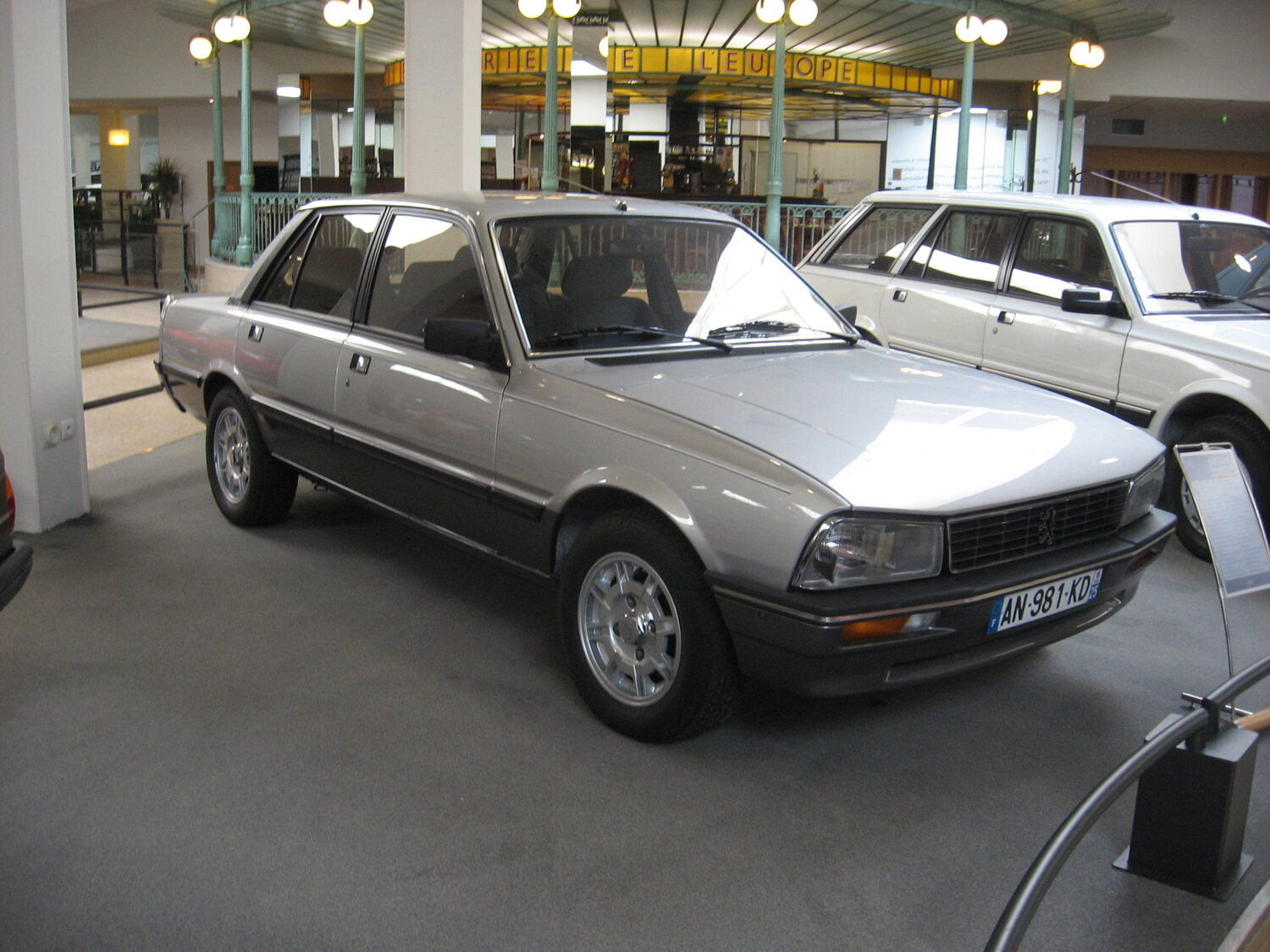
Peugeot 505 GTI · Luc106 · Public domain (PD-self)
Research pending
A matching completed auction sale has not been verified for this exact year, body, trim, engine, transmission and market.
Joyride shows this gap instead of substituting an asking price, unsold bid or mismatched special vehicle.
More than a set of wheels.
Peugeot introduced the 505 in 1979 as the successor to the 504, with a Pininfarina exterior and Paul Bracq interior. For the 1984 model year, the French-market GTI replaced the STI at the top of the naturally aspirated injected range. Its 2.2-litre ZDJL engine, five-speed manual and rear-wheel drive made a long-distance family sedan more responsive while preserving the 505's practical four-door shape. The cover shows a preserved Series 1 505 GTI at the Musée de l'Aventure Peugeot; it verifies the exact model and pre-restyle body, but not a 1984 build date or hidden mechanical condition.
Look a little closer.
This was a GTI with four doors, a 523-litre boot and rear-wheel drive. The badge meant a livelier fuel-injected engine and useful road performance, not that Peugeot had erased the 505's family-sedan job.
Photos show an example of the model or generation. The pictured vehicle’s year, equipment, or modifications can differ from the specification described here.
What changed from STI to GTI
The earlier 2.2-litre STI used K-Jetronic mechanical injection and made 117 ch. For 1984, Peugeot replaced it with the electronically injected ZDJL GTI, rated at 130 ch and 19.2 mkg of torque. The change let sensors and an electronic control unit decide how much fuel the injectors should deliver instead of relying on a continuously operating mechanical metering system.
Source: Club 505 · Injection ↗A French sedan designed for the world
Peugeot describes the 505 as its last large rear-wheel-drive sedan. Pininfarina shaped the exterior and Paul Bracq designed the cabin. Production spread beyond France to countries including Spain, Argentina, China and India, and total sales reached 1,351,254 before Chinese production ended in 1997. That worldwide story explains why durability and space mattered alongside the GTI's extra performance.
Source: Peugeot · 40 years of the 505 ↗Where these facts come from
- Peugeot · 40 years of the 505
- Club 505 · Injection
- Wikimedia Commons · Peugeot 505-GTI at Musée de l'Aventure Peugeot
Selected facts checked for this edition. Some source pages link to broader model families. Last reviewed 2026-10-07.