
BMW R 27
Four rubber mounts helped this small BMW keep the engine’s shaking away from its rider, making refinement the centre of a practical single-cylinder design.
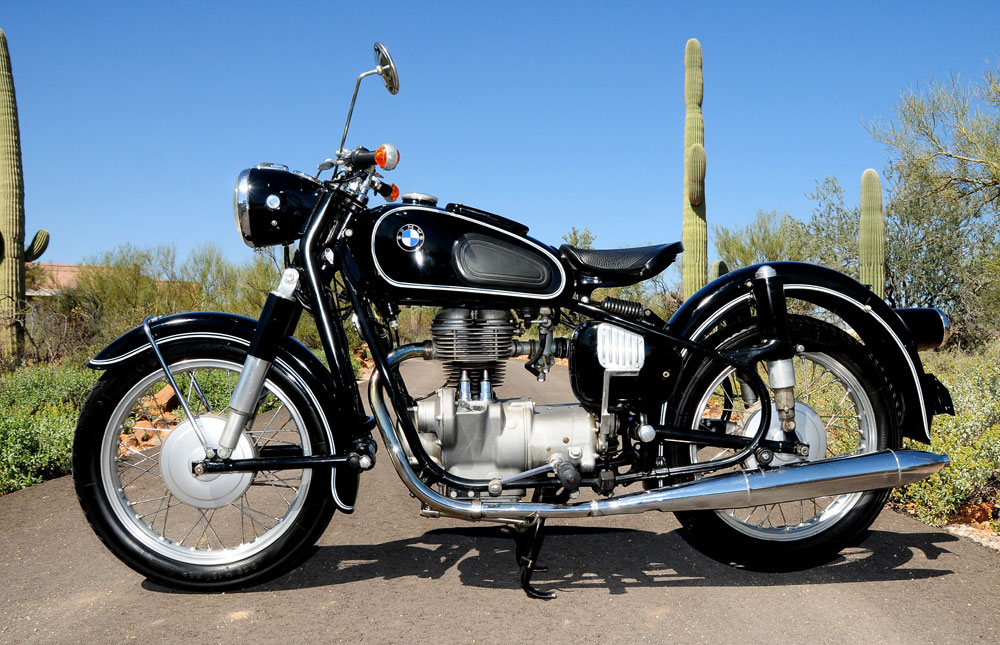
1964-BMW-R27.jpg · User:R69S · Attribution-only permission
Research pending
A matching completed auction sale has not been verified for this exact year, body, trim, engine, transmission and market.
Joyride shows this gap instead of substituting an asking price, unsold bid or mismatched special vehicle.
More than a set of wheels.
The R 27 replaced the R 26 in 1960. It kept the full-swing suspension arrangement but raised output to 18 PS and isolated the power unit with rubber mounts. BMW built 15,364 before production ended in 1966. As everyday transport buyers moved toward cars and leisure riders sought more power, BMW’s traditional single-cylinder line came to an end; a new single did not arrive until 1993.
Look a little closer.
BMW’s next production single-cylinder motorcycle arrived 27 years after R 27 production ended.
Photos show an example of the model or generation. The pictured vehicle’s year, equipment, or modifications can differ from the specification described here.
The engine gets its own cushions
Four rubber mounts support the R 27 engine in the frame. The mounts do not remove the forces created inside a running single-cylinder engine; they reduce the path by which vibration reaches the rest of the motorcycle. This made comfort a design feature that could be felt even when the bike was travelling steadily.
Source: BMW Group Classic · BMW R 27 ↗Practical transport could include a family
BMW’s Classic account describes an enclosed shaft drive and a frame strong enough for sidecar use without extra reinforcement. These are clues to the motorcycle’s everyday role: it could carry more than a lone rider, and its enclosed drive was protected from road dirt. Police forces and training users also valued the compact machine.
Source: BMW Group Classic · She’s the One ↗Where these facts come from
Selected facts checked for this edition. Some source pages link to broader model families. Last reviewed 2026-10-02.