
Fiat Nuova 500 F
A two-cylinder city car that helped put post-war Italy on wheels—now with safer front-hinged doors.
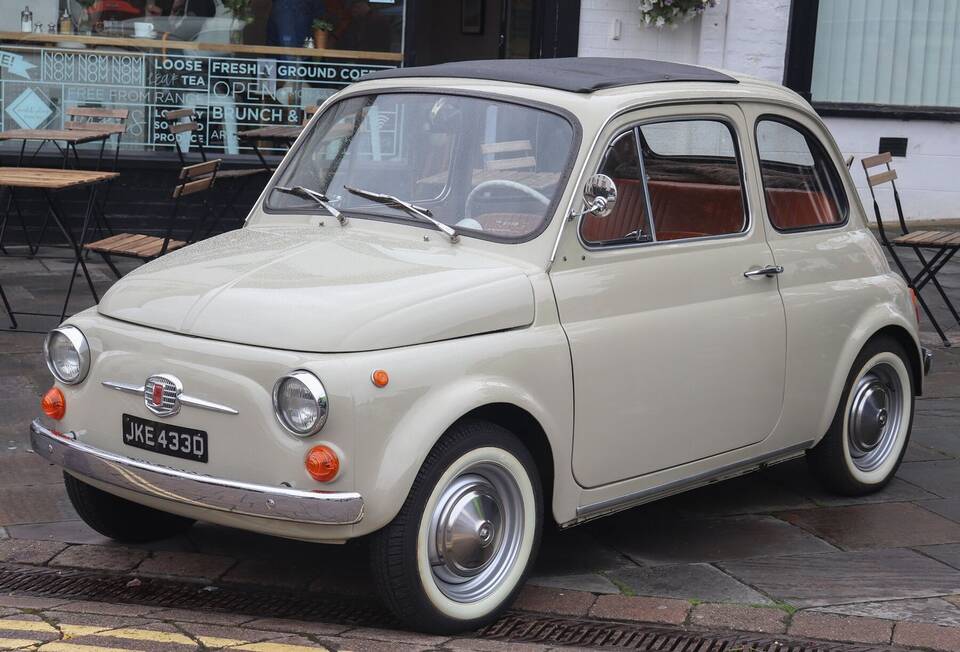
1966 Fiat 500F · Vauxford · CC BY-SA 4.0 International
Research pending
A matching completed auction sale has not been verified for this exact year, body, trim, engine, transmission and market.
Joyride shows this gap instead of substituting an asking price, unsold bid or mismatched special vehicle.
More than a set of wheels.
Fiat launched the 500 F in March 1965. It kept the tiny rear-mounted, air-cooled two-cylinder engine, but introduced front-hinged doors and strengthened parts of the transmission. It was simple, light and sized for crowded streets. The cover photo is an exact 500 F from 1966, but it is a British-market right-hand-drive car rather than this page’s 1965 Italian specification.
Look a little closer.
Fiat’s history gives a launch price of 475,000 lire and says the 500 F could carry four people plus 40 kg of luggage.
Photos show an example of the model or generation. The pictured vehicle’s year, equipment, or modifications can differ from the specification described here.
The doors changed direction
Earlier 500s had rear-hinged doors. The 500 F moved the hinges to the front, which Fiat described as safer in a crash and also allowed the outside hinges to disappear from view.
Source: Fiat · fifty years of the 500 ↗Small changes underneath
Fiat strengthened the transmission and improved the clutch, drive shafts and differential. These are not glamorous parts, but improving them helps a small everyday car survive years of starts, stops and gear changes.
Source: Fiat · fifty years of the 500 ↗Where these facts come from
Selected facts checked for this edition. Some source pages link to broader model families. Last reviewed September 29, 2026.