Honda N360
Honda squeezed four seats and a lively motorcycle-like engine into a car less than three metres long.
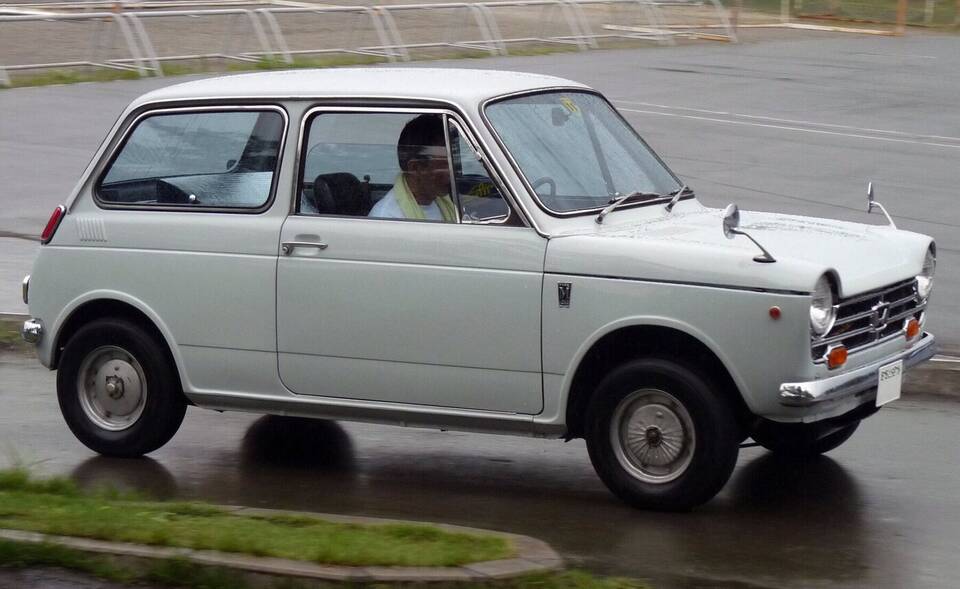
1967–1968 Honda N360 Type M at a classic-car meet in Saitama, Japan. · dacheket; cropped and altered by Mr.choppers · CC BY 2.0 Generic
Research pending
A matching completed auction sale has not been verified for this exact year, body, trim, engine, transmission and market.
Joyride shows this gap instead of substituting an asking price, unsold bid or mismatched special vehicle.
More than a set of wheels.
Honda announced the N360 in October 1966 and began Japanese sales in March 1967. It was the company's first full-scale mass-produced mini passenger car. A low price, useful cabin and energetic 354 cc engine helped it overtake the established Subaru 360 in sales only two months after launch.
Look a little closer.
The whole car is only 2.995 metres long—shorter than many modern parking spaces.
Photos show an example of the model or generation. The pictured vehicle’s year, equipment, or modifications can differ from the specification described here.
A people’s car with Honda character
Honda aimed for low cost and room for four while keeping the car inside Japan's kei-car limits. The high-revving twin produced 31 PS at 8,500 rpm, unusually energetic for a tiny everyday car in 1967.
Source: Honda · introducing the N360 ↗Front-wheel drive saves cabin space
Placing the engine, gearbox and driven wheels together at the front avoided a long driveshaft through the passenger compartment. Honda used that packaging to create a four-seat cabin within a body under three metres long.
Source: Honda · original N360 specifications ↗Where these facts come from
Selected facts checked for this edition. Some source pages link to broader model families. Last reviewed September 29, 2026.