Willys-Overland do Brasil Interlagos Berlineta
Brazil's tiny Interlagos Berlineta squeezed French Alpine ideas into a locally made fiberglass shell. Its engine sat behind the passengers, so even a small 845 cc four-cylinder could move a very light sports car with enthusiasm.
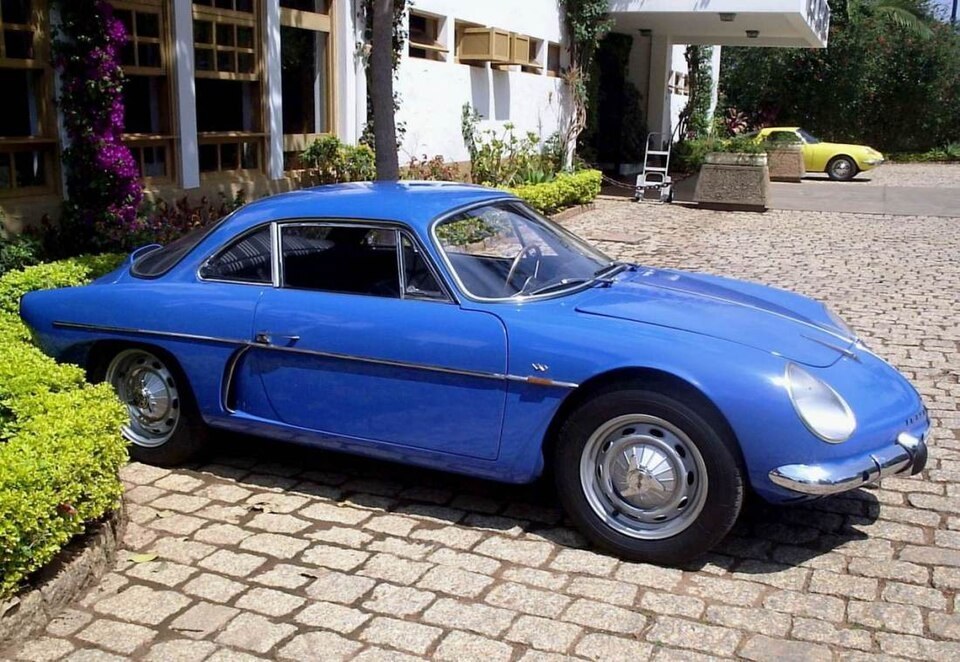
1962 Brazil Willys Interlagos Berlineta profile cover · JasonVogel · CC BY-SA 3.0
Research pending
A matching completed auction sale has not been verified for this exact year, body, trim, engine, transmission and market.
Joyride shows this gap instead of substituting an asking price, unsold bid or mismatched special vehicle.
More than a set of wheels.
Willys presented the Interlagos at São Paulo's second motor show and began production in 1962. Jean Rédélé of Alpine attended the opening ceremony, where the first car went to advertising executive Mauro Salles, who had suggested the Interlagos name. Built only to order, the family comprised a convertible, a notchback cupê and the model 3136 fastback-style Berlineta profiled here.
Look a little closer.
Its name came from São Paulo's Interlagos circuit, linking a new Brazilian road car directly to the country's racing world.
Photos show an example of the model or generation. The pictured vehicle’s year, equipment, or modifications can differ from the specification described here.
An Alpine translated for Brazil
The Interlagos was licensed from the Alpine A108, while its engine and suspension roots came through Renault's Dauphine family. French tooling and fiberglass training travelled to Brazil, but the badges, market and production team were Brazilian. The model therefore belongs in both Alpine's international family tree and Brazil's own industrial story.
Source: Renault Group media — Alpine at sixty ↗Three bodies, several engines, one easy trap
Contemporary Interlagos references cover three body shapes and engines of 845, 904 and 998 cc, plus competition tuning up to 70 cv. The often-repeated 160 km/h figure belongs to the quickest Berlineta context, not automatically to this 40 cv launch car. This profile keeps the body code and base engine precise and leaves that headline speed out.
Source: Quatro Rodas — Willys Interlagos history ↗Where these facts come from
Selected facts checked for this edition. Some source pages link to broader model families. Last reviewed October 2, 2026.