
R. Buckminster Fuller
1934 Dymaxion Car No. 2 · 4D Transport
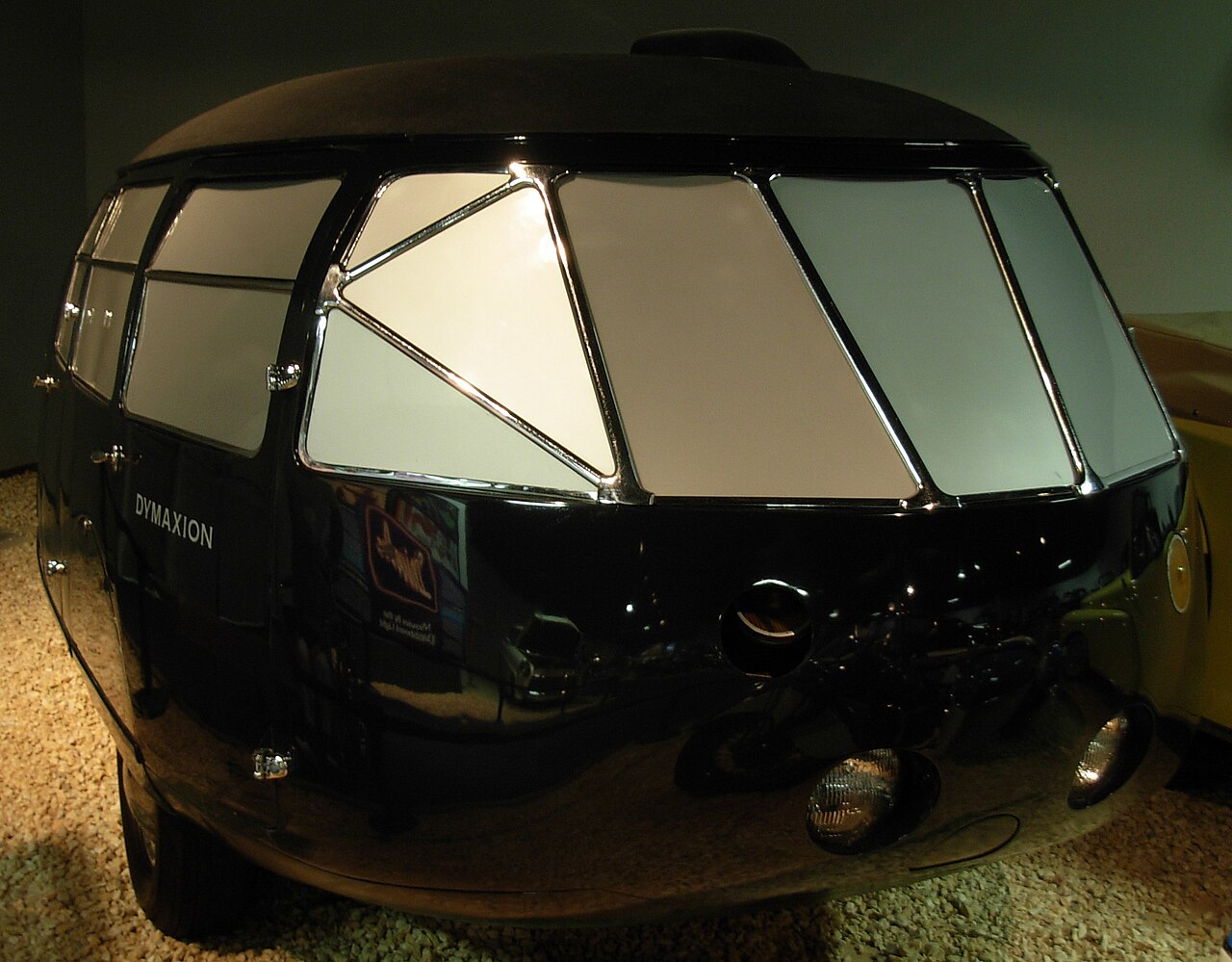
Photo details
Joyride serves Wikimedia’s 1,280 × 999 proportional JPEG derivative byte-for-byte. No crop, metadata removal, retouching, generation or vehicle reconstruction.
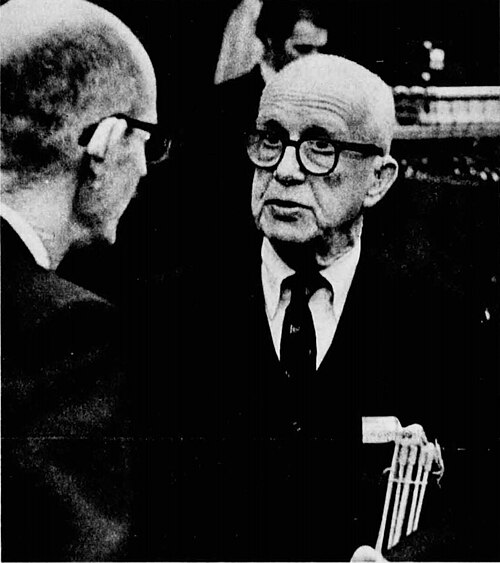
Photo details
Joyride serves Wikimedia’s 500 × 563 proportional JPEG derivative byte-for-byte. Joyride applies no crop, retouching or generation; a responsive frame may crop displayed edges. The portrait remains separate from the Dymaxion photograph.
Three were built. This is the survivor.
- Connection
- Designer and documented driver · not ownership
- When
- Designed in the early 1930s · No. 2 completed January 6, 1934 · Fuller drove it in May 1935
- Identity
- 1934 Dymaxion No. 2 · 4D Transport · only surviving original of three built · listed by the National Automobile Museum
The Buckminster Fuller Institute says Fuller designed the Dymaxion car in the early 1930s: a long, aerodynamic, three-wheel machine with front-wheel drive and a single rear steering wheel. Lane Motor Museum’s history adds two collaborators the shorthand can erase: Anna Biddle financed the project, while naval architect and aircraft builder Starling Burgess engineered the car and directed construction. Joyride records Fuller’s creator association and later driving—not personal ownership of the surviving museum car.
No. 2 began construction on September 25, 1933 and was completed on January 6, 1934, according to Lane’s chronology. It had been intended for London businessman Fred Taylor, who declined it, and Fuller kept the car as a demonstrator. Lane records Fuller driving No. 2 with his wife and daughter in May 1935 when it overturned; no one was seriously injured. The sources do not establish its exact post-accident component originality or current operating condition.
That identity matters because later Dymaxions include replicas. The National Automobile Museum’s current inventory lists the ‘1934 Dymaxion 2, 4D Transport’ as the only one known to exist, while Lane’s own page is explicitly for a replica and says original No. 2 is the sole survivor in Reno. Brewbooks photographed the actual museum car there in 2007 under CC BY-SA 2.0. Joyride does not relabel a replica, a reconstruction or another streamlined three-wheeler as Fuller’s surviving No. 2.
Where the car went next
- March 1933The Bridgeport workshop opens
Lane Motor Museum dates Fuller’s rented workshop and crew to this month, with Biddle financing and Burgess directing engineering and construction.
- September 25, 1933No. 2 starts
Construction began on the second of the three original Dymaxion cars.
- January 6, 1934Car No. 2 is completed
The car was finished after its intended buyer, Fred Taylor, declined it; Fuller retained it as a demonstrator.
- May 1935Fuller drives the demonstrator
Lane records Fuller at the wheel with his wife and daughter when No. 2 overturned. The account says no one was seriously injured.
- Inventory reviewed October 7, 2026The sole survivor is listed in Reno
The National Automobile Museum lists the 1934 Dymaxion No. 2 in its inventory as the only one known to exist; availability on any particular visit can change.
Sources for this story
The Buckminster Fuller Institute establishes Fuller’s design role and the project’s basic layout. Lane Motor Museum documents Biddle’s financing, Burgess’s engineering role, No. 2’s construction dates, Fuller’s demonstrator use and the 1935 rollover; its own vehicle is clearly labeled a replica. The National Automobile Museum separately lists the individual 1934 No. 2 as the only one known to exist. No personal ownership, legal title, chassis number, exact post-accident component originality, present operating condition, complete Dymaxion-family coverage, exact Joyride catalog match or game representation is claimed.
- Dymaxion CarBuckminster Fuller Institute · Institutional overview · reviewed 2026-10-07 · external source
Fuller’s design role in the early 1930s and the Dymaxion’s three-wheel, rear-steering, front-wheel-drive and long aerodynamic layout.
- Dymaxion (replica) – 1933Lane Motor Museum · Museum history · reviewed 2026-10-07 · external source
Biddle’s financing, Burgess’s engineering role, the three originals, No. 2’s September 1933 start and January 1934 completion, Fuller’s demonstrator use and May 1935 rollover, sole-survivor status, and the explicit distinction between original No. 2 and Lane’s replica.
- Vehicle InventoryNational Automobile Museum · Live inventory · reviewed 2026-10-07 · external source
The museum’s listing for ‘1934 Dymaxion 2, 4D Transport’ and its ‘Only one known to exist’ designation.
Reviewed
Why this is the actual car
- Photo identity evidence
Photographer brewbooks identifies the September 15, 2007 museum photograph as Model 2, 4D Transport and says No. 2 is displayed at the National Automobile Museum; Commons confirms CC BY-SA 2.0 reuse.
- Photo identity evidence
The National Automobile Museum lists the individual 1934 Dymaxion No. 2, 4D Transport as the only one known to exist.
- Photo identity evidence
Lane Motor Museum identifies No. 2 as the only surviving original at the National Automobile Museum and separately labels Lane’s own vehicle a replica.
The matching photographer, venue, date and vehicle history establish the identification; the chassis stamp is not visible in these photographs.