
Donald Campbell
1960–1962 Bluebird-Proteus CN7 · Science Museum Group object 1981-1638
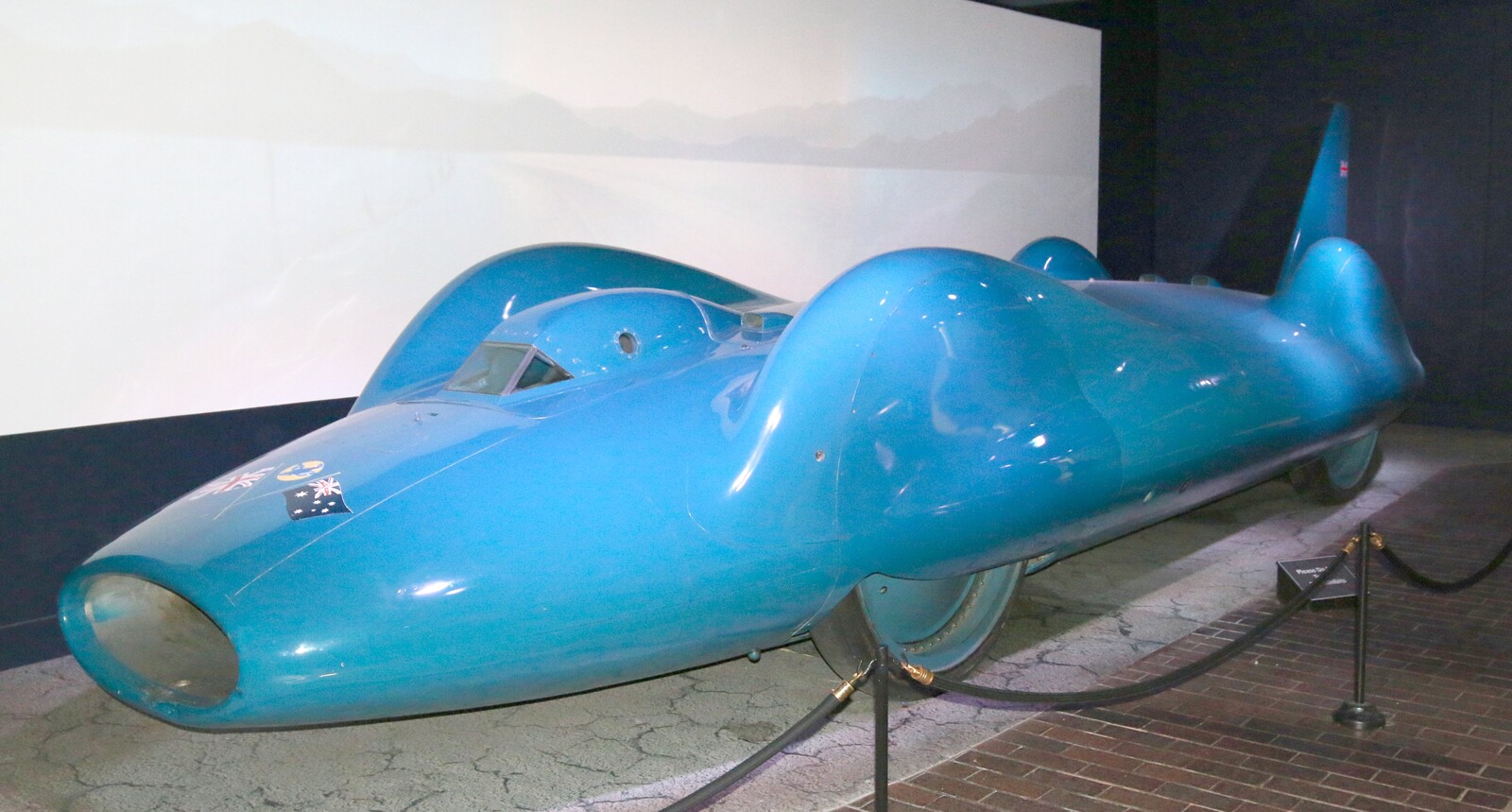
Photo details
Joyride preserves the 4,866 × 2,612 Commons original byte-for-byte. The public 1,600 × 859 derivative applies orientation, removes embedded metadata, resizes proportionally and uses JPEG quality 90 without crop, retouching, generated content or vehicle reconstruction.
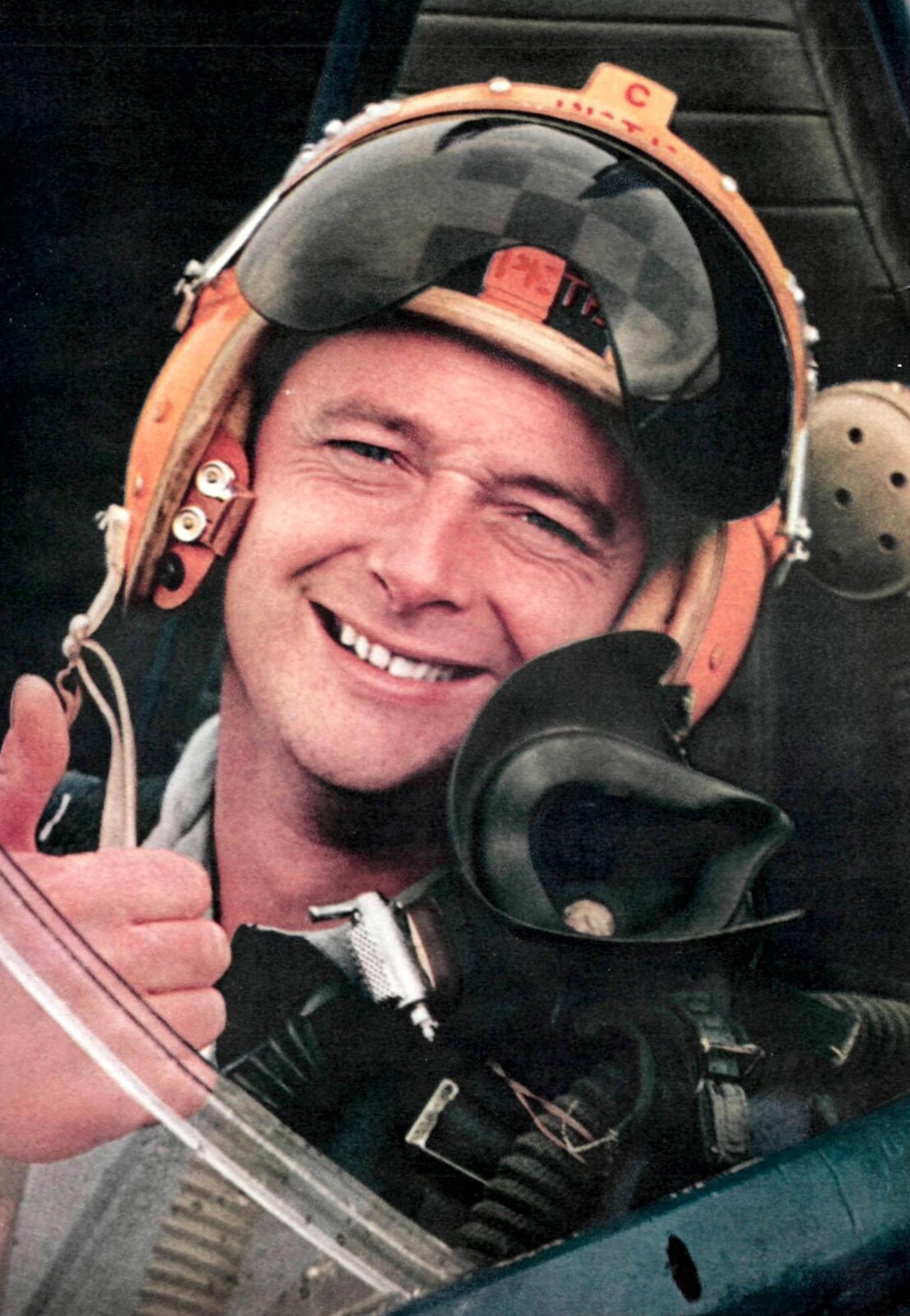
Photo details
Joyride preserves the 1,360 × 1,968 Commons scan byte-for-byte and serves a proportional 1,106 × 1,600 JPEG derivative with orientation applied, metadata removed and quality 90. No crop, retouching, generation or reconstruction; responsive presentation may crop displayed edges. This identification portrait remains separate from the 2018 photograph of the actual CN7.
The rebuilt Bluebird that crossed 400 mph
- Connection
- Driver and record-attempt association · not personal ownership
- When
- 1960 Bonneville crash · rebuilt by 1962 · 403.10 mph on July 17, 1964
- Identity
- Bluebird-Proteus CN7 · rebuilt after its 1960 Bonneville crash · Science Museum Group object 1981-1638
The National Motor Museum identifies this individual Bluebird CN7 as the first car officially to set a land-speed record above 400 mph and the last wheel-driven holder of the outright record. Ken and Lew Norris designed it, Motor Panels Ltd built it, and a modified Bristol-Siddeley Proteus gas turbine drove all four wheels. Campbell’s relationship is the documented driver and record programme, not personal ownership.
Its famous form was already a rebuild. The museum says a gust caught Bluebird during the 1960 Bonneville attempt; it left the course, somersaulted and was virtually destroyed while Campbell escaped with minor injuries. The revived car gained the distinctive high tail visible in the reviewed photograph. The Science Museum Group catalogs the rebuilt record car as made in 1962 and assigns object number 1981-1638, while the National Motor Museum presents the project as a 1960 vehicle on loan from that collection.
After weather defeated Lake Eyre attempts in 1962 and 1963, Campbell completed the record on July 17, 1964 at 403.10 mph. The museum also records how quickly the context changed: revised rules admitted jet-propelled cars, and by the end of 1964 the outright record had been broken five more times. Joyride therefore keeps the exact date, measured speed, wheel-driven status and rebuilt identity together rather than presenting the survivor as an untouched 1960 machine.
Where the car went next
- 1960Bonneville ends in a somersault
A gust sent CN7 off course during its first record attempt. Campbell escaped with minor injuries, but the National Motor Museum says the car was virtually destroyed.
- 1962The rebuilt car receives its collection year
The Science Museum Group catalogs the surviving rebuilt Bluebird CN7 as made in 1962 and records it as object 1981-1638.
- 1962–1963Weather stops two Lake Eyre attempts
The National Motor Museum records two abandoned Australian attempts before the successful 1964 run.
- July 17, 1964403.10 mph at Lake Eyre
Campbell drove the rebuilt CN7 to an official 403.10 mph land-speed record on the dried lake bed.
- Current collection recordA Science Museum Group object on loan
The National Motor Museum lists CN7 as loaned by the Science Museum Group; the Science Museum Group identifies the complete car as object 1981-1638/1.
Sources for this story
Primary National Motor Museum and Science Museum Group records establish the individual CN7, Campbell’s driving role, Norris Brothers design, Motor Panels manufacture, 1960 crash, rebuilt high-tail form, 1962 collection dating, July 17, 1964 record and object number 1981-1638. No personal ownership, untouched 1960 condition, complete component chronology, precise current gallery promise, exact Joyride catalog link or game-ready specification is claimed.
- Proteus Bluebird CN7National Motor Museum · current collection record · reviewed 2026-10-12 · external source
1960 project year, 4,100-shp Proteus power, Motor Panels manufacture, Norris Brothers design, Campbell association, 1960 crash, rebuilt high tail, abandoned 1962–1963 attempts, July 17, 1964 result and current Science Museum Group loan status.
- Bluebird CN7 record-breaking car · object 1981-1638Science Museum Group · current collection record · reviewed 2026-10-12 · external source
1962 collection dating, Norris Brothers designer credit, modified Bristol Proteus specification, Campbell’s July 17, 1964 403.1-mph record, collection ownership and exact object numbers 1981-1638 and 1981-1638/1.
Reviewed
Why this is the actual car
- Photo identity evidence
Photographer kitmasterbloke identifies the November 4, 2018 image as Donald Campbell’s Bluebird CN7 at the National Motor Museum; Commons records a reviewed CC BY 2.0 license.
- Photo identity evidence
The museum identifies its loaned CN7, its rebuilt high-tail form, Campbell’s record programme and the 403.10-mph result.
- Photo identity evidence
The owning collection binds the record car to object 1981-1638 and the complete vehicle to 1981-1638/1.
The matching photographer, venue, date and vehicle history establish the identification; the chassis stamp is not visible in these photographs.