Ed “Big Daddy” Roth
1961 Ed Roth Beatnik Bandit
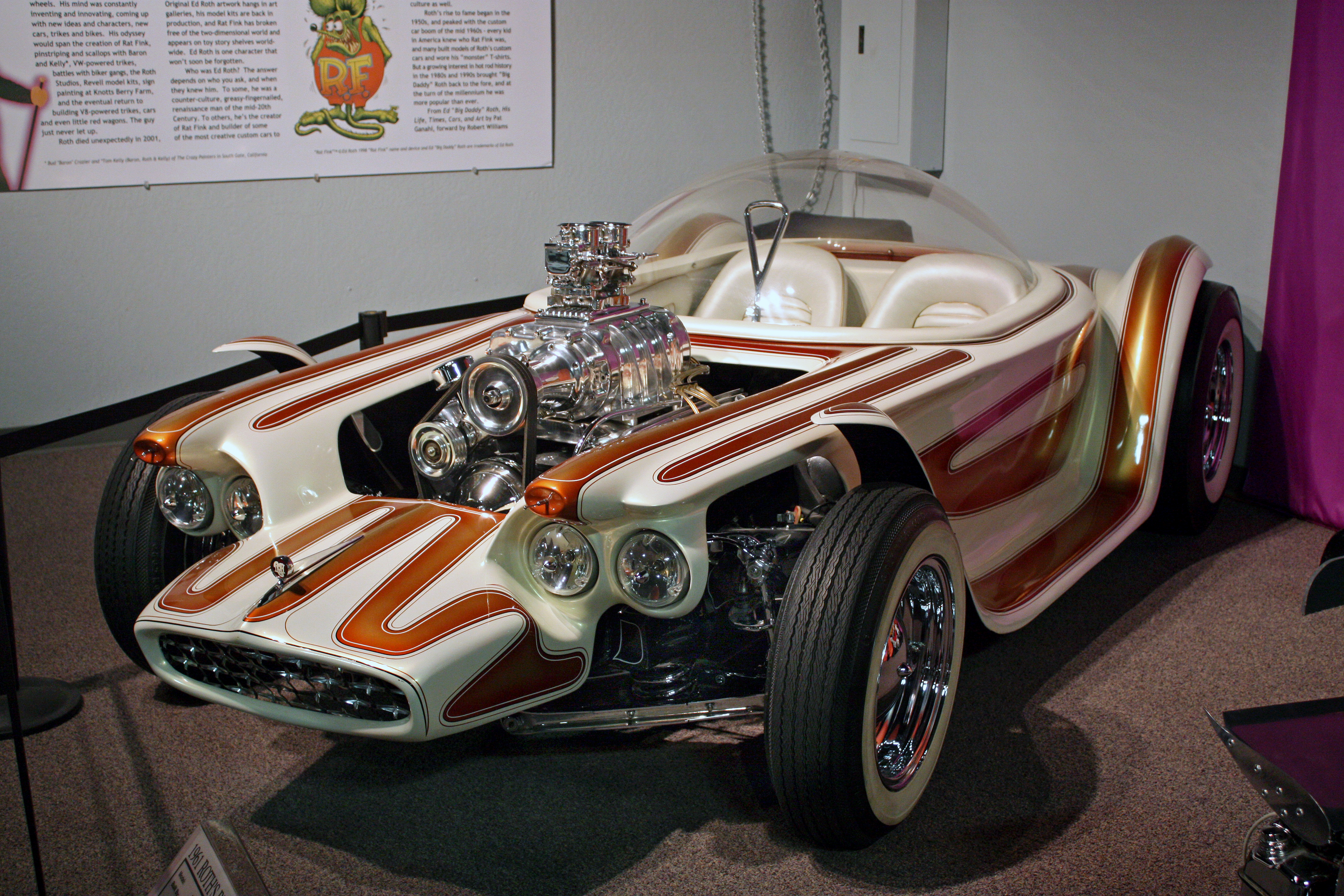
Photo details
Joyride serves the 4,272 × 2,848 current Commons JPEG byte-for-byte. Commons records a 2022 color correction by Jonnmann; Joyride adds no crop, resize, retouching, metadata removal, generation or vehicle reconstruction. Responsive presentation may crop displayed edges.
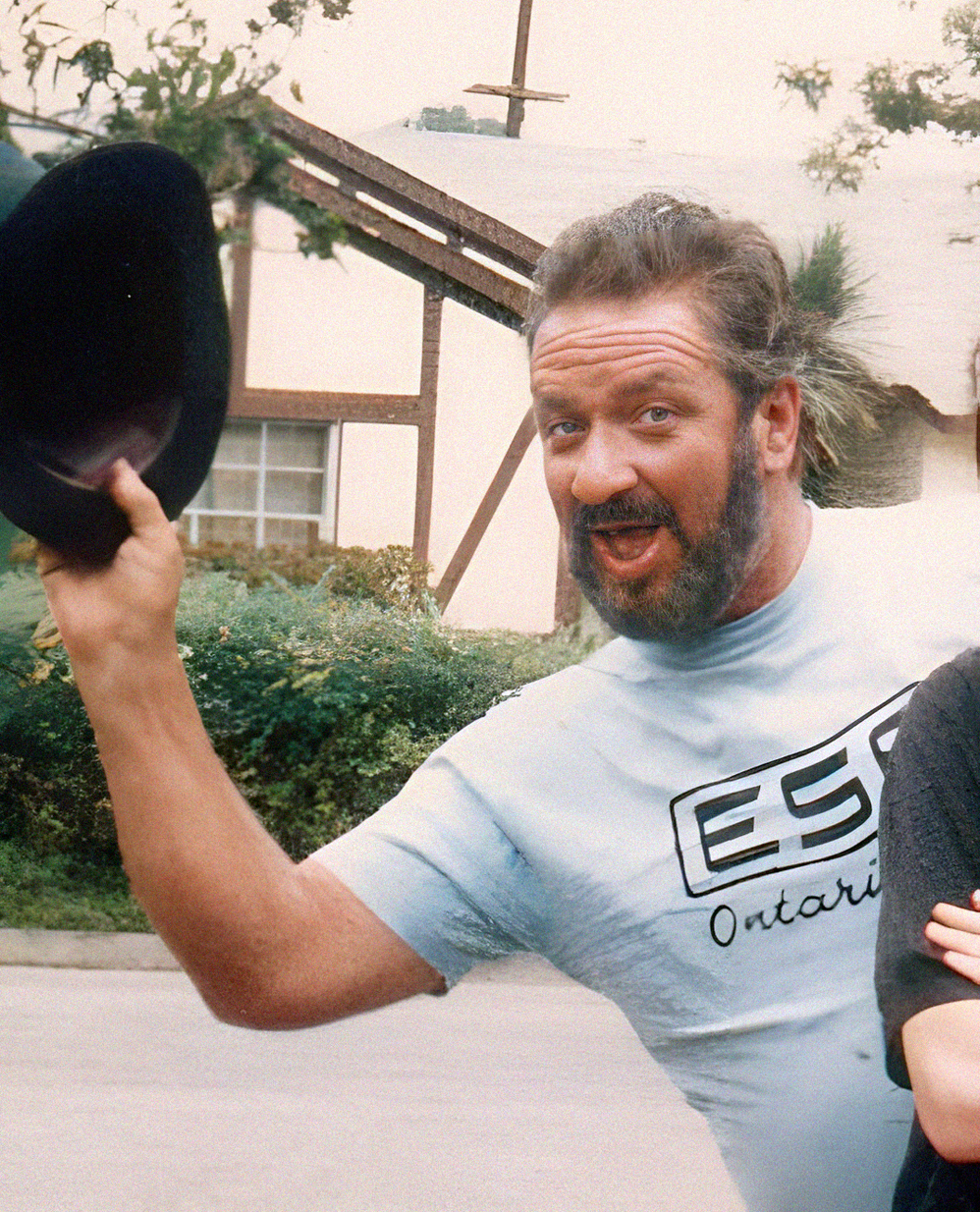
Photo details
Joyride serves the 998 × 1,234 current Commons JPEG byte-for-byte. Commons discloses that ARTEST4ECHO cropped Paul Conroy’s original two-person photograph to Roth and that Jonnmann adjusted the file in 2023. Joyride adds no crop, resize, retouching, metadata removal or generation; a responsive frame may crop displayed edges. This identification portrait remains separate from Nick Ares’s actual-car photograph.
The bubble-top custom was sculpture, sales tool and toy
- Connection
- Co-builder · former owner and promotional showman
- When
- Built in 1960–1961 · promoted by Roth into the 1970s · museum collection since 1989
- Identity
- 1961 Beatnik Bandit · handmade fiberglass body · shortened 1950 Oldsmobile chassis · NHVR no. 35 · HAER NV-51 · National Automobile Museum survivor
The National Historic Vehicle Register credits illustrator Joe Henning with the Beatnik Bandit’s initial design for Rod & Custom magazine, then records Ed Roth and “Dirty Doug” Kinney building the car in 1960–1961 in a one-car garage. Its handmade fiberglass body sits on a shortened 1950 Oldsmobile chassis under the bubble canopy that made the one-off custom look less like a modified production car than a rolling piece of pop art.
Roth’s connection was both creative and commercial. The register says he owned the Beatnik Bandit and used it to promote his mail-order art, including Rat Fink, until he sold the car to a custom-car collector in the 1970s. Revell model kits and an early Hot Wheels version widened the car’s reach, but those miniatures are not the individual full-size vehicle photographed here.
The custody trail continues after Roth. William Harrah eventually acquired the car and restored it to the pearlescent white-and-gold configuration associated with Roth’s build. After Harrah’s collection was divided, the Beatnik Bandit became one of the cars that formed the National Automobile Museum in 1989. The register now identifies the museum as owner and the museum lists the 1961 car separately from Roth’s 1994 Beatnik Bandit II. Joyride therefore records Roth as a former owner and co-builder, not the present owner.
Where the car went next
- 1960–1961A magazine idea becomes a one-off car
Joe Henning supplied the initial Rod & Custom design; Roth and Doug Kinney built the fiberglass-bodied car on a shortened 1950 Oldsmobile chassis.
- 1960s–1970sRoth turns the car into a calling card
Roth owned and promoted the Beatnik Bandit alongside his mail-order art until selling it to a collector in the 1970s.
- 1970sHarrah restores the original configuration
William Harrah acquired the car and restored its pearlescent white-and-gold presentation and Roth pinstriping.
- 1989–presentThe original enters the National Automobile Museum
The restored 1961 Beatnik Bandit joined the museum’s founding collection and remains identified there separately from the 1994 Beatnik Bandit II.
- 2024National Historic Vehicle Register no. 35
The Hagerty Drivers Foundation documented the individual car for the National Historic Vehicle Register and Historic American Engineering Record as HAER NV-51.
Sources for this story
The Hagerty Drivers Foundation documents the initial Henning design, Roth/Kinney build, Roth’s former ownership and promotion, later collector and Harrah custody, restoration and present National Automobile Museum ownership. The museum separately lists the original 1961 car and 1994 Beatnik Bandit II. No serial number, exact 1970s sale date, complete restoration chronology, untouched 1961 condition, production-model equivalence, exact Joyride catalog match or compatible game representation is claimed.
- 1961 Ed Roth’s Beatnik BanditHagerty Drivers Foundation · National Historic Vehicle Register record · reviewed 2026-10-07 · external source
Initial Joe Henning design, Roth/Kinney construction, Oldsmobile chassis, Roth ownership and promotion, later collector and Harrah custody, original-configuration restoration, museum ownership, specifications, NHVR no. 35 and HAER NV-51.
- The Art of Ed RothNational Automobile Museum · museum exhibition record · reviewed 2026-10-07 · external source
Current permanent display of the original 1961 Beatnik Bandit in Gallery Three and its distinction from the 1994 Beatnik Bandit II.
- Vehicle InventoryNational Automobile Museum · current collection inventory · reviewed 2026-10-07 · external source
Separate inventory entries for the 1961 Roth Beatnik Bandit Custom Hot Rod and 1994 Roth Beatnik Bandit II.
Reviewed
Why this is the actual car
- Photo identity evidence
Nick Ares identifies the July 14, 2008 photograph as the 1961 Roth Beatnik Bandit; Commons verifies CC BY-SA 2.0 and records the current file’s 2022 color correction.
- Photo identity evidence
The National Historic Vehicle Register identifies the surviving car, its restoration and current National Automobile Museum ownership as NHVR no. 35 / HAER NV-51.
- Photo identity evidence
The National Automobile Museum confirms the original 1961 car’s permanent display and distinguishes it from Roth’s 1994 Beatnik Bandit II.
The matching photographer, venue, date and vehicle history establish the identification; the chassis stamp is not visible in these photographs.