
Ferdinand Porsche
1898 Egger-Lohner electric vehicle · C.2 Phaeton model
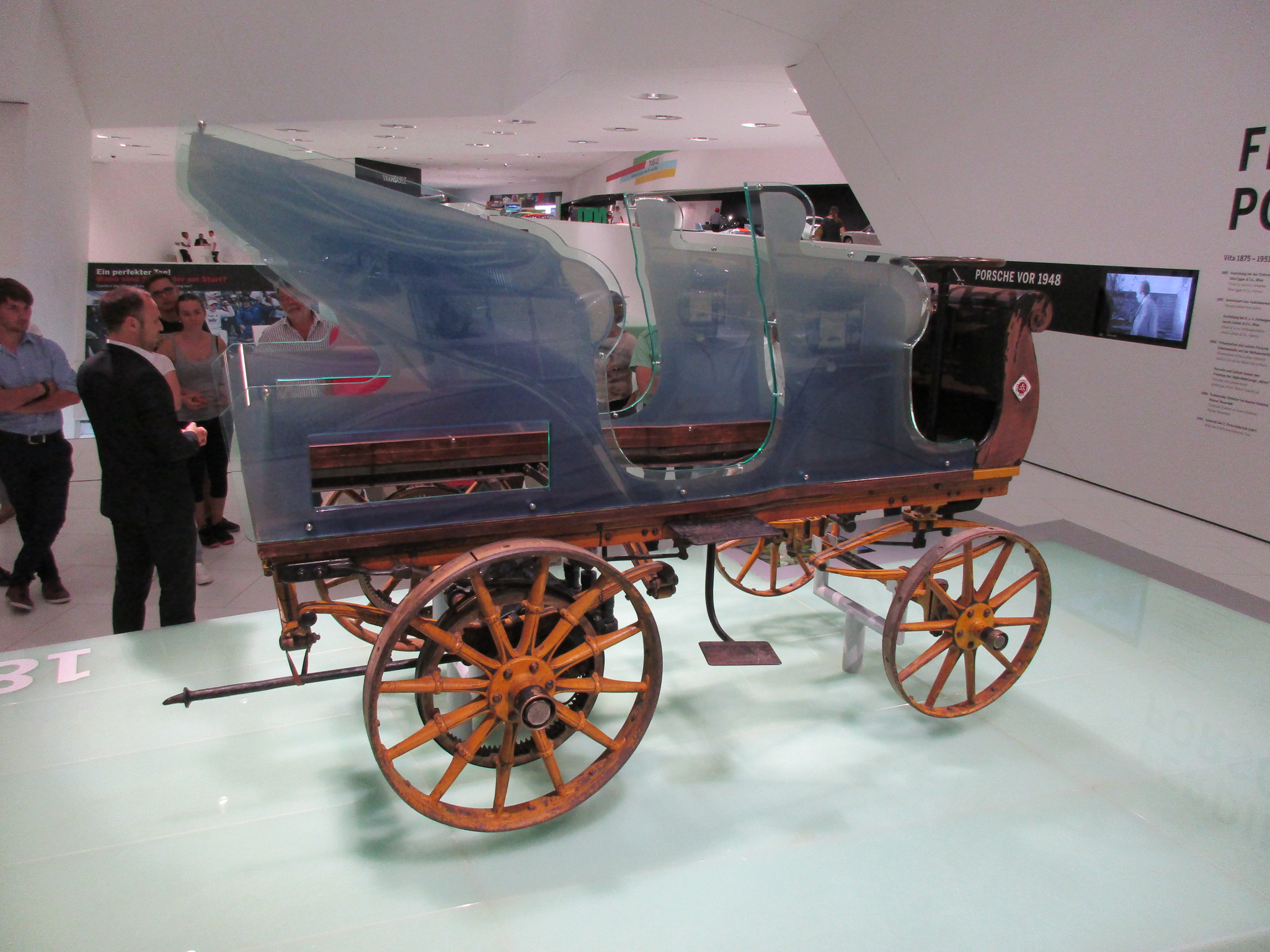
Photo details
Joyride serves the 2,048 × 1,536 Commons original JPEG byte-for-byte. No crop, resize, retouching, metadata removal, generation or vehicle reconstruction; responsive presentation may crop displayed edges.
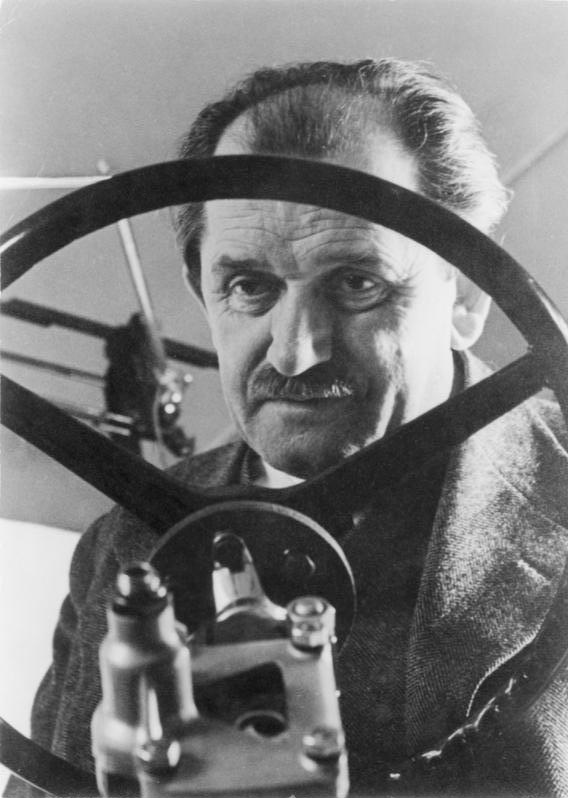
Photo details
Joyride serves the current 568 × 798 Commons JPEG byte-for-byte. Commons records Liandrei’s 2011 crop of the German Federal Archives file; Joyride made no additional crop, resize, retouching, metadata removal or generation. This identification portrait remains separate from Arnaud 25’s actual-car photograph.
The surviving first design is not automatically the race winner
- Connection
- Designer and builder association · not ownership
- When
- Built 1898 · public-road debut June 26, 1898 · surviving car photographed September 3, 2016
- Identity
- Surviving 1898 Egger-Lohner C.2 Phaeton · octagon electric motor · oldest still-existing Ferdinand Porsche construction
Porsche’s current museum press kit identifies the Egger-Lohner C.2 Phaeton as the oldest construction by Ferdinand Porsche still in existence. It describes an electric car built in 1898 with front-wheel stub-axle steering and an ‘octagon’ motor whose eight-sided housing weighed 130 kilograms. The display is therefore a creator and builder association—not evidence that Porsche personally owned the car.
The specification is striking even without a modern comparison: Porsche records 2.2–3.7 kW (3–5 hp), a 25 km/h top speed, an 80 km range and a twelve-position controller with six forward gears, two reverse gears and four braking levels. Viennese coachbuilder Ludwig Lohner made four body constructions on this chassis design. One of those vehicles won first prize in a 40-kilometre event at the 1899 Berlin motor show, but the current museum text does not identify the photographed survivor as that winning individual.
Arnaud 25 photographed the actual surviving C.2 Phaeton in the Porsche Museum on September 3, 2016 and released the image under CC BY-SA 4.0. The car appears with a transparent interpretive body, exposed timber and metal structure, and no road registration. Joyride retains Porsche’s 1898 catalog date while keeping the missing serial number, exact early custody and race-winner identity unresolved; no ‘first Porsche-branded car,’ personal ownership, current private owner or production-family coverage is claimed.
Where the car went next
- 1898An early electric construction
Porsche dates the C.2 Phaeton to 1898 and identifies it as Ferdinand Porsche’s oldest construction still in existence.
- June 26, 1898A public-road debut
Porsche’s 2014 history records the Egger-Lohner electric vehicle taking to Vienna’s streets on this date; that corporate account supplies context, not a surviving serial number.
- September 28, 1899One of four wins in Berlin
The current museum record says one vehicle based on the four C.2 chassis-and-body combinations won the 40-kilometre event; it does not tie that result to this survivor.
- January 2014The survivor enters the museum story
Porsche announced the recovered, unrestored C.2 Phaeton for its museum’s fifth anniversary and called ‘P1’ an unofficial name.
- September 3, 2016The exact survivor photographed
Arnaud 25 photographed the individual museum car used here; the image establishes this dated display, not present-day exhibition status.
Sources for this story
Porsche’s current museum press kit establishes the surviving 1898 C.2 Phaeton identity, Ferdinand Porsche’s creator role, Lohner’s four body constructions, octagon motor, controller, output, speed and range. Its wording says one of four vehicles won the 1899 Berlin event, so Joyride does not assign that victory to this survivor. Porsche’s 2014 release supplies the June 1898 debut and recovered-unrestored museum history while calling ‘P1’ an unofficial name. No personal ownership, serial number, exact early custody, proven race-winner identity, present private owner, first Porsche-branded-car claim, complete model-family coverage, exact Joyride catalog match or compatible game representation is claimed.
- Egger-Lohner C2 PhaetonPorsche Newsroom · Porsche Museum press kit · reviewed 2026-10-08 · external source
The 1898 model year, Ferdinand Porsche creator role, front-wheel stub-axle steering, octagon motor, twelve-position controller, four Lohner body constructions, one vehicle’s Berlin win, specifications and oldest-surviving-construction status.
- The world’s very first Porsche design — the return of the ‘P1’Porsche AG · 2014-01-27 · external source
Porsche’s corporate account of the June 26, 1898 road debut, ‘P1’ as an unofficial name, the recovered and unrestored vehicle, and its 2014 Porsche Museum presentation.
Reviewed
Why this is the actual car
- Photo identity evidence
Arnaud 25 identifies the September 3, 2016 photograph as the 1898 Egger-Lohner C.2 Phaeton at the Porsche Museum and licenses the original CC BY-SA 4.0.
- Photo identity evidence
Porsche identifies the C.2 Phaeton as its oldest surviving Ferdinand Porsche construction while distinguishing the four body constructions and saying only that one won the 1899 Berlin event.
The matching photographer, venue, date and vehicle history establish the identification; the chassis stamp is not visible in these photographs.