Ray Harroun
1911 Marmon Wasp · race no. 32 · inaugural Indianapolis 500 winner
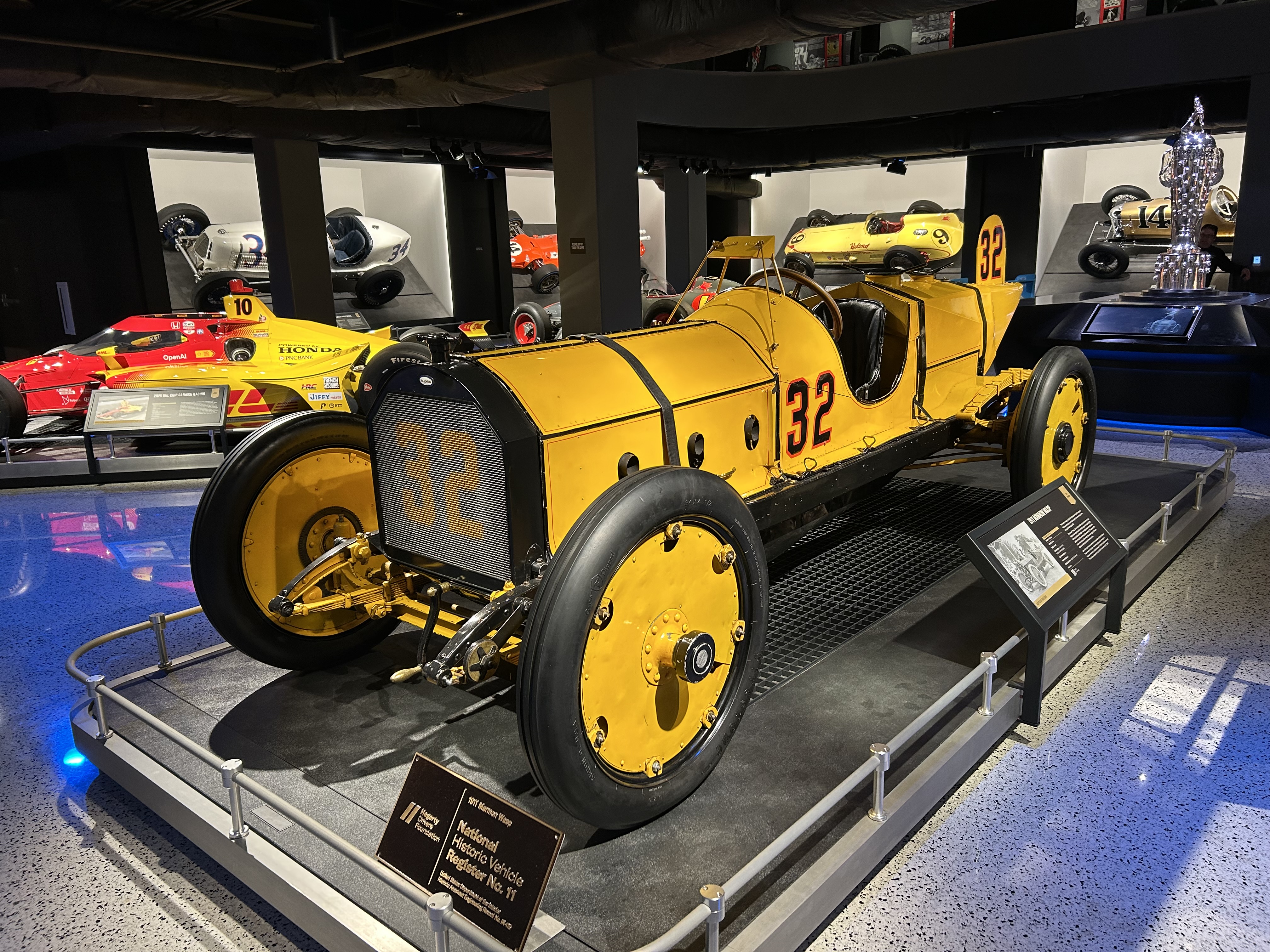
Photo details
Joyride serves the 4032 × 3024 Commons original JPEG byte-for-byte. No crop, resize, retouching, metadata removal, generation or vehicle reconstruction; a responsive frame may crop displayed edges.
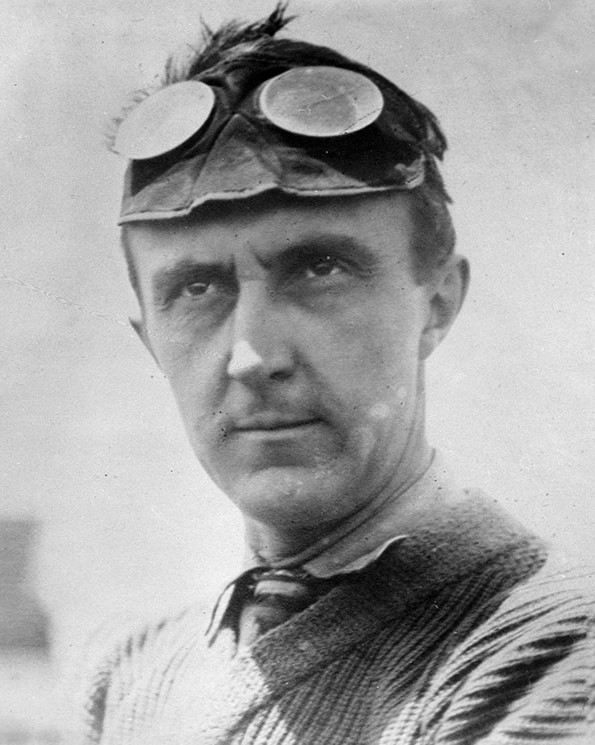
Photo details
Joyride serves the current 595 × 745 Commons JPEG byte-for-byte. Commons records this file as a cropped, handwriting-removed derivative of the earlier scan; Joyride applies no further crop, resize, retouching or generation. The portrait is separate from OctaviaCombi’s 2026 actual-car photograph.
The first Indy winner was already a proven experiment
- Connection
- Engineer, co-designer and competition driver · not ownership
- When
- Development from 1910 · Indianapolis 500 victory on May 30, 1911
- Identity
- Individual yellow-and-black Marmon Wasp · race no. 32 · NHVR no. 11 · HAER IN-115 · mostly unrestored survivor
Ray Harroun did not simply arrive at the first Indianapolis 500 in a new car. Indianapolis Motor Speedway records say he worked in Marmon’s engineering department, helped design the Wasp and supervised its development from early 1910. The same source says the streamlined single-seater won before the 500 existed: Harroun drove it to a short Atlanta victory and the 1910 Wheeler-Schebler Trophy. Joyride therefore records both a creator and competition association, not personal ownership.
On May 30, 1911, Harroun started 28th and drove the yellow-and-black no. 32 to victory in the inaugural Indianapolis 500. The museum records an average of 74.602 mph and 88 laps led. Harroun’s single seat carried no riding mechanic, so he mounted what the Speedway describes cautiously as a rearview mirror believed to be the first used on an automobile. That wording matters: Joyride does not turn a museum’s qualified claim into an undisputed invention story.
The individual survivor is NHVR no. 11 and HAER IN-115. The National Historic Vehicle Register says it has never been fully restored, has likely been repainted, retains mostly unrestored body and interior material, and has spent most of its life at the Indianapolis Motor Speedway Museum. Two current institutional records disagree on the engine: the museum lists 477 cubic inches (7.8 litres), while the register lists 447 cubic inches and 110 hp. Joyride preserves that conflict rather than selecting the tidier number. OctaviaCombi’s 2026 museum photograph shows the actual registered survivor, not the replica Marmon commissioned for its centenary project.
Where the car went next
- January–May 1910A special takes shape
Indianapolis Motor Speedway says Harroun supervised the purpose-built Wasp’s development before plans for the first 500-mile race were announced.
- May 1910First wins before the 500
Harroun drove the Wasp to a short Atlanta win and then the Speedway’s 200-mile Wheeler-Schebler Trophy.
- May 30, 1911The inaugural 500
Starting 28th, Harroun won in six hours and 42 minutes; the museum records 74.602 mph and 88 laps led.
- 2016 register documentationA documented survivor
The National Historic Vehicle Register assigned the Wasp no. 11 and Historic American Engineering Record survey IN-115, documenting its mostly unrestored condition.
- May 12, 2026The original, not the replica
OctaviaCombi photographed the registered survivor in the Indianapolis Motor Speedway Museum. Marmon separately identifies its 2011 centenary reconstruction as a replica.
Sources for this story
Indianapolis Motor Speedway identifies Harroun as Marmon engineer, co-designer and winning driver and its museum identifies the displayed car as the 1911 winner. The National Historic Vehicle Register binds the survivor to NHVR no. 11 and HAER IN-115 and documents its mostly unrestored, likely repainted state. Official museum and register engine figures conflict at 477 versus 447 cubic inches, so both remain visible. No Harroun ownership, first-ever-mirror certainty, untouched paint, replica equivalence, complete Marmon-family coverage, exact Joyride catalog link or compatible game entry is claimed.
- 1911 Marmon WaspIndianapolis Motor Speedway Museum · Museum collection record · reviewed 2026-10-07 · external source
The displayed car’s identity as the 1911 winner, Harroun’s driver role, 28th starting position, 74.602 mph average, 88 laps led and the museum’s 477-cu-in engine specification.
- The First 500Indianapolis Motor Speedway · Track history · reviewed 2026-10-07 · external source
Harroun’s Marmon engineering and design role, the May 30, 1911 victory, six-hour 42-minute time and qualified rearview-mirror claim.
- Secrets of the Marmon WaspIndianapolis Motor Speedway · 2020-02-06 · external source
The Wasp’s pre-500 development, Harroun’s design supervision, May 1910 competition, aerodynamic purpose, crash repair and survival into the 1911 race.
- 1911 Marmon WaspHagerty Drivers Foundation · National Historic Vehicle Register · NHVR no. 11 record · reviewed 2026-10-07 · external source
HAER IN-115 identity, mostly unrestored and likely repainted condition, museum history, running status and the differing 447-cu-in / 110-hp engine record.
- Marmon Wasp, Indianapolis Motor Speedway Hall of Fame MuseumLibrary of Congress · Historic American Engineering Record · HAER IN-115 record · reviewed 2026-10-07 · external source
The individual register documentation, Harroun relationship, first-500 victory, six-hour 42-minute eight-second result and 74.6 mph average.
- Marmon Wasp 1911 Indy 500 Winner - Ray HarrounWikimedia Commons · OctaviaCombi · Photographed 2026-05-12 · external source
The exact museum display, photographer identity, capture date and CC BY-SA 4.0 reuse terms.
Reviewed
Why this is the actual car
- Photo identity evidence
The Indianapolis Motor Speedway Museum identifies its displayed 1911 Marmon Wasp as the inaugural Indianapolis 500-winning car driven by Harroun.
- Photo identity evidence
The National Historic Vehicle Register identifies the survivor as NHVR no. 11 and HAER IN-115 and documents its mostly unrestored condition and long museum custody.
- Photo identity evidence
OctaviaCombi identifies the May 12, 2026 photograph as the 1911 Indy-winning Marmon Wasp on display at the museum and licenses it CC BY-SA 4.0.
- Photo identity evidence
Marmon distinguishes the original museum car from the separately built 2011 centenary replica.
The matching photographer, venue, date and vehicle history establish the identification; the chassis stamp is not visible in these photographs.