Rudolf Caracciola
1938 Mercedes-Benz W 125 record car
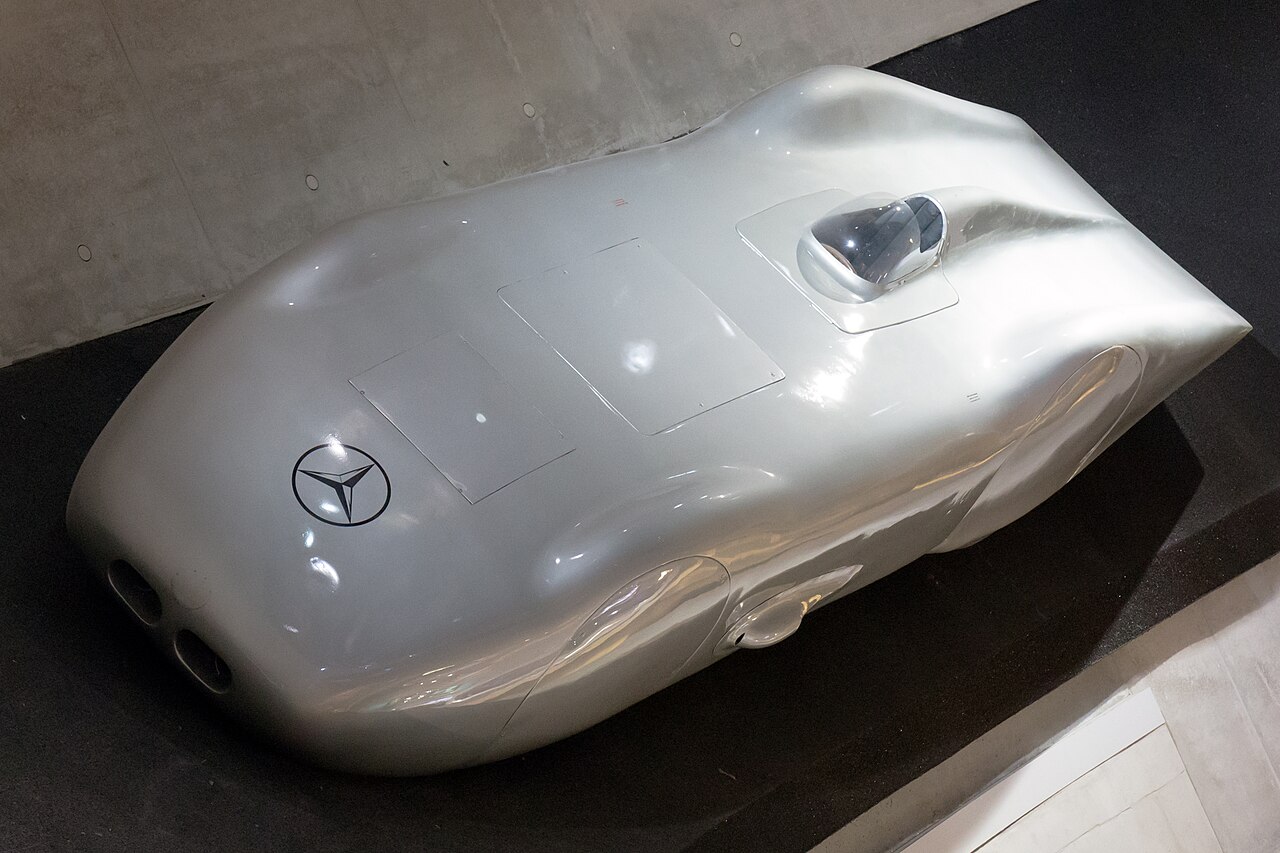
Photo details
Joyride serves the 1,280 × 853 Commons derivative byte-for-byte. Commons generated the derivative from Morio’s 2,560 × 1,707 original. No further crop, resize, retouching, metadata removal, generation or vehicle reconstruction; responsive presentation may crop displayed edges.
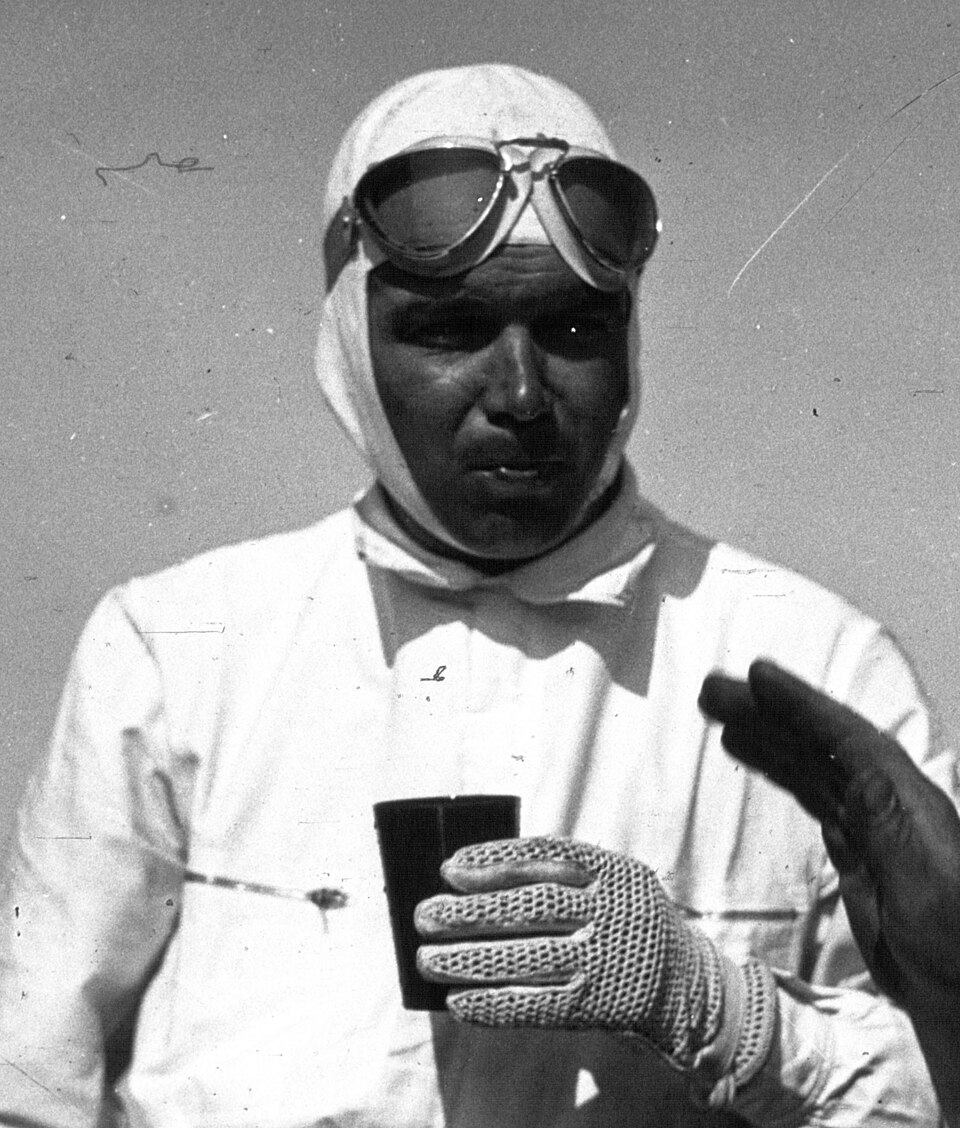
Photo details
Joyride serves the 960 × 1,128 Commons derivative byte-for-byte. Commons’ crop was extracted from the BnF image before Joyride downloaded it; Joyride made no further crop, resize, retouching or generative change. This identification portrait remains separate from Morio’s 2013 actual-car photograph.
The ice-cooled Silver Arrow that averaged 432.692 km/h
- Connection
- Competition association · not ownership
- When
- Record driver · January 28, 1938 · museum photograph March 2, 2013
- Identity
- 1938 Mercedes-Benz W 125 record car · MD 25 DAB V12 engine no. 3 · January 28, 1938 public-road record machine
Mercedes-Benz records an unsuccessful October 1937 debut for its first W 125-based twelve-cylinder record car, followed by a thorough January 1938 redesign. Engineers lowered and lengthened the body, reduced the intake openings, reshaped the windscreen and used ice cooling so a conventional radiator opening would not spoil the airflow. The company identifies the retained MD 25 DAB V12 as engine number 3 and records about 563 kW (765 PS) at 5,800 rpm after detail changes.
At 8 a.m. on January 28, 1938, Rudolf Caracciola set off on the Frankfurt–Darmstadt autobahn. Mercedes-Benz says the required average of opposite-direction runs produced 432.692 km/h over the flying kilometre and 432.361 km/h over the flying mile; the return leg reached 437 km/h. This is a competition-driving association, not evidence that Caracciola personally owned the car.
The public-road record stood for almost eight decades. Mercedes-Benz also preserves the difficult context: Auto Union driver Bernd Rosemeyer was killed later that day while trying to answer the record. Morio photographed the individual streamlined W 125 at the Mercedes-Benz Museum on March 2, 2013 under CC BY-SA 3.0. Joyride uses that dated museum photograph without claiming current display, unchanged 1938 mechanical condition, a chassis number or personal ownership.
Where the car went next
- October 1937The first version falls short
Mercedes-Benz says the newly built W 125-based twelve-cylinder record car failed to meet its targets during Record Week.
- January 1938A body redesigned around air
The revised car gained a lower nose, longer tapered tail, rounded windscreen, smaller intakes and ice-assisted cooling.
- January 28, 1938 · 8 a.m.Two measured-direction records
Caracciola averaged 432.692 km/h over the flying kilometre and 432.361 km/h over the flying mile.
- Later that morningA fatal attempt to answer it
Mercedes-Benz records that Auto Union’s Bernd Rosemeyer was killed while attempting to break the new record.
- March 2, 2013The survivor photographed in Stuttgart
Morio photographed the streamlined W 125 at the Mercedes-Benz Museum; Joyride makes no claim about later display status.
Sources for this story
Mercedes-Benz documents the W 125 record car’s 1937 failure, January 1938 redesign, MD 25 DAB engine no. 3, ice cooling, power, Caracciola’s two measured records and Rosemeyer’s fatal same-day attempt. Morio’s licensed 2013 museum photograph identifies the surviving streamlined car. No personal ownership, chassis number, unchanged record specification, current display, complete W 125 family coverage, exact Joyride catalog match or compatible game representation is claimed.
- Mercedes-Benz W 125 record car, 1938Mercedes-Benz Public Archive · archive record · reviewed 2026-10-07 · external source
The 1937 failure, January 1938 redesign, MD 25 DAB engine no. 3, 563 kW output, ice cooling, exact January 28 speeds, Caracciola’s role, Rosemeyer’s fatal attempt and later aerodynamic measurement.
- The Mercedes-Benz Silver Arrows from 1934 to 1939Mercedes-Benz Media · 2019-05-23 · reviewed 2026-10-07 · external source
The W 125-based twelve-cylinder record car, 432.7 km/h public-road record, 5.6-litre V12, aerodynamic body, ice-and-water cooling and historical competition context.
Reviewed
Why this is the actual car
- Photo identity evidence
Mercedes-Benz documents the individual 1938 W 125 record car’s unique revised body, engine no. 3 and Caracciola’s January 28 record run.
- Photo identity evidence
Morio identifies the March 2, 2013 photograph as the 1938 Mercedes-Benz W 125 record car at the Mercedes-Benz Museum; Commons confirms CC BY-SA 3.0.
The matching photographer, venue, date and vehicle history establish the identification; the chassis stamp is not visible in these photographs.