Rolls-Royce 40/50 h.p.
Before Silver Ghost became a whole model’s nickname, it belonged to one famously quiet demonstration car.
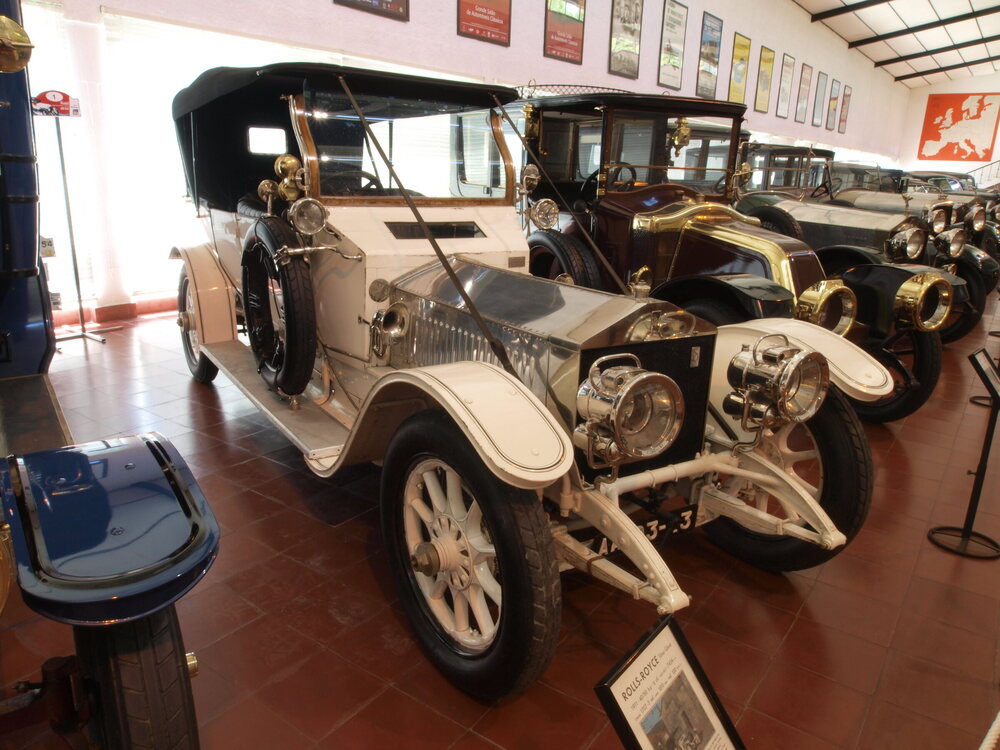
1911 Rolls-Royce 40/50 h.p. Silver Ghost · Alf van Beem · CC0 1.0
Research pending
A matching completed auction sale has not been verified for this exact year, body, trim, engine, transmission and market.
Joyride shows this gap instead of substituting an asking price, unsold bid or mismatched special vehicle.
More than a set of wheels.
Rolls-Royce introduced the 40/50 h.p. before 1911 and kept improving it for many years. One silver-painted 1907 demonstrator was named Silver Ghost; people soon used that name for the whole family, although the factory still called a 1911 car the 40/50 h.p. Buyers usually received a chassis and chose a coachbuilder for the body, so two cars from the same year could look very different.
Look a little closer.
The number 40/50 was the model’s official name; Silver Ghost began as the special name of chassis 60551, registration AX 201.
Photos show an example of the model or generation. The pictured vehicle’s year, equipment, or modifications can differ from the specification described here.
One Ghost, then a whole family
The original Silver Ghost was a 1907 demonstrator with silver paint and fittings. Its quiet running and a 15,000-mile reliability test helped build the name’s fame. By 1911, people commonly called other 40/50 cars Silver Ghosts too, even though Rolls-Royce did not formally adopt the family name until later.
Source: Rolls-Royce Silver Ghost · model history and technical overview ↗A car was not always one finished design
The 40/50 was built around a chassis carrying its engine, gearbox, axles and suspension. A separate coachbuilder could add an open tourer, limousine or another body. That is why this profile does not pretend that a year alone identifies the seats, roof or body dimensions of a particular 1911 car.
Source: Revs Institute · Rolls-Royce 40/50 h.p. general and technical handbook ↗The 1911 top-gear trial
The 1911 London-to-Edinburgh type was a special 40/50 development, not the specification of every 1911 chassis. Rolls-Royce records that chassis 1701 completed the roughly 800-mile reliability run locked in top gear, averaged 19.59 mph and returned more than 24 mpg. A later half-mile test reached 78.2 mph; with streamlined bodywork it exceeded 100 mph at Brooklands. Those results belong to chassis 1701 and are kept separate from this profile's unspecified coachbuilt car.
Source: Rolls-Royce Motor Cars · Models of the Marque: 40/50 H.P. Silver Ghost ↗Where these facts come from
- Rolls-Royce Silver Ghost · model history and technical overview
- Revs Institute · Rolls-Royce 40/50 h.p. general and technical handbook
- Country Life · retracing the Silver Ghost reliability route
- Rolls-Royce Motor Cars · Models of the Marque: 40/50 H.P. Silver Ghost
Selected facts checked for this edition. Some source pages link to broader model families. Last reviewed September 30, 2026.