
Ruxton Model C Sedan
By pulling with its front wheels, the low Ruxton could put its floor between the frame rails instead of above a driveshaft.
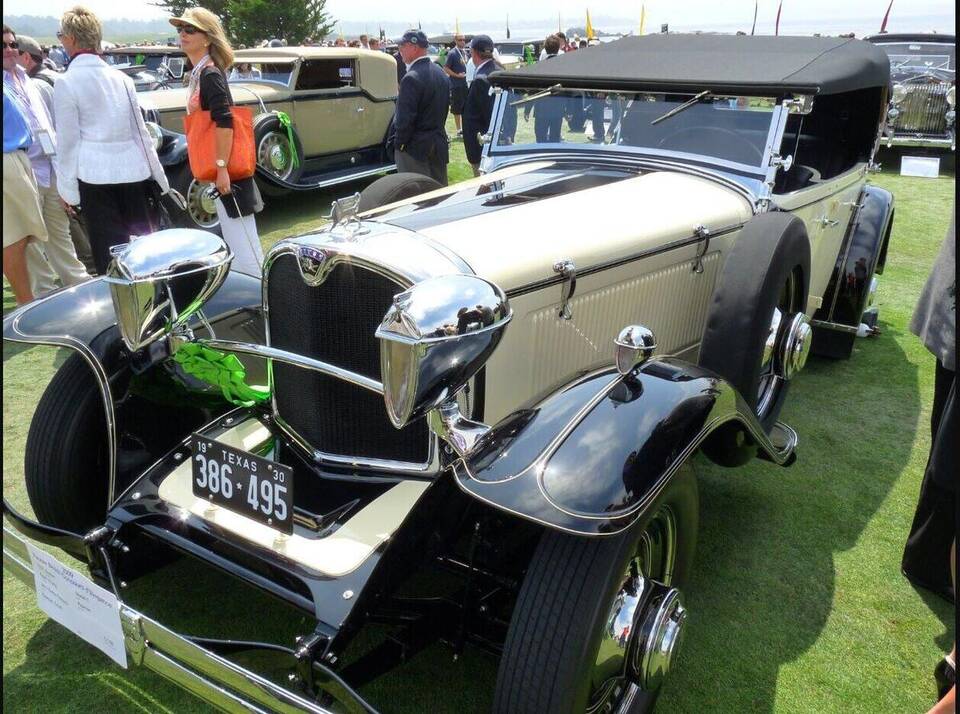
1930 Ruxton Model C Rauch & Lang Phaeton · Craig Howell · CC BY 2.0
Research pending
A matching completed auction sale has not been verified for this exact year, body, trim, engine, transmission and market.
Joyride shows this gap instead of substituting an asking price, unsold bid or mismatched special vehicle.
More than a set of wheels.
Engineer William J. Muller began with a front-wheel-drive prototype for body supplier Budd. Promoter Archie Andrews turned the project into the Ruxton, a luxury car named after an investor who did not approve the use of his name. Publicity began in 1929, but series production had not started by early 1930. The finished car paired a low Budd sedan body with a Continental straight-eight and a clever compact transaxle.
Look a little closer.
The car was named for financier William V. C. Ruxton before he realized his name had been adopted; he sued, but the name stayed.
Photos show an example of the model or generation. The pictured vehicle’s year, equipment, or modifications can differ from the specification described here.
The 1929 date needs a footnote
The Ruxton campaign and prototypes appeared in 1929, including a roadster at New York's Grand Central Palace show. Revs Institute reports that series production had still not begun at the start of 1930. This packet therefore uses the production-ready 1930 sedan identity while preserving 1929 as the public-introduction story.
Source: Revs Institute · The Mythical Ruxton ↗How the low floor worked
Muller divided the gearbox around the final drive: first and reverse sat ahead of the axle, while second and third sat between the final drive and engine. This shortened the powertrain and moved weight toward the driven wheels. With no shaft running to a rear axle, the passenger floor could sit lower inside the frame.
Source: Revs Institute · The Mythical Ruxton ↗Where these facts come from
- Revs Institute · The Mythical Ruxton
- Petersen Automotive Museum · 1929 Ruxton Model C Roadster
- America's Car Museum · 1929 Ruxton program
Selected facts checked for this edition. Some source pages link to broader model families. Last reviewed September 30, 2026.