
Opel Olympia 1.3
The first Olympia made its steel body carry the loads, cutting weight while changing how Opel assembled cars.
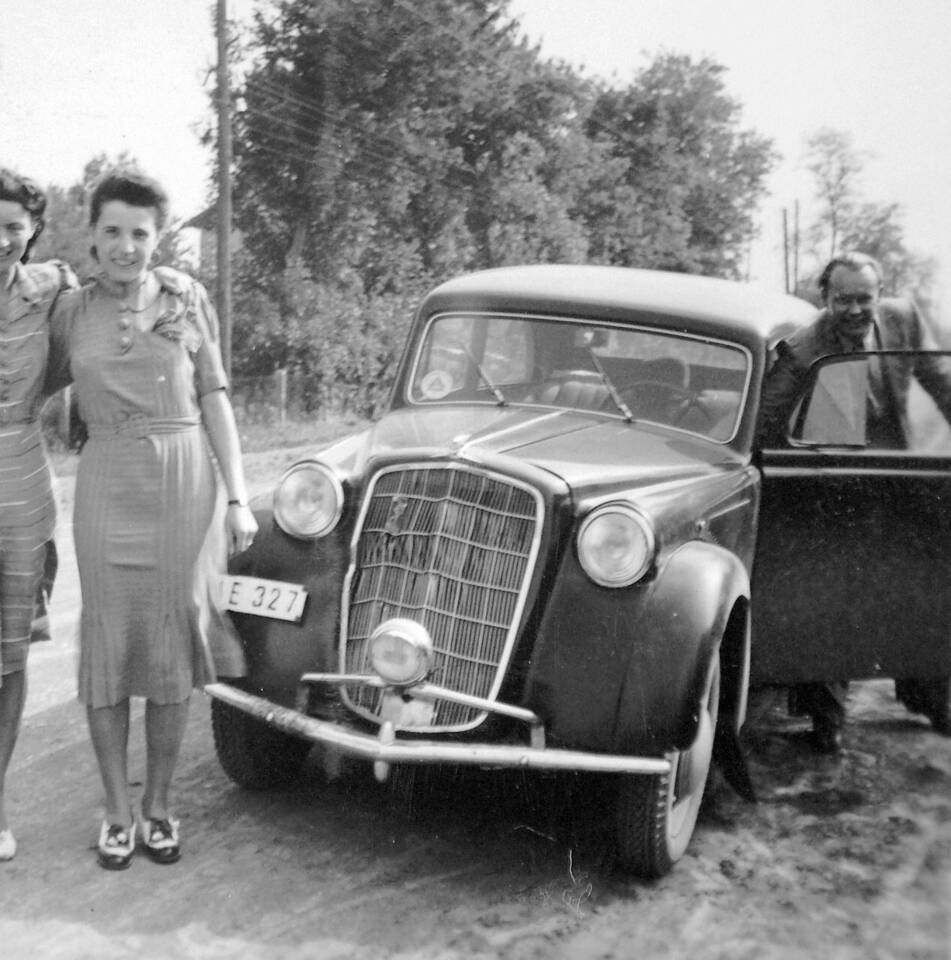
Opel Olympia 1935 típusú személygépkocsi. Fortepan 3200.jpg · FOTO:Fortepan — ID 3200: Adományozó/Donor: Unknown. · Public domain (PD-anon-70-EU and PD-anon-80-1996)
Research pending
A matching completed auction sale has not been verified for this exact year, body, trim, engine, transmission and market.
Joyride shows this gap instead of substituting an asking price, unsold bid or mismatched special vehicle.
More than a set of wheels.
Opel unveiled the Type Olympia 1.3 at the Berlin Motor Show in early 1935 and began series production in April. Instead of placing a body on a separate heavy frame, Opel joined steel sections into a load-bearing shell. The patented design reduced mass, lowered the centre of gravity and allowed the body and powertrain to meet in a production step later called the marriage. With a 24 hp engine, the lighter car could reach 95 km/h while using a stated 9.5 L/100 km. Its name looked forward to the 1936 Berlin Olympic Games, while its construction pointed toward modern mass production.
Look a little closer.
An Olympia later crossed the Atlantic to South America aboard an airship—the first car Opel says made that journey by airship.
Photos show an example of the model or generation. The pictured vehicle’s year, equipment, or modifications can differ from the specification described here.
Why unitary construction changed the factory
Combining body and frame did more than save 135 kilograms. It let workers build the shell and mechanical assemblies in separate flows and then join them in the production 'marriage.' That shortened and simplified assembly, making the Olympia an important manufacturing story as well as a vehicle-design story. The basic idea remains common in modern car factories.
Source: Opel · 90 Years of Olympia ↗Lighter, lower and easier to control
The steel shell weighed less than the predecessor's separate-frame arrangement and placed the centre of gravity about 15 centimetres lower without sacrificing much ground clearance. Those two changes work together: reduced mass asks less of the engine and brakes, while a lower centre of gravity reduces the body's tendency to lean in a corner. Opel paired them with its synchronised suspension for a car intended to feel stable as well as economical.
Source: Opel · Power & Grip: 120 Years of Automobile Production ↗Where these facts come from
- Opel · 90 Years of Olympia
- Opel · Birthday Celebrations: 160 Years of Innovations
- Opel · Power & Grip: 120 Years of Automobile Production
Selected facts checked for this edition. Some source pages link to broader model families. Last reviewed October 1, 2026.