
Opel Kadett A Saloon
The Kadett A combined a light body, a water-cooled front engine and a big boot in an affordable compact saloon.
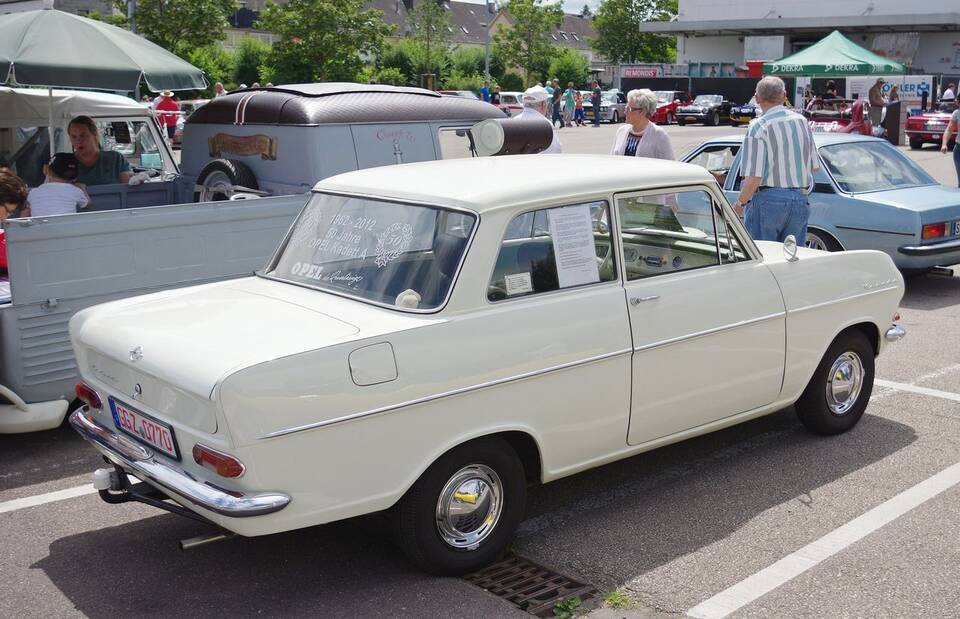
Opel Kadett A BW 2016-07-17 14-21-52.jpg · Berthold Werner · CC BY-SA 3.0
Research pending
A matching completed auction sale has not been verified for this exact year, body, trim, engine, transmission and market.
Joyride shows this gap instead of substituting an asking price, unsold bid or mismatched special vehicle.
More than a set of wheels.
Opel revived the Kadett name with a completely new car and a completely new Bochum factory. The first Kadett A left the line in October 1962. Its 670 kg saloon body used only twelve main pieces, helping keep the starting price to 5,075 Deutsche Mark. The 993 cc four-cylinder sat at the front, sent 40 hp to the rear wheels and could carry the car to 120 km/h. Four adults, a large boot and an external fuel filler made it practical for families during West Germany's economic boom. Almost 650,000 Kadett A cars were built through 1965.
Look a little closer.
Opel joked that the outside fuel filler meant drivers would never smell petrol in the boot—a pointed tease aimed at the Volkswagen Beetle.
Photos show an example of the model or generation. The pictured vehicle’s year, equipment, or modifications can differ from the specification described here.
A new car needed a new factory
The Kadett A was not squeezed into an old line. Opel built a dedicated Bochum plant for it in 1962, signalling the intended scale of the compact-car programme. Simple construction helped that factory work efficiently: the body used twelve main parts and each side panel came from one sheet of steel. The design choice linked manufacturing cost directly to an affordable showroom price.
Source: Opel · 60 Years Ago: Kadett A Jump Starts the Compact Class ↗Why ordinary service mattered
Affordability did not stop after purchase. Suspension and steering joints needed no grease nipples, and Opel calculated a 10,000-kilometre inspection—including materials—at about DM30. That attention to maintenance, fuel storage and luggage space explains the Kadett's appeal better than a speed figure alone: the car was engineered to fit family budgets and routines.
Source: Opel · Kadett and Astra: 85 Years ↗Reading the Kadett A's horizontal instruments
The representative Caravan close-up makes the long horizontal speed scale and separate fuel/temperature dials readable, while the saloon view shows the same generation's bench-seat driving position. Neither source proves a 1962 launch car: the Caravan is a different body and includes visible later accessories, and the saloon's year, 40/48 hp engine, trim and market are undocumented.
Source: KarleHorn · Kadett A Caravan cockpit, CC BY 3.0 ↗Where these facts come from
- Opel · 60 Years Ago: Kadett A Jump Starts the Compact Class
- Opel · Kadett and Astra: 85 Years
- Opel · Made in Germany: 120 Years of Automobiles
- Wikimedia Commons · Opel Kadett A saloon interior
- Wikimedia Commons · Opel Kadett A Caravan instruments
Selected facts checked for this edition. Some source pages link to broader model families. Last reviewed October 1, 2026.