
Opel Manta A 1600 S
The Manta 1600 S put a lively 80 hp engine and four useful seats under a sleek ray-badged coupé body.
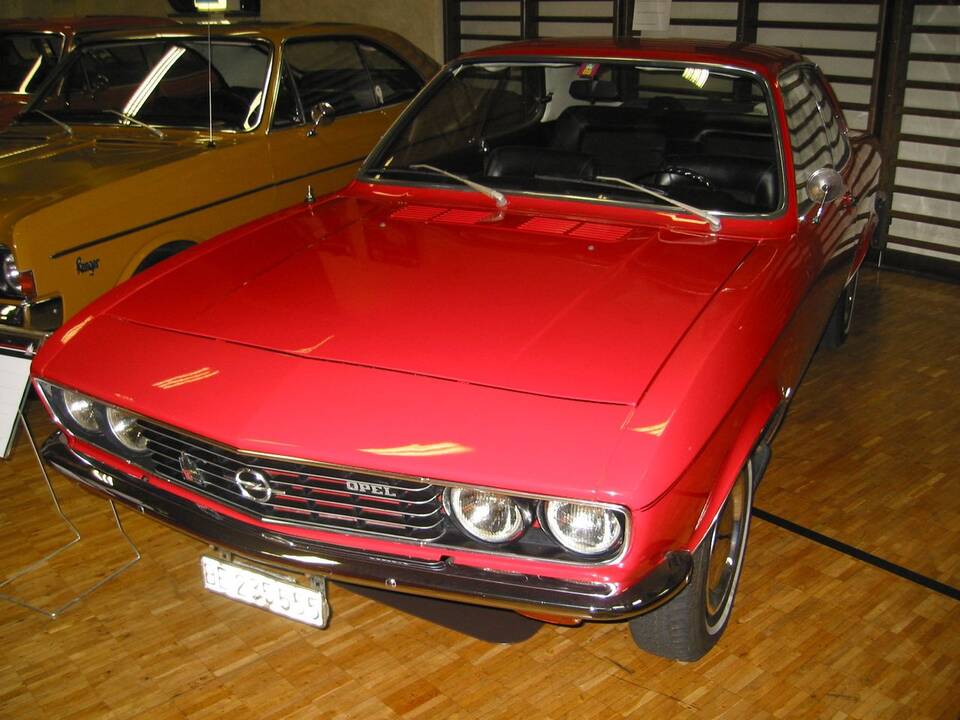
Opel Manta 1600 S 1971 (General Motors Suisse).JPG · Buch-t · CC BY-SA 3.0 de
Research pending
A matching completed auction sale has not been verified for this exact year, body, trim, engine, transmission and market.
Joyride shows this gap instead of substituting an asking price, unsold bid or mismatched special vehicle.
More than a set of wheels.
Opel presented the Manta to the press at Timmendorfer Strand on the Baltic Sea in September 1970. It was not a replacement for an existing model but a new four-seat sports coupé aimed at growing demand for personal style. Under George Gallion's sleek body, the Manta shared its platform, suspension and four-cylinder engine family with the practical Ascona, keeping the dream-car shape accessible. The new 1.6-litre engine made 68 hp in standard form and 80 hp as the high-compression S. The formula worked: 56,200 Mantas sold in the first full year and 498,553 Manta A cars were built by 1975.
Look a little closer.
Designer George Gallion studied Jacques Cousteau's underwater images to find the manta-ray shape used for the chrome fender emblem.
Photos show an example of the model or generation. The pictured vehicle’s year, equipment, or modifications can differ from the specification described here.
One platform, two personalities
The Ascona was a practical saloon and estate; the Manta was a low, sporty coupé. Opel could price the Manta for a wider audience because both used the same basic platform, suspension and engines. Shared engineering did not make the cars identical—it let body proportions, seating and styling create different experiences without duplicating every expensive component underneath.
Source: Opel · The Year of the Legends: Ascona and Manta ↗Why the ray became more than a name
Animal names suited the era, but Gallion wanted a real visual identity rather than a word alone. Cousteau's image of a manta ray seen from below supplied the broad, wing-like silhouette for a small chrome emblem. That badge tied the car's wide, flowing shape to its name and turned a research trip into one of the Manta's most memorable design details.
Source: Opel · A Fish Called Manta ↗Where these facts come from
- Opel · Just Like 50 Years Ago: Manta at Timmendorfer Strand
- Opel · The Year of the Legends: Ascona and Manta
- Opel · A Fish Called Manta
Selected facts checked for this edition. Some source pages link to broader model families. Last reviewed October 1, 2026.