
Chevrolet Corvette Sting Ray Coupe
The first Corvette coupe hid its headlights, split its rear glass in two and finally gave each rear wheel its own suspension.
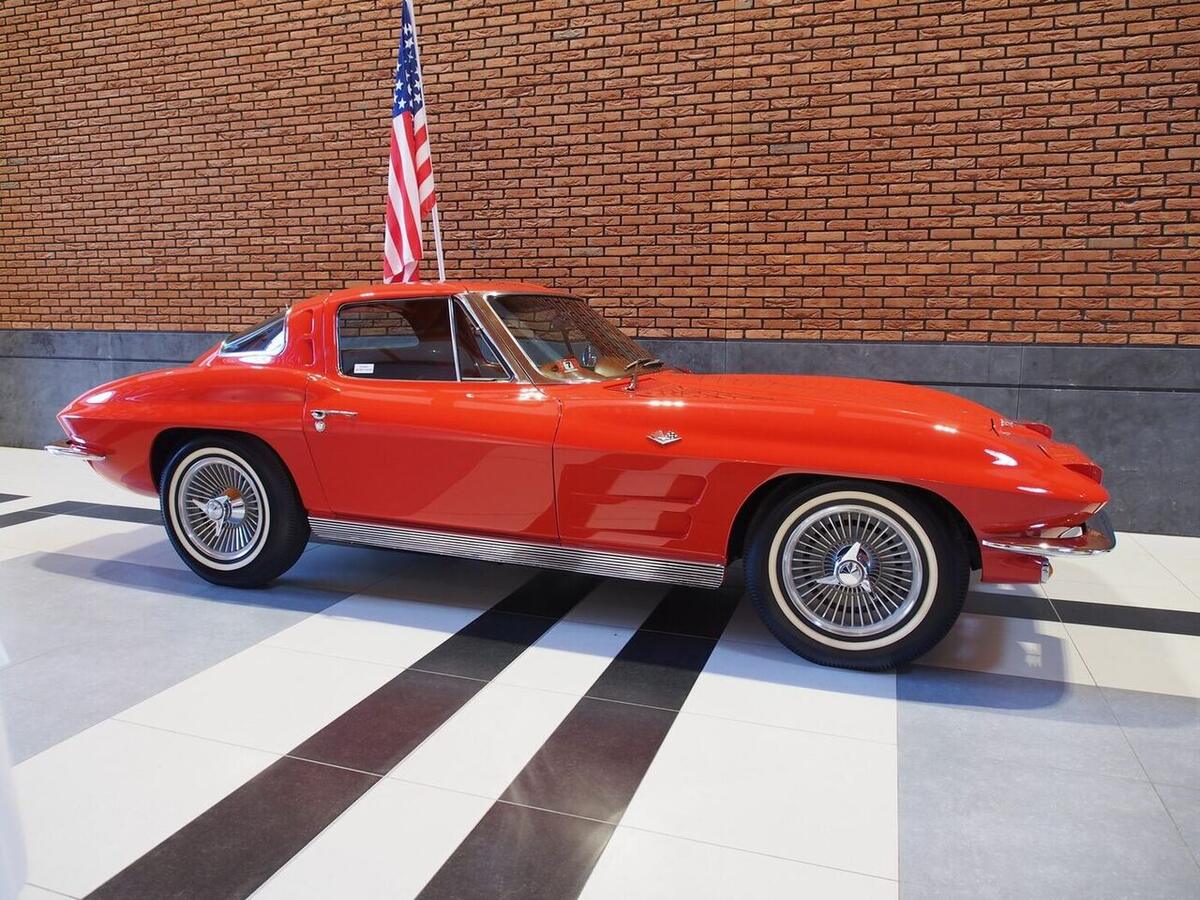
1963 Chevrolet Corvette Sting Ray split-window coupe · Alf van Beem · Public domain (PD-self)
What did this one sell for?
Make a guess, then reveal one identity-matched completed auction result. It is a comparison point, not a price promise.
Reveal the auction result
Based on a completed sale at Bring a Trailer, an estimated value for this vehicle is $140,000.
Why this sale: Exact 1963 U.S. split-window coupe with numbers-matching 327/250-hp V8 and three-speed manual transmission. 91k miles shown with total mileage unknown; NCRS Second Flight award, long-term storage history, some paintwork and recent oil/carburetor service.
Winning bid; Bring a Trailer's 5% buyer service fee, taxes and transport are excluded. The listing states a $0 dealer document fee. One auction result is a reference, not an appraisal; condition, history, options, location and market timing can change value. Accepted over higher-output, fuel-injected and automatic-transmission sales because the engine, gearbox, body, year and market match the profile.
More than a set of wheels.
The 1963 Sting Ray was the first production Corvette coupe and the first year of the second generation. Its central roof spine divided the rear window only for this model year. Under the fiberglass skin, a new frame and independent rear suspension made the change far more than a styling exercise. This profile uses the standard 250-horsepower V8 and three-speed manual rather than the famous fuel-injected option.
Look a little closer.
The split rear window lasted for just one model year; the 1964 coupe used one large pane instead.
Photos show an example of the model or generation. The pictured vehicle’s year, equipment, or modifications can differ from the specification described here.
The divider was part of a centerline idea
A strong visual ridge runs from the hood, over the roof and down between the two pieces of rear glass. It made the coupe unforgettable but also divided the driver's rearward view. Chevrolet removed the divider for 1964, making the 1963 version easy to identify—provided the body has not been altered later.
Source: GM Heritage Collection · 1963 Corvette Sting Ray ↗A racing lesson under the rear floor
Engineer Zora Arkus-Duntov's team drew on experimental racing cars when developing the new independent rear suspension. Half-shafts helped locate each wheel, and a transverse leaf spring saved vertical space. Better control of each rear wheel helped the Sting Ray use its V8 power without relying on the first Corvette's solid rear axle.
Source: Car and Driver · contemporary 1963 Sting Ray engineering review ↗Two big dials, two different jobs
Compare the two large dials in the cabin photograph: one measures road speed, while the other is marked RPM × 100 and measures engine speed. Smaller gauges surround them. This makes the instrument layout easier to explore, but the museum photograph does not identify its engine option or transmission. Do not transfer its tachometer markings to the base 250-hp specification automatically.
Source: Tino Rossini · 1963 Corvette interior, GM Heritage Center ↗Where these facts come from
- General Motors · 1963 Chevrolet Corvette vehicle information kit
- GM Heritage Collection · 1963 Corvette Sting Ray Coupe
- Car and Driver · contemporary Sting Ray engineering review
- Car and Driver · 1963 road test
Selected facts checked for this edition. Some source pages link to broader model families. Last reviewed October 1, 2026.