
Mitsubishi Debonair
Mitsubishi’s flagship paired a six-cylinder engine with a distinctive formal body.
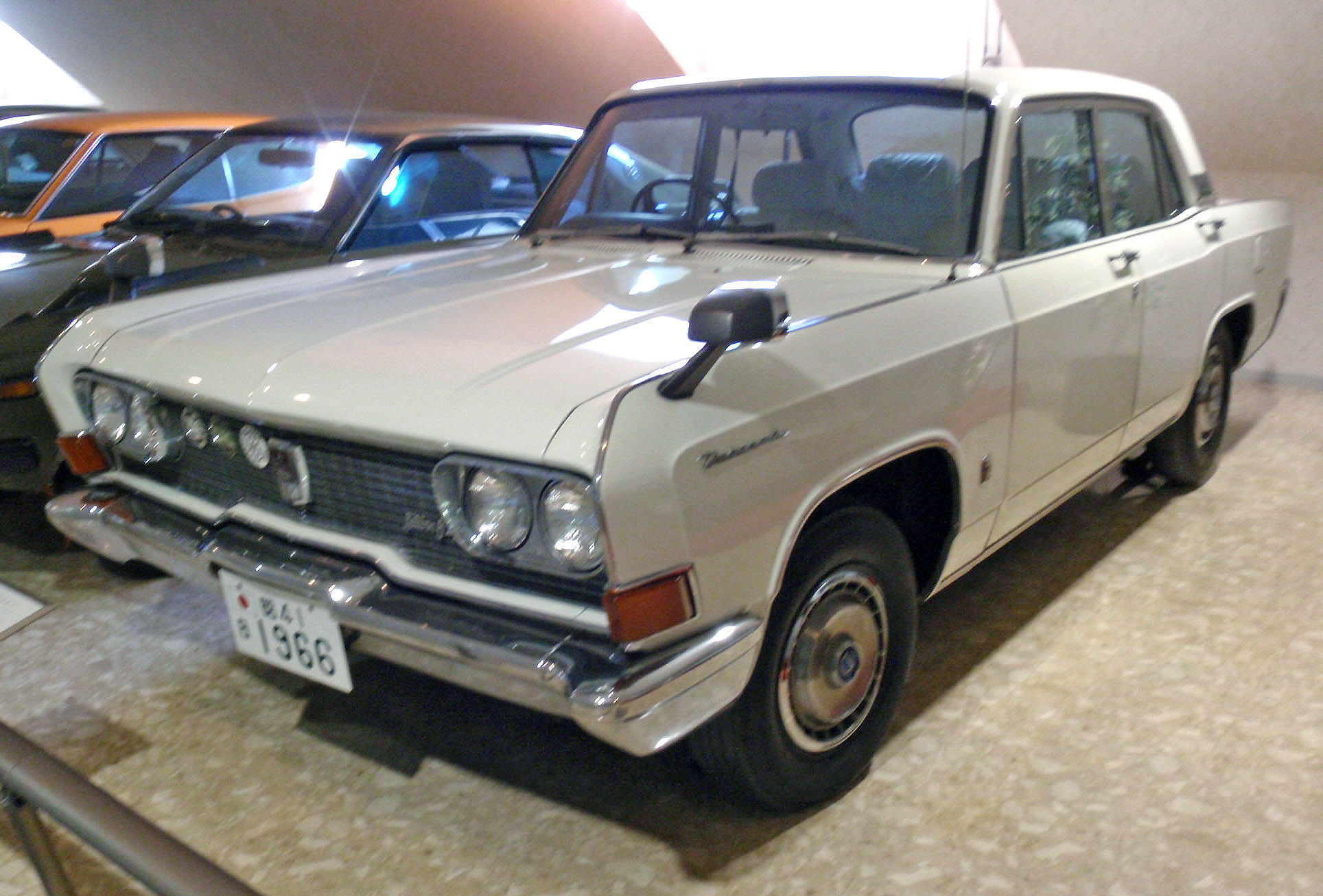
Debonair — representative photograph · Kzaral; Commons crop and alteration by Mr.choppers · CC BY 2.0
Research pending
A matching completed auction sale has not been verified for this exact year, body, trim, engine, transmission and market.
Joyride shows this gap instead of substituting an asking price, unsold bid or mismatched special vehicle.
More than a set of wheels.
Shown as the Colt Debonair at the 1963 Tokyo Motor Show, the car entered the Japanese market in July 1964. Designer Hans S. Bretzner worked with Mitsubishi as a consultant. The basic shape survived into the 1980s, but this profile keeps the original engine specification separate from later cars.
Look a little closer.
Bretzner sought fabric in Kyoto’s Nishijin weaving district for the motor-show car.
Photos show an example of the model or generation. The pictured vehicle’s year, equipment, or modifications can differ from the specification described here.
A design collaboration with lasting effects
The collaboration covered more than exterior lines: Mitsubishi records work on the show stand, upholstery and clay modelling. A flagship project could therefore teach design methods as well as produce a new car.
Source: Mitsubishi Motors — mitsubishi-history-diamante ↗A familiar shape does not fix the year
The first-generation silhouette lasted until 1986, while engines and details changed. The cover shows a later representative car, not the 1964 launch specification. Dimensions and drivetrain facts here come from the technical record, not from guessing at the photograph.
Source: Society of Automotive Engineers of Japan — jsae-debonair ↗Where these facts come from
- Mitsubishi Motors — mitsubishi-history-diamante
- Society of Automotive Engineers of Japan — jsae-debonair
Selected facts checked for this edition. Some source pages link to broader model families. Last reviewed 2026-10-15T23:03:27.717Z.