
Iso Grifo GL300
Italian shape, American heartbeat, grand-touring purpose
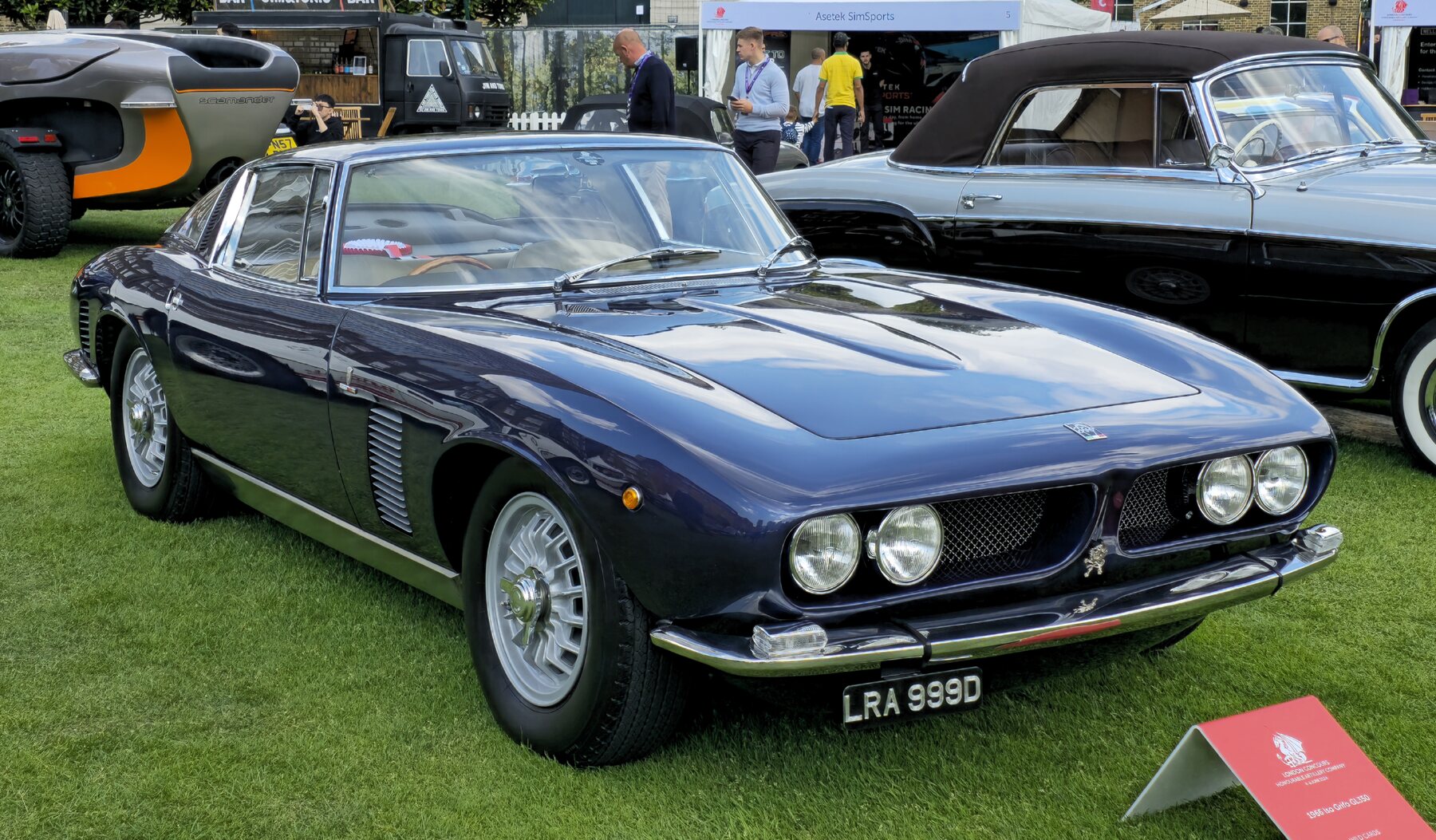
1965 Italy Iso Grifo GL300 · Calreyn88 · CC BY-SA 4.0
Research pending
A matching completed auction sale has not been verified for this exact year, body, trim, engine, transmission and market.
Joyride shows this gap instead of substituting an asking price, unsold bid or mismatched special vehicle.
More than a set of wheels.
Renzo Rivolta asked engineer Giotto Bizzarrini for a sportier companion to the Iso Rivolta GT, while Bertone's young Giorgetto Giugiaro shaped the body. The A3/L road car and A3/C racer were shown as prototypes at Turin in 1963, but the luxury road coupe needed more development and customer deliveries began only in mid-1965. The GL300 was the softer, more usable launch tune: a hand-built Italian steel coupe powered by a blueprinted Chevrolet 327 and backed by robust American transmission hardware.
Look a little closer.
Its Italian body and chassis wrapped around a Chevrolet V8 and American four-speed gearbox.
Photos show an example of the model or generation. The pictured vehicle’s year, equipment, or modifications can differ from the specification described here.
The road Grifo and race Grifo are cousins, not synonyms
The letters explain the split. A3/L meant the luxury road coupe: steel Bertone body, occasional rear seats and a civilised GL300 or GL365 engine. A3/C meant competition: a different, lighter Drogo-bodied machine developed for endurance racing. Both emerged from the same idea, but after Rivolta and Bizzarrini separated in August 1965, the competition branch evolved into Bizzarrini's own 5300 GT while Iso continued the road-going Grifo. Calling every early Grifo an A3/C erases the model's most important fork.
Source: Iso A3/L Grifo Series I GL300/GL365/GL350 historical and technical appraisal ↗Why the De Dion rear axle suited a grand tourer
A De Dion axle links the rear wheels geometrically while letting the heavy differential stay attached to the body. That reduces unsprung mass—the weight that bounces with the wheels—so the suspension can follow rough surfaces more calmly. Iso mounted the rear brake discs inboard for the same reason. The layout gave the Grifo the planted high-speed feel of a serious GT without relying on a simple heavy live axle.
Source: Iso A3/L Grifo Series I GL300/GL365/GL350 historical and technical appraisal ↗Where these facts come from
- Iso A3/L Grifo Series I GL300/GL365/GL350 historical and technical appraisal
- 1967 Iso Grifo GL300 by Bertone
- Iso Grifo model guide
Selected facts checked for this edition. Some source pages link to broader model families. Last reviewed October 2, 2026.