
Iso Isetta 236
Before BMW built an Isetta, Italy's Iso made this egg-shaped two-seater with one enormous door across its whole nose.
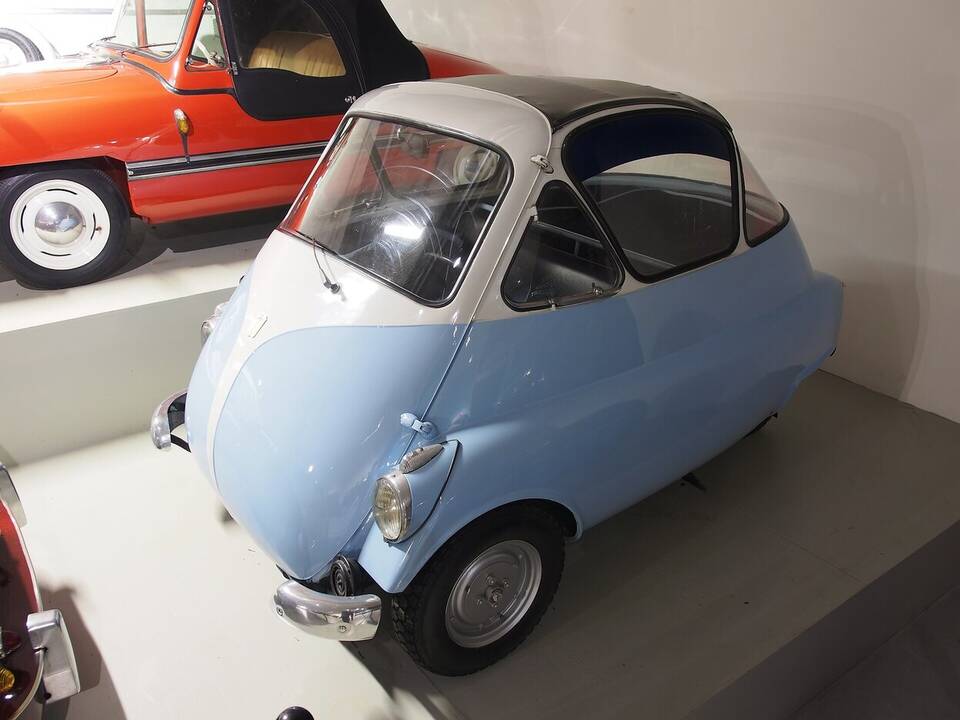
1953 Iso Isetta 236 at the Louwman Museum · Alf van Beem · Public domain
Research pending
A matching completed auction sale has not been verified for this exact year, body, trim, engine, transmission and market.
Joyride shows this gap instead of substituting an asking price, unsold bid or mismatched special vehicle.
More than a set of wheels.
Renzo Rivolta's Iso company moved from refrigerators into scooters and tiny vehicles. Its 1953 Isetta put two people behind a front door that carried the dashboard, steering wheel and column forward when opened. A 236 cc two-stroke engine drove two very closely spaced rear wheels. Iso later licensed the idea to BMW, whose motorcycle-engined version became much more famous.
Look a little closer.
Iso entered seven Isettas in the 1954 Mille Miglia and the Louwman Museum says they won the economy class.
Photos show an example of the model or generation. The pictured vehicle’s year, equipment, or modifications can differ from the specification described here.
The whole front became a door
The nose swings sideways, taking the dashboard, wheel and steering column with it. That makes a wide opening directly in front of the bench. It is playful to look at, but it was also practical packaging for a car only big enough for two people and almost no luggage.
Source: Louwman Museum · Iso Isetta ↗Do not turn it into a BMW by accident
BMW bought a licence, then replaced Iso's original two-stroke with a 250 cc four-stroke motorcycle engine and made visual changes. This profile keeps the 1953 Italian identity and 236 cc Iso powertrain; BMW's later production totals and 12 hp figure do not describe this exact car.
Source: BMW Group Classic · BMW Isetta model series ↗Where these facts come from
- Louwman Museum · Iso Isetta
- BMW Group Classic · BMW Isetta model series
- BMW Group Classic · Isetta 250 Standard
Selected facts checked for this edition. Some source pages link to broader model families. Last reviewed September 30, 2026.