
De Tomaso Pantera
A steel Italian mid-engine shape put a Ford V8 behind the seats and a five-speed transaxle at the rear.
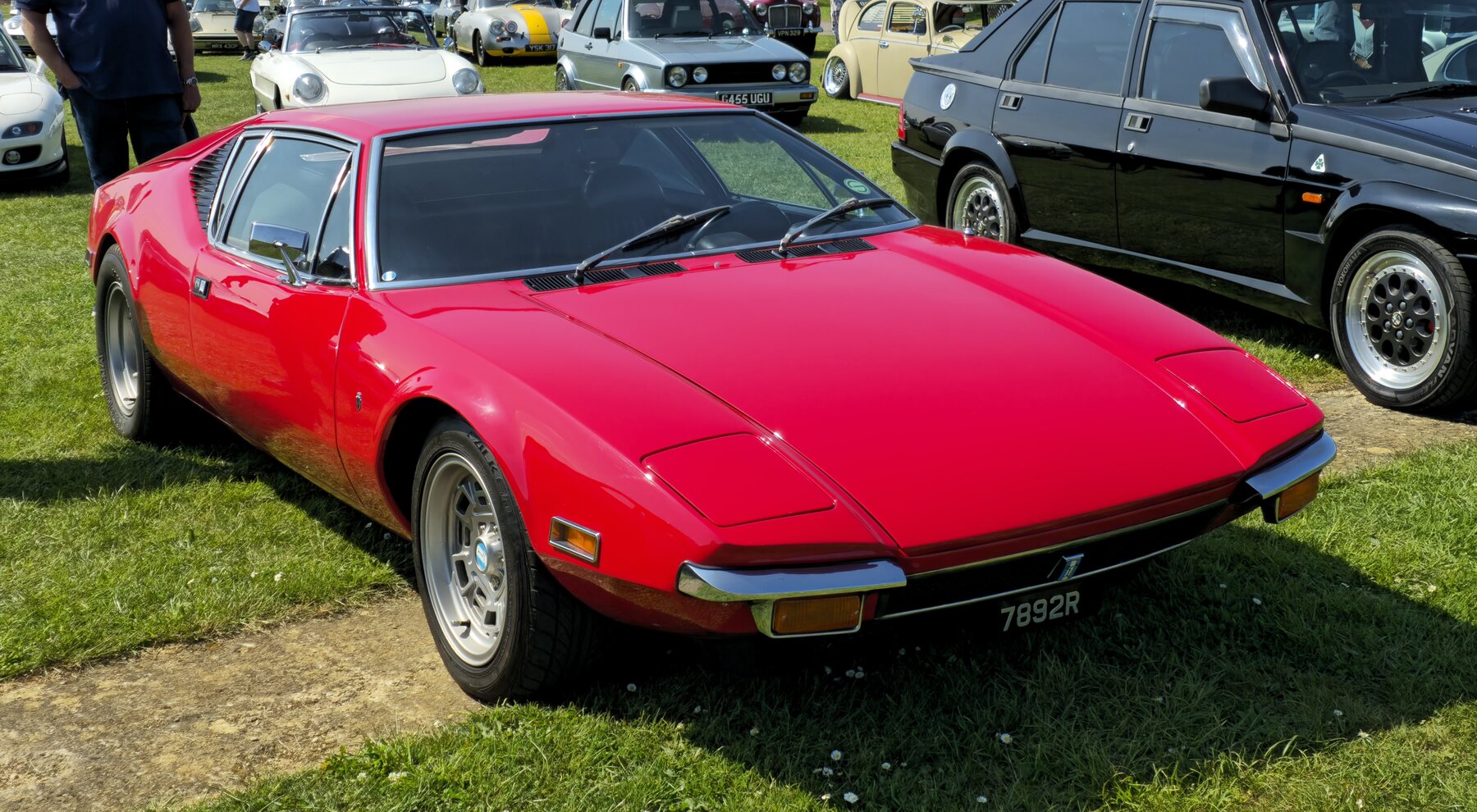
1971 Italy De Tomaso Pantera · Calreyn88 · CC BY-SA 4.0
What did this one sell for?
Make a guess, then reveal one identity-matched completed auction result. It is a comparison point, not a price promise.
Reveal the auction result
Based on a completed sale at Bring a Trailer, an estimated value for this vehicle is $68,000.
Why this sale: Exact 1971 early-production push-button Euro Pantera, chassis THPNLK01042, with 351-ci Cleveland V8 and ZF five-speed manual transaxle; located and registered in New York at sale. 79k kilometres shown; fitted with GTS graphics, vented hood, quarter-panel scoops, flared rear arches, MOMO wheel, aftermarket ignition, carburetor, intake and valve covers. Rust, paint chips, removed A/C compressor and an inoperative passenger window were disclosed.
Winning bid; Bring a Trailer's 5% buyer service fee, applicable VAT on the fee, taxes and transport are excluded. One auction result is a reference, not an appraisal; condition, history, options, location and market timing can change value. Accepted as a completed sale of a European-specification early push-button 1971 car with the profiled Cleveland/ZF drivetrain. The later U.S. residence, extensive modifications and condition issues remain explicit, so this is not a generic pristine-value claim.
More than a set of wheels.
De Tomaso and Ford developed the Pantera as a more producible exotic than the earlier Mangusta. Tom Tjaarda at Ghia shaped it, while Gian Paolo Dallara worked on its chassis and production engineering. The prototype appeared in Modena in March 1970 and at New York a few weeks later; customer production began in 1971. Early cars were narrow-bodied, and the first pre-assembly examples used hand-built Vignale bodies and push-button door handles. Numerous running changes preceded the separate Pantera L introduced for the 1972½ model year.
Look a little closer.
The gearbox is behind the engine and was rotated for the Pantera installation; that compact transaxle layout helped package the V8 in the middle of the car.
Photos show an example of the model or generation. The pictured vehicle’s year, equipment, or modifications can differ from the specification described here.
Italian shape, American production plan
Ford wanted a high-performance road car it could sell in greater numbers, while De Tomaso wanted a broader market. Their agreement paired Tjaarda's Ghia styling and Dallara's chassis work with Ford's Cleveland V8. Unlike the Mangusta's spine chassis, the Pantera used a full steel monocoque intended for more economical series production.
Source: De Tomaso UK Drivers Club · Pantera history ↗Why 'pre-L' is an identity boundary
The 1971 cars have the original narrow body. Very early examples have push-button door handles, but production evolved continuously. The later Pantera L added safety-related and comfort revisions plus a different front bumper for the U.S. market. A photograph or specification for a Pantera L therefore should not silently stand in for this 1971 launch-series car.
Source: De Tomaso UK Drivers Club · pre-L and Pantera L distinctions ↗The Cleveland V8 sits behind the cabin
A documented 1971 Pantera photographed with its rear cover open shows the mid-engine packaging and the 5.8-litre V8 installation. Because the source does not establish European versus U.S. market, narrow-body pre-L configuration or component originality, the view is labeled representative and is not evidence that every hose, ignition part or finish matches the launch car.
Source: Charles · 1971 De Tomaso Pantera engine view, CC BY 2.0 ↗Where these facts come from
- De Tomaso Automobili · Pantera legacy history and specification
- De Tomaso UK Drivers Club · Pantera development and pre-L identity
- Pantera Place · August 1971 road-test compilation
- Wikimedia Commons · 1971 Pantera open engine bay
Selected facts checked for this edition. Some source pages link to broader model families. Last reviewed October 2, 2026.