Bajaj Chetak 150
The original 1972 Chetak turned a Vespa Sprint-derived pressed-steel, hand-shifted two-stroke design into one of India's defining family-mobility machines.
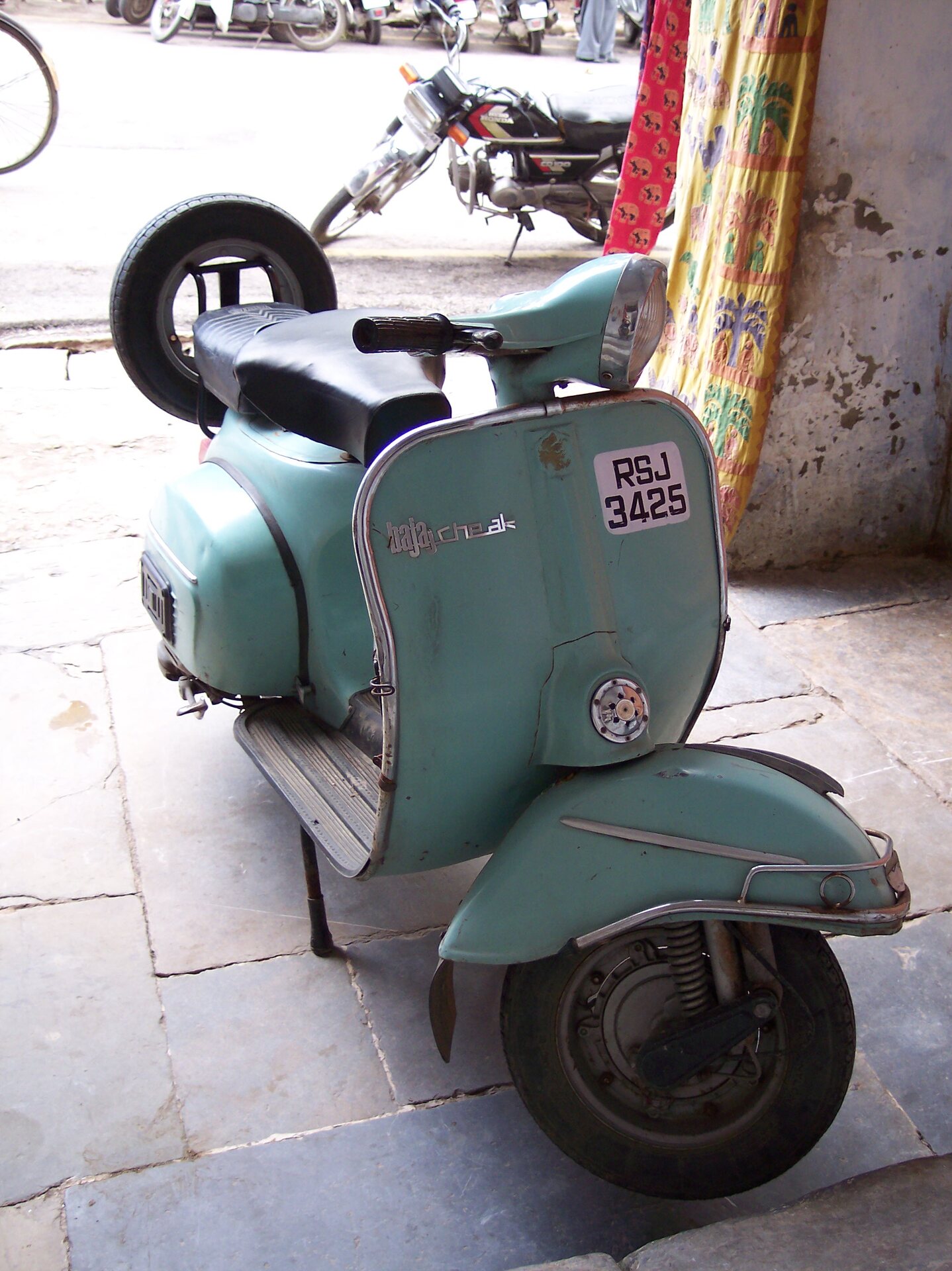
Bajaj Chetak 150 family; year and originality unverified · katanja · Public domain
Research pending
A matching completed auction sale has not been verified for this exact year, body, trim, engine, transmission and market.
Joyride shows this gap instead of substituting an asking price, unsold bid or mismatched special vehicle.
More than a set of wheels.
Bajaj's history marks 1972 as the arrival of the original Chetak after licensed Vespa manufacture began in 1960. Its pressed-steel body, side-mounted two-stroke engine and four-speed twist-grip shift made a compact, enclosed transport package. Demand later produced waiting lists measured in years, but that later historical context is not a uniform 1972 delivery-time claim.
Look a little closer.
The corrected wheel clue is 3.50-10 for Chetak; 3.50-8 belongs to the related Bajaj Super.
Photos show an example of the model or generation. The pictured vehicle’s year, equipment, or modifications can differ from the specification described here.
The body is the frame
Pressed-steel halves formed the load-bearing shell, integrating leg shield, floor and main structure rather than decorating a separate motorcycle frame. The engine beside the rear wheel preserved the central step-through and avoided a long chain.
Source: D'source Design in India archive ↗Correcting the wheel-size trap
A recovered note assigned 8-inch wheels to Chetak. Autocar's account distinguishes Chetak 3.50-10 from Bajaj Super 3.50-8, so this packet corrects the fitment. Wheel size affects stance, gearing, parts and photo matching, making the distinction editorially material.
Source: Autocar India Chetak history ↗Where these facts come from
- 80 Years of Bajaj Auto
- Bajaj Chetak: from inception to rebirth
- D'source Transport Automobiles 1971–1980
- U.S. Customs HQ 876001
Selected facts checked for this edition. Some source pages link to broader model families. Last reviewed October 3, 2026.