
Lancia Beta Montecarlo Spider
Pininfarina put a family of familiar Lancia mechanical parts behind two seats, wrapped them in a tiny wedge and rolled the roof away into the roll bar.
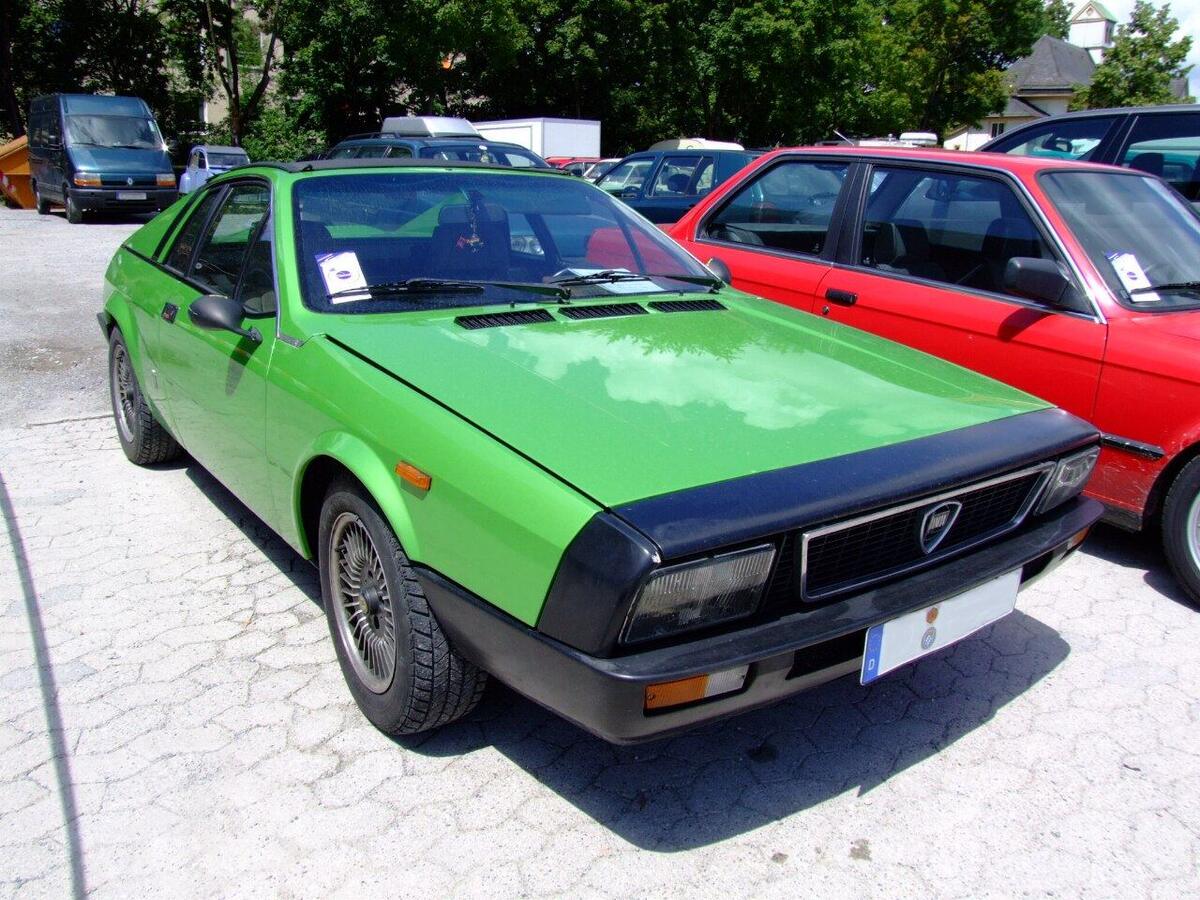
1975 Lancia Beta Montecarlo Spider cover · ChiemseeMan at German Wikipedia (original credit: Späth Chr.) · Public domain (PD-self)
What did this one sell for?
Make a guess, then reveal one identity-matched completed auction result. It is a comparison point, not a price promise.
Reveal the auction result
Based on a completed sale at Bring a Trailer, an estimated value for this vehicle is $27,250.
Why this sale: Exact 1975 Italian-market first-series Beta Montecarlo Spider, chassis 137AS0000370, with 2.0-litre Lampredi block and five-speed manual transaxle; first registered in Turin. 85k km shown. The car had a Scorpion-sourced cylinder head and camshaft, high-compression pistons, ANSA exhaust, MOMO steering wheel, Maserati wheels, revised suspension, RetroSound radio, a repainted left-front fender and a repainted rear decklid; rust was noted on rear suspension components.
Winning bid; Bring a Trailer's 5% buyer service fee, taxes, registration, transport and remedial work are excluded. One auction result is a reference, not an appraisal; condition, history, options, location and market timing can change value. Accepted as an exact year, Spider body, Italian-market and transmission match, with the material engine and chassis modifications kept visible. It is a completed sale of a modified example, not a stock-condition benchmark or a claim about the globally latest sale.
More than a set of wheels.
The Montecarlo began as Fiat-Pininfarina project X1/20, survived oil-crisis delays and gained a competition preview through the Abarth-Pininfarina SE 030. Lancia revealed the production Beta Montecarlo at Geneva in March 1975. Its two-liter twin-cam engine sat sideways behind the cabin beside a five-speed transaxle, while Pininfarina designed, built and assembled the dedicated monocoque at Grugliasco. The Spider was really a targa-style two-seater whose fabric roof rolled into the rollover-bar structure.
Look a little closer.
A contemporary report praised the big front luggage space but joked that heat from the radiator and brakes made it a bad place to carry ice cream home.
Photos show an example of the model or generation. The pictured vehicle’s year, equipment, or modifications can differ from the specification described here.
A production car with a racing prologue
Before the road car arrived, Abarth and Pininfarina turned the delayed project into the SE 030 competition prototype. It finished second in the 1974 Giro d'Italia behind a Lancia Stratos. That result helped persuade Fiat managers that the project belonged under the Lancia badge, and the Montecarlo name linked it to the company's rally victories.
Source: Stellantis Heritage · Lancia Beta Montecarlo ↗Pininfarina designed the way it was built
The Montecarlo's unitary shell was not borrowed from another production model: Pininfarina engineered, produced and assembled it at Grugliasco. ACI's archive identifies two Pininfarina patents on the car—a flush windscreen without conventional trim and the Spider roof that rolls like a blind into the roll-bar housing.
Source: Automobile Club d'Italia archive · Beta Montecarlo ↗The spare travels with the engine
An exact-1975 Spider reference view makes the mid-engine packaging easy to read: the Lampredi four sits across the rear bay and the spare wheel is strapped beside it. That leaves the separate compartment at the front available for luggage. The photograph proves the visible layout and engine family, not that every service component on this survivor is factory-original.
Source: Wikimedia Commons · 1975 Beta Montecarlo Spider engine bay ↗Where these facts come from
- Stellantis Heritage · Lancia Beta Montecarlo
- Automobile Club d'Italia archive · Beta Montecarlo
- Motor Sport · July 1975 launch drive
- Wikimedia Commons · 1975 Beta Montecarlo Spider engine bay
Selected facts checked for this edition. Some source pages link to broader model families. Last reviewed October 6, 2026.