
Bimota DB1
Federico Martini wrapped Ducati's 750 F1 engine in a tiny triangular steel chassis and smooth two-piece body shell. The DB1 was Bimota's first all-Italian motorcycle—and the model that helped the company survive.
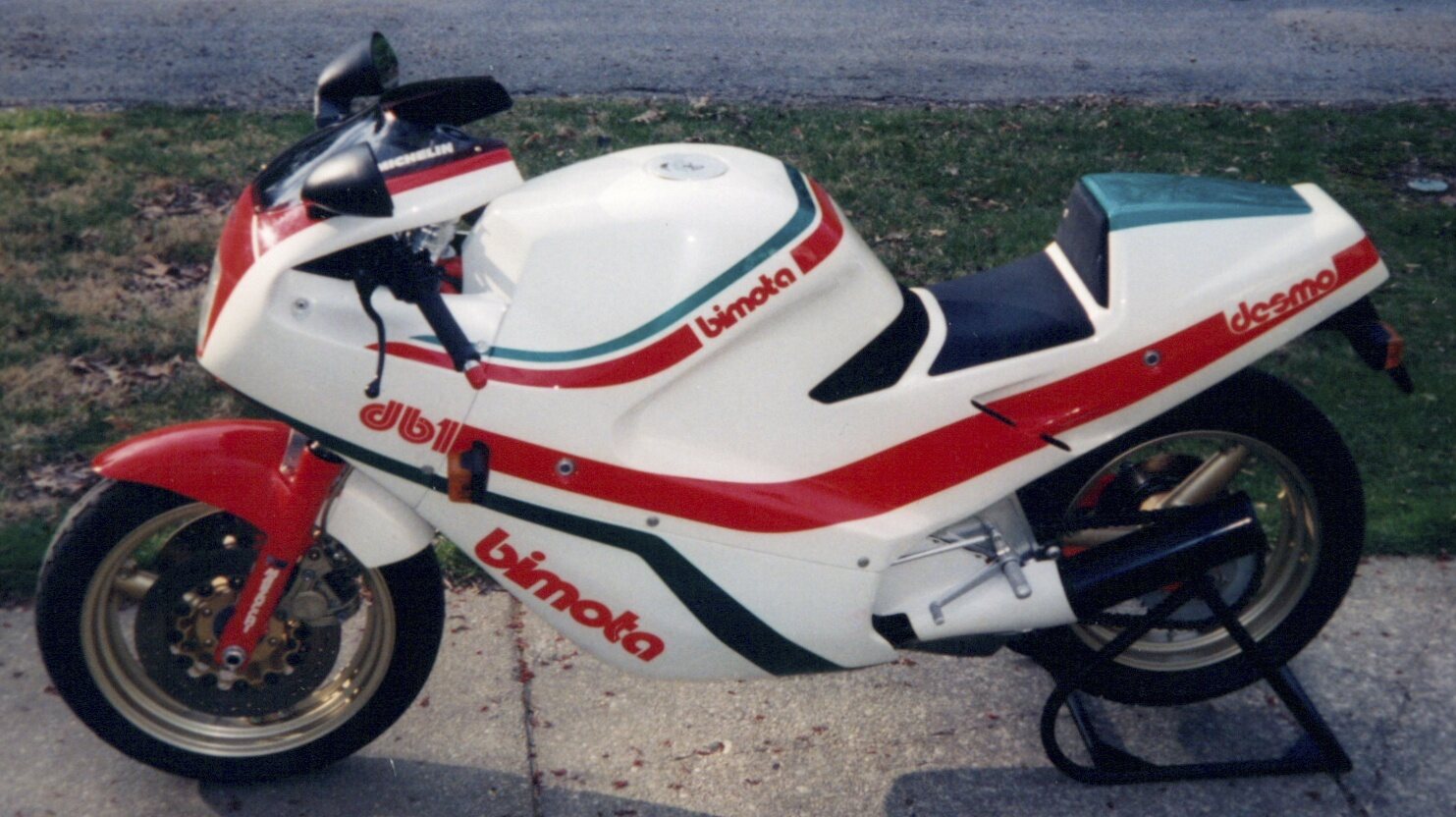
1985 Italy Bimota DB1 · Ducati88M5 · CC BY-SA 3.0
Research pending
A matching completed auction sale has not been verified for this exact year, body, trim, engine, transmission and market.
Joyride shows this gap instead of substituting an asking price, unsold bid or mismatched special vehicle.
More than a set of wheels.
Cagiva originally commissioned Bimota to build a Ducati-powered sports prototype. When Cagiva chose its own path, Bimota engineer Federico Martini developed the idea into a Formula 1 racer and then a closely related road bike. The DB1 debuted in 1985 with a standard Ducati 750 F1 engine, expensive race-grade suspension and brakes, and fully enclosed fiberglass bodywork. Its compactness and finish made it more than an engine transplant: it was a complete packaging exercise. Bimota built 453 standard DB1s before higher-output S and SR derivatives followed.
Look a little closer.
The letters DB identify a Ducati-powered Bimota—the first such model in the company’s naming sequence.
Photos show an example of the model or generation. The pictured vehicle’s year, equipment, or modifications can differ from the specification described here.
Packaging as performance
The DB1's innovation was not huge power. Martini shortened and lowered almost everything around a known engine: a 1,380 mm wheelbase, low seat, tiny triangular frame and bodywork that became tank cover, seat and tail. Less bulk meant the rider and machine could change direction with less effort.
Source: Bimota DB1: the bike that saved Bimota ↗The body shell hid workshop-grade details
Under the smooth fiberglass were pieces machined from Avional aluminum, remote-adjustable suspension and race-style floating brakes. The shell detached with quick fasteners, so its futuristic cleanliness did not make the bike impossible to service. It also made the DB1 look like one designed object rather than a frame with parts bolted on.
Source: Bimota DB1: the bike that saved Bimota ↗Read prototype promises separately from road-bike specifications
Alan Cathcart's July 1985 factory-visit report caught the DB1 before road production: Italian race development was planned from June, with street production targeted for September. He reported development-engine output of 73 bhp at the gearbox and discussed proposed performance parts, including a future four-valve head. These were development results and plans, not a specification for every standard DB1 sold. This profile therefore keeps its separately sourced standard-road-bike power figure and two-valve engine description; the contemporary report explains the project in progress rather than silently upgrading the production bike.
Source: Alan Cathcart · Bimota On the Mend, Cycle World, July 1985 ↗Where these facts come from
Selected facts checked for this edition. Some source pages link to broader model families. Last reviewed October 2, 2026.