Toyota Supra RZ
The 1993 Supra RZ put a twin-turbo straight-six in front, a six-speed manual in the middle and driven wheels at the back. Toyota then worked hard to remove more than 100 kg compared with the previous Supra generation.
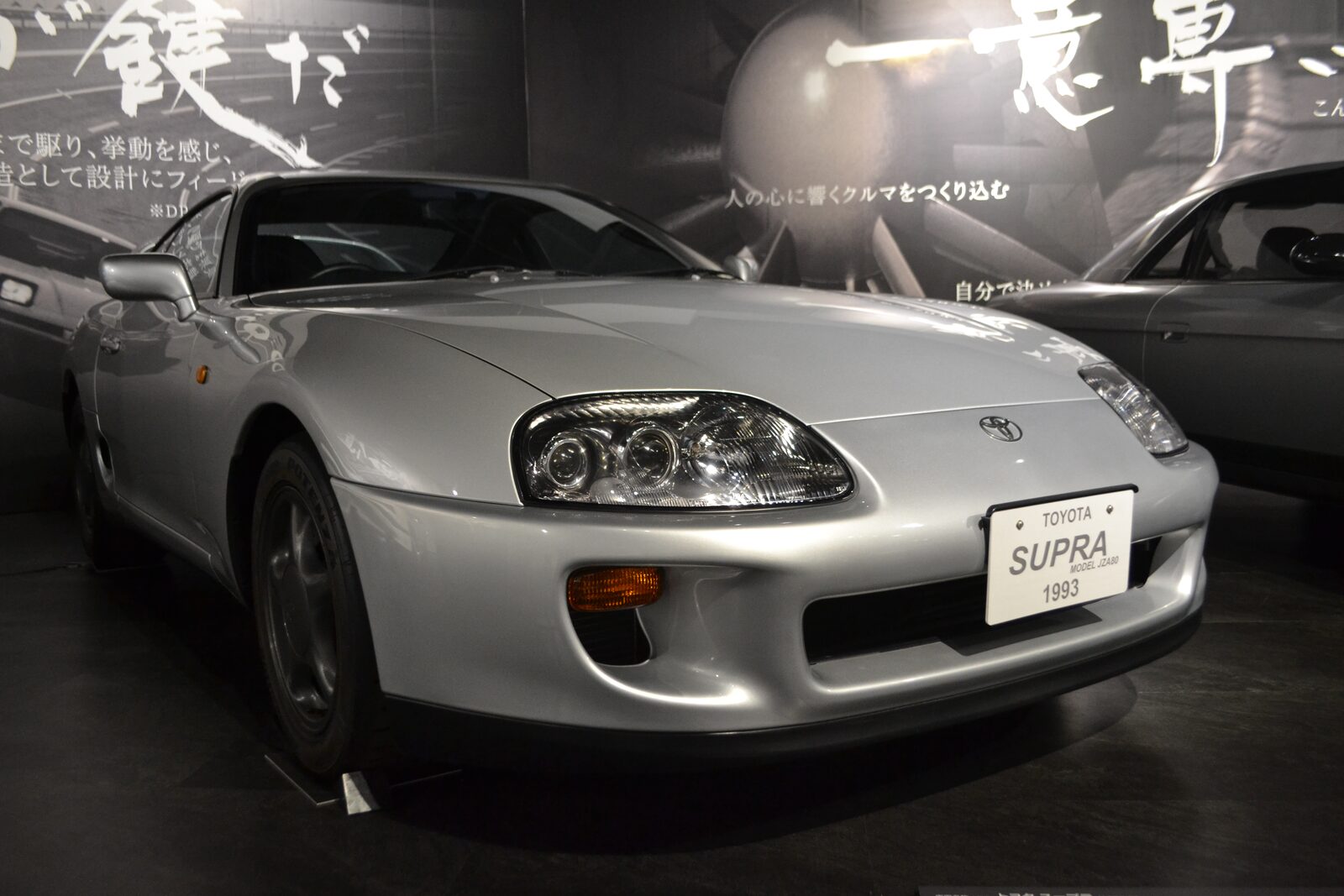
1993 Toyota E-JZA80 Supra RZ six-speed · 先従隗始 · CC0 1.0
Research pending
A matching completed auction sale has not been verified for this exact year, body, trim, engine, transmission and market.
Joyride shows this gap instead of substituting an asking price, unsold bid or mismatched special vehicle.
More than a set of wheels.
Toyota launched the redesigned Japanese Supra on May 24, 1993. The RZ was the focused twin-turbo grade: lighter than the luxury GZ, fitted with Bilstein dampers and paired with Toyota's first six-speed manual, developed with Getrag. Its rounded body hid a careful weight-saving campaign using an aluminum hood, plastic fuel tank, hollow-fiber carpet and a single exhaust.
Look a little closer.
The RZ's optional powered front spoiler lowered itself above 90 km/h and retracted below 70 km/h when its automatic mode was switched on.
Photos show an example of the model or generation. The pictured vehicle’s year, equipment, or modifications can differ from the specification described here.
RZ, not GZ or an export Turbo
Toyota's Japanese lineup separated the normally aspirated SZ, sports-focused twin-turbo RZ and more luxurious twin-turbo GZ. The representative RZ weighs 1,490 kg, 50 kg less than the GZ in Toyota's heritage table. This profile retains the Japanese 280-PS net rating and does not substitute export horsepower figures.
Source: Toyota 75 Years — 1993 Supra vehicle lineage ↗Less is more, item by item
The A80 gained larger wheels and new safety hardware, yet Toyota says it was more than 100 kg lighter than its predecessor. The company lists an aluminum hood, plastic fuel tank, hollow-fiber carpet, single exhaust and hollow-bead resin rear spoiler among the savings. The details show that mass reduction was a whole-car project, not one exotic panel.
Source: Toyota — All-new Supra launch release ↗A chassis matched to the engine
Toyota gave all four corners double-wishbone suspension with light-alloy upper arms, while the RZ added Bilstein dampers. Turbo cars used wider rear tires than fronts, and lateral-G-sensing four-channel ABS was standard. Those choices were meant to support braking and cornering, not just the 2JZ-GTE's headline output.
Source: Toyota — All-new Supra launch release ↗Where these facts come from
Selected facts checked for this edition. Some source pages link to broader model families. Last reviewed October 1, 2026.