
Peugeot 106 Electric
A real battery-powered Peugeot you could buy in France when most electric cars were still experiments.
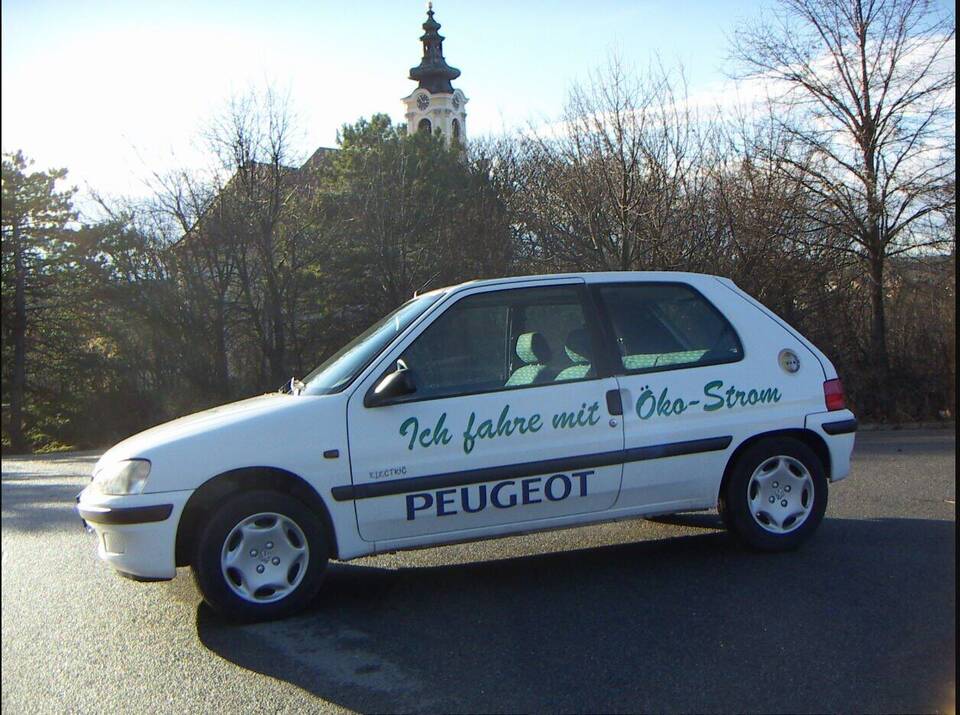
Peugeot 106 Electric · Solarenergy2 · CC BY-SA 3.0
Research pending
A matching completed auction sale has not been verified for this exact year, body, trim, engine, transmission and market.
Joyride shows this gap instead of substituting an asking price, unsold bid or mismatched special vehicle.
More than a set of wheels.
Peugeot had already supplied electric J5 vans to organizations, then opened electric-car sales to private buyers in July 1995 with the 106 Electric. A 1996 car combined the familiar small 106 body with a direct-current motor and nickel-cadmium batteries. Peugeot sent the body shell to Heuliez for its electric conversion. It was slow by modern EV standards, but it was a genuine production city car decades before today's battery hatchbacks.
Look a little closer.
Peugeot says the little 106 held a world record for electric-car sales until 2010.
Photos show an example of the model or generation. The pictured vehicle’s year, equipment, or modifications can differ from the specification described here.
Maximum power is not continuous power
Peugeot's archive gives the motor two honest figures: 11 kW continuous and 20 kW maximum. The lower number is power it can sustain; the higher one is available for shorter demands. Calling it only a 20 kW motor would hide that important distinction.
Source: Peugeot · 70 years of electric mobility ↗An old battery chemistry with a serious job
The pack used 6 V, 100 Ah nickel-cadmium blocks rather than modern lithium-ion cells. Peugeot quoted 13–18 kWh consumption, roughly seven hours for a full household-socket charge and up to about 120 km range. These are period manufacturer figures, not a modern WLTP rating.
Source: Peugeot · 70 years of electric mobility ↗Where these facts come from
- Peugeot · 70 years of electric mobility
- Peugeot · electric journey from VLV to e-2008
- Peugeot · 106 30th-anniversary museum selection
- Peugeot period-brochure index · March 1996 French 106 range
Selected facts checked for this edition. Some source pages link to broader model families. Last reviewed September 30, 2026.