
Toyota WiLL Vi
The WiLL Vi looked like a tiny storybook carriage, but its real experiment was bigger: Toyota joined food, travel, electronics and household-goods companies to build one playful lifestyle brand.
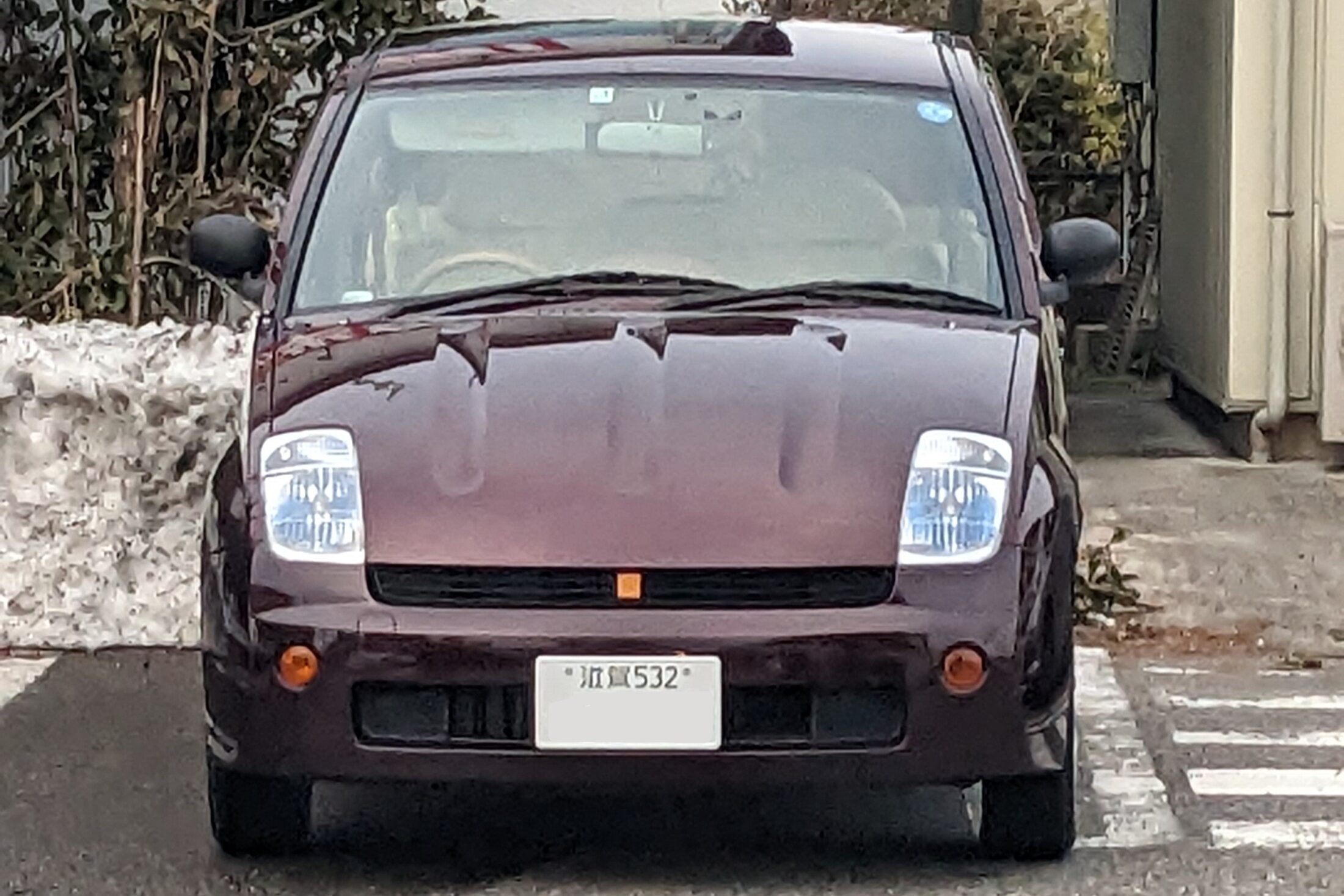
Toyota GH-NCP19 WiLL Vi (23021116490).jpg · 先従隗始 · CC0
Research pending
A matching completed auction sale has not been verified for this exact year, body, trim, engine, transmission and market.
Joyride shows this gap instead of substituting an asking price, unsold bid or mismatched special vehicle.
More than a set of wheels.
Toyota's young internal Virtual Venture Company helped create WiLL with four other major Japanese businesses in August 1999. The WiLL Vi became the project's first car on January 17, 2000. Its four-door body used the first Vitz platform, an arched beltline and a backward-slanting rear window, while the cabin used center-mounted gauges and sofa-like bench seats. This profile covers the original hardtop launch car, not the later canvas-top or limited WEB version.
Look a little closer.
Toyota described the WiLL Vi as a four-door personal capsule, and the launch release compared its cliff-cut rear shape with horse-drawn carriages.
Photos show an example of the model or generation. The pictured vehicle’s year, equipment, or modifications can differ from the specification described here.
A car inside a shared lifestyle label
WiLL was not only a Toyota badge. Asahi Breweries, Kao, Kinki Nippon Tourist and Matsushita joined the original cross-industry project, with other companies following. Toyota's VVC used younger internally recruited employees and new planning methods; the Vi was the first automotive result.
Source: Toyota 75 Years — Strengthening Development through VVC ↗Playful shape, practical engineering
The backward-slanting rear glass and ribbed panels made the car instantly recognizable, but Toyota also used 15-inch tires at the corners, high seating, center gauges, ABS, brake assist, front airbags and WIL-design seats. The result was meant to feel friendly without treating usability as an afterthought.
Source: Toyota — Highly Awaited WiLL Vi Goes on Sale Nationwide ↗Where these facts come from
- Toyota 75 Years — WiLL Vi vehicle lineage
- Toyota — Highly Awaited WiLL Vi Goes on Sale Nationwide
- Toyota 75 Years — Strengthening Development through VVC
Selected facts checked for this edition. Some source pages link to broader model families. Last reviewed October 1, 2026.