
BMW C evolution
BMW turned electric-car battery know-how into a fast, practical maxi-scooter for European cities.
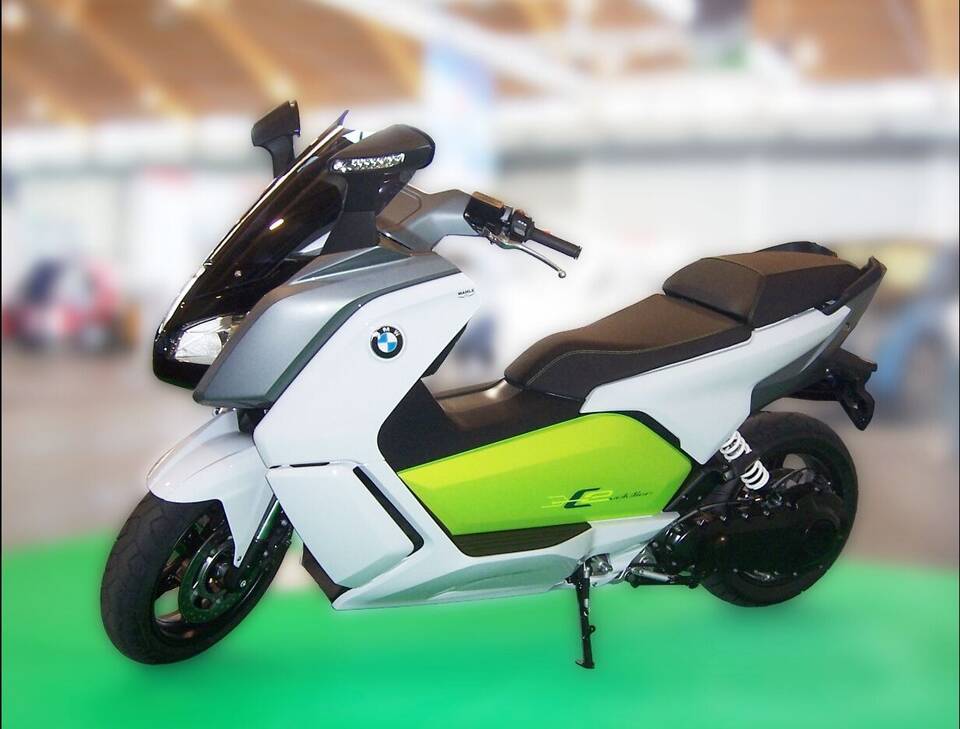
BMW C evolution photographed in 2014 · Bergfalke2 · CC BY-SA 3.0
Research pending
A matching completed auction sale has not been verified for this exact year, body, trim, engine, transmission and market.
Joyride shows this gap instead of substituting an asking price, unsold bid or mismatched special vehicle.
More than a set of wheels.
BMW Motorrad moved from rideable development scooters to the production C evolution in 2014. The original European model combined an 8 kWh air-cooled battery with a liquid-cooled motor and a scooter-style step-through body. It could travel at motorway speed, recover energy while slowing, and recharge from a household outlet. BMW also used battery modules and electronics related to the i3 electric car.
Look a little closer.
The battery case is not just cargo: its die-cast aluminium shell forms the central structural piece of the scooter's chassis.
Photos show an example of the model or generation. The pictured vehicle’s year, equipment, or modifications can differ from the specification described here.
Rated power and peak power do different jobs
BMW homologated the scooter at 11 kW under ECE R85 but allowed 35 kW peak output for acceleration. The lower figure describes sustained rated output; the peak explains why the scooter could reach 100 km/h in BMW's quoted 6.2 seconds.
Source: BMW Group PressClub · The new BMW C evolution ↗Four modes changed how slowing felt
Road, Eco Pro, Sail and Dynamic adjusted both acceleration and regenerative braking. Sail removed most coast regeneration so the scooter could glide; Eco Pro softened acceleration and maximized recovery; Dynamic combined full acceleration with strong regeneration.
Source: BMW Group PressClub · The new BMW C evolution ↗Where these facts come from
- BMW Group PressClub · The new BMW C evolution
- BMW Group PressClub · English technical PDF attachment
- BMW Group 2014 sustainability presentation · C evolution launch
- BMW Motorrad · C evolution technical data archive
Selected facts checked for this edition. Some source pages link to broader model families. Last reviewed September 30, 2026.