
BMW i8
BMW wrapped a carbon-fibre passenger cell around a tiny turbo engine, an electric front axle and the shape of a science-fiction supercar.
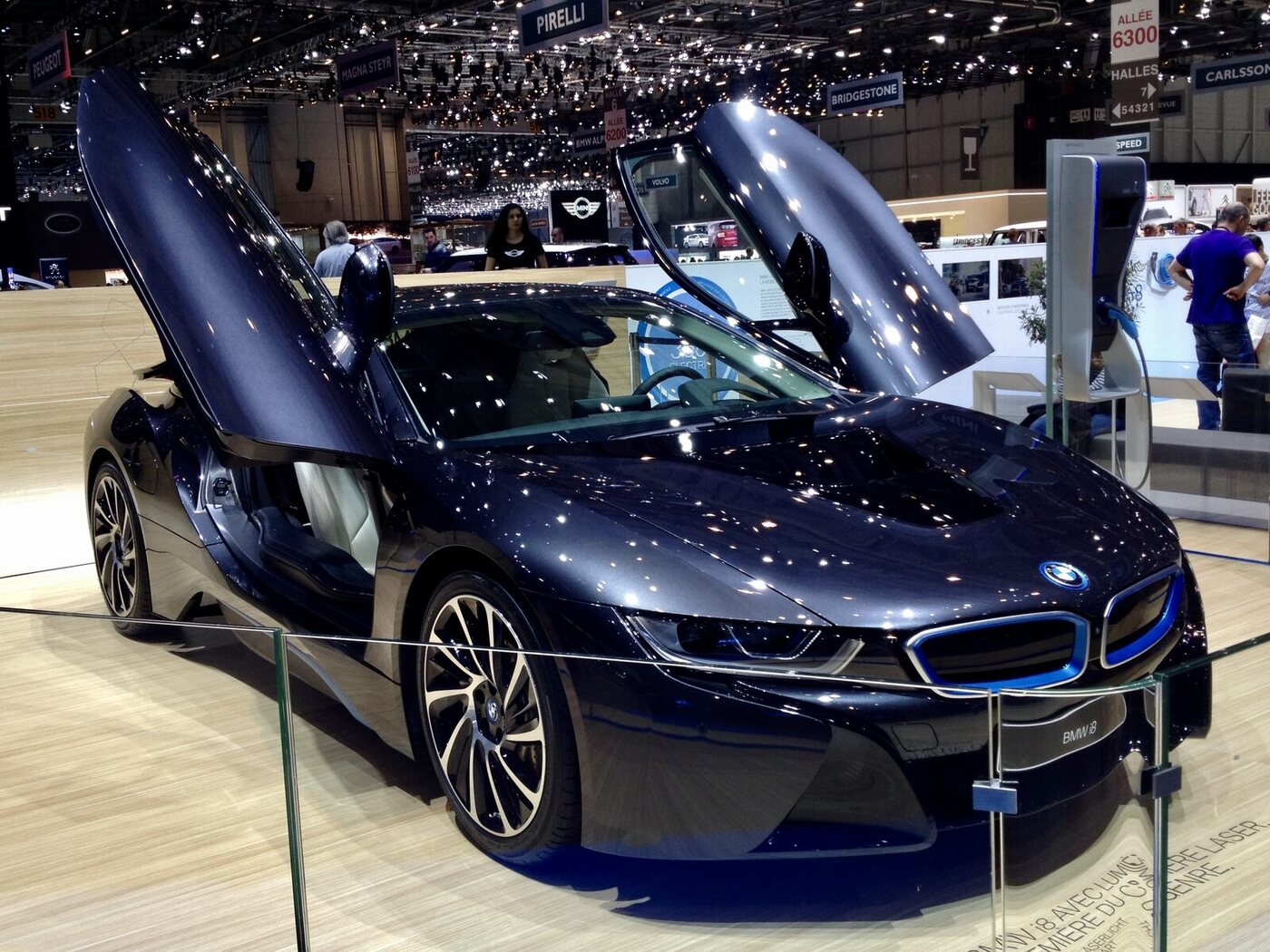
2014 BMW i8 at the Geneva Motor Show · Ank Kumar · CC BY-SA 4.0
Research pending
A matching completed auction sale has not been verified for this exact year, body, trim, engine, transmission and market.
Joyride shows this gap instead of substituting an asking price, unsold bid or mismatched special vehicle.
More than a set of wheels.
BMW presented the production i8 in September 2013 and launched it in Europe in 2014. Its plug-in hybrid system combined a rear-driving 1.5-litre turbo three-cylinder with an electric motor driving the front wheels. The two systems could work separately or together, giving the 2+2 coupé electric city driving and all-wheel-drive performance without using a giant engine.
Look a little closer.
The i8's centre of gravity sat less than 460 mm above the road—lower than many pure sports cars—even though it carried both an engine and a battery.
Photos show an example of the model or generation. The pictured vehicle’s year, equipment, or modifications can differ from the specification described here.
Two powertrains, one all-wheel-drive system
There is no mechanical driveshaft joining the axles. Software blends the front electric motor with the rear gasoline engine, so the i8 can be front-wheel drive in electric mode, rear-wheel drive in some conditions, or all-wheel drive when both work together.
Source: BMW Group PressClub · production BMW i8 technical press kit ↗Lightweight construction carried the idea
BMW split the car into an aluminum Drive module for battery, powertrains and chassis, plus a carbon-fibre Life module for the cabin. The result was a 1,490 kg DIN kerb weight despite the dual powertrains and four-seat layout.
Source: BMW Group PressClub · BMW i8 specifications ↗Where these facts come from
- BMW Group PressClub · production BMW i8 technical press kit
- BMW Group PressClub · March 2014 BMW i8 specifications
Selected facts checked for this edition. Some source pages link to broader model families. Last reviewed September 30, 2026.