
AMC Eagle Wagon
A family wagon on tall suspension with power always reaching all four wheels—years before 'crossover' became a common word.
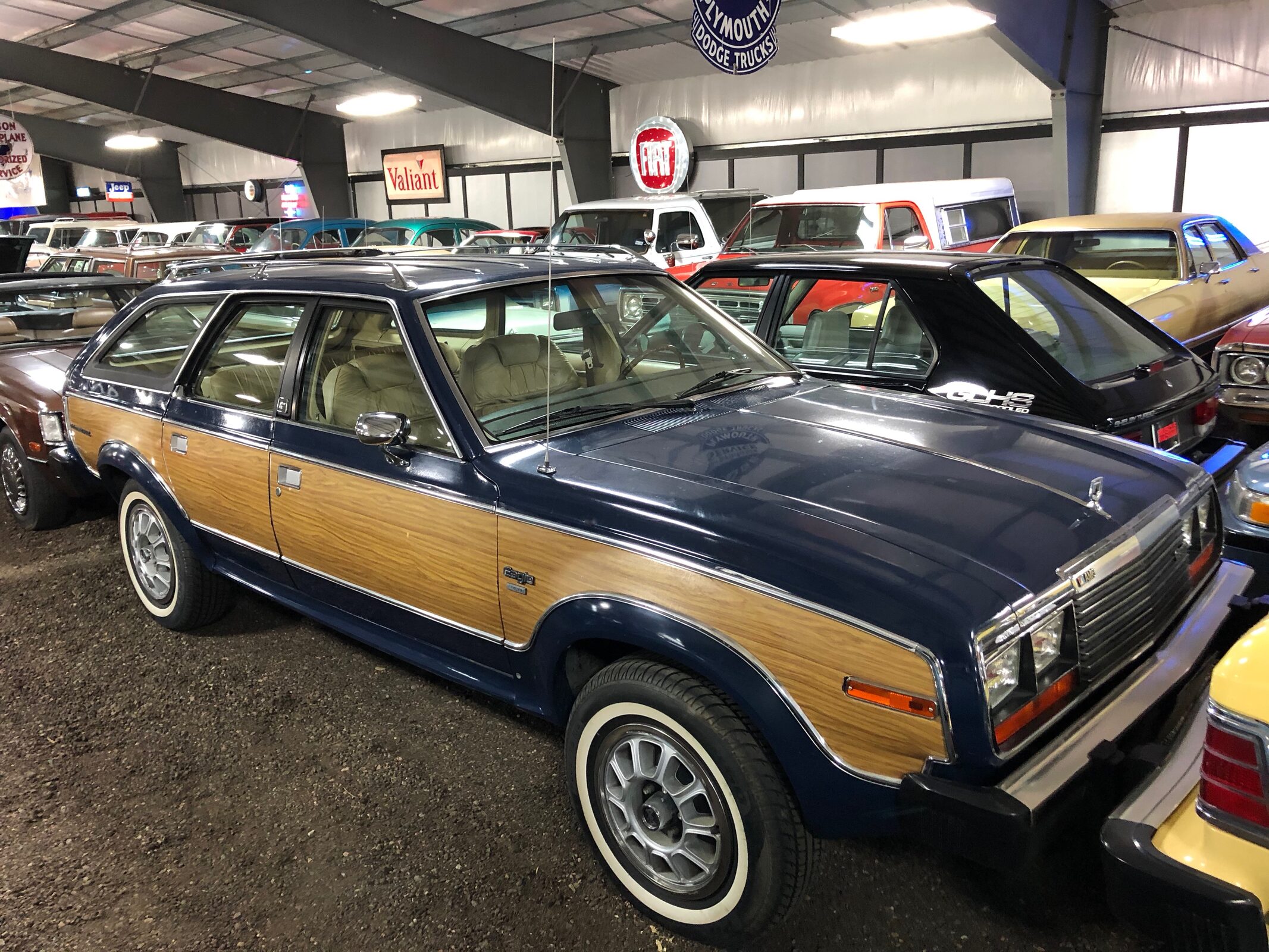
1980 AMC Eagle Limited wagon in blue with woodgrain at Rambler Ranch 1of3.jpg · CZmarlin — Christopher Ziemnowicz, a photo credit would be appreciated if this image is used anywhere other than Wikipedia. Please also include the location of the image: the Rambler Ranch collection in Elizabeth, Colorado. See: https://www.ramblerranch.com · CC BY-SA 4.0
Research pending
A matching completed auction sale has not been verified for this exact year, body, trim, engine, transmission and market.
Joyride shows this gap instead of substituting an asking price, unsold bid or mismatched special vehicle.
More than a set of wheels.
American Motors created the Eagle by combining passenger-car space and comfort with a full-time four-wheel-drive system. For 1980 it offered coupe, sedan and wagon bodies; the wagon provided the most cargo space and became the shape most closely associated with the name. The system could be used on dry pavement because a limited-slip centre differential allowed front and rear axles to turn at slightly different speeds.
Look a little closer.
AMC's brochure called the Eagle neither a truck nor an ordinary car. Its recipe—car body, extra clearance and four driven wheels—looks a lot like today's crossover.
Photos show an example of the model or generation. The pictured vehicle’s year, equipment, or modifications can differ from the specification described here.
Four-wheel drive for pavement too
Traditional part-time 4WD could bind on dry roads because front and rear axles were forced to turn together. The Eagle's centre differential allowed a small speed difference while its limited-slip mechanism managed traction, so AMC promoted it as full-time and automatic.
Source: 1980 AMC Eagle sales brochure ↗Cargo car, not just trail machine
The wagon kept its rear-wheel housings narrow enough for a broad load floor, used a split tailgate with upper glass lifting and lower panel dropping, and expanded from 40.3 to 71.3 cubic feet when the rear seat was folded. That family usefulness is central to its historical importance.
Source: 1980 AMC Eagle sales brochure ↗Where these facts come from
- American Motors · 1980 AMC Eagle sales brochure
- American Motors · 1980 AMC Data Book
- Automotive History Preservation Society · 1980 AMC Eagle brochure record
- Hagerty · Unique and memorable AMC Eagle was a pioneer
Selected facts checked for this edition. Some source pages link to broader model families. Last reviewed October 1, 2026.