
Aston Martin DB5
The famous shape matters, but the DB5's real step forward was mechanical: four litres, five synchronized gears and stronger brakes.
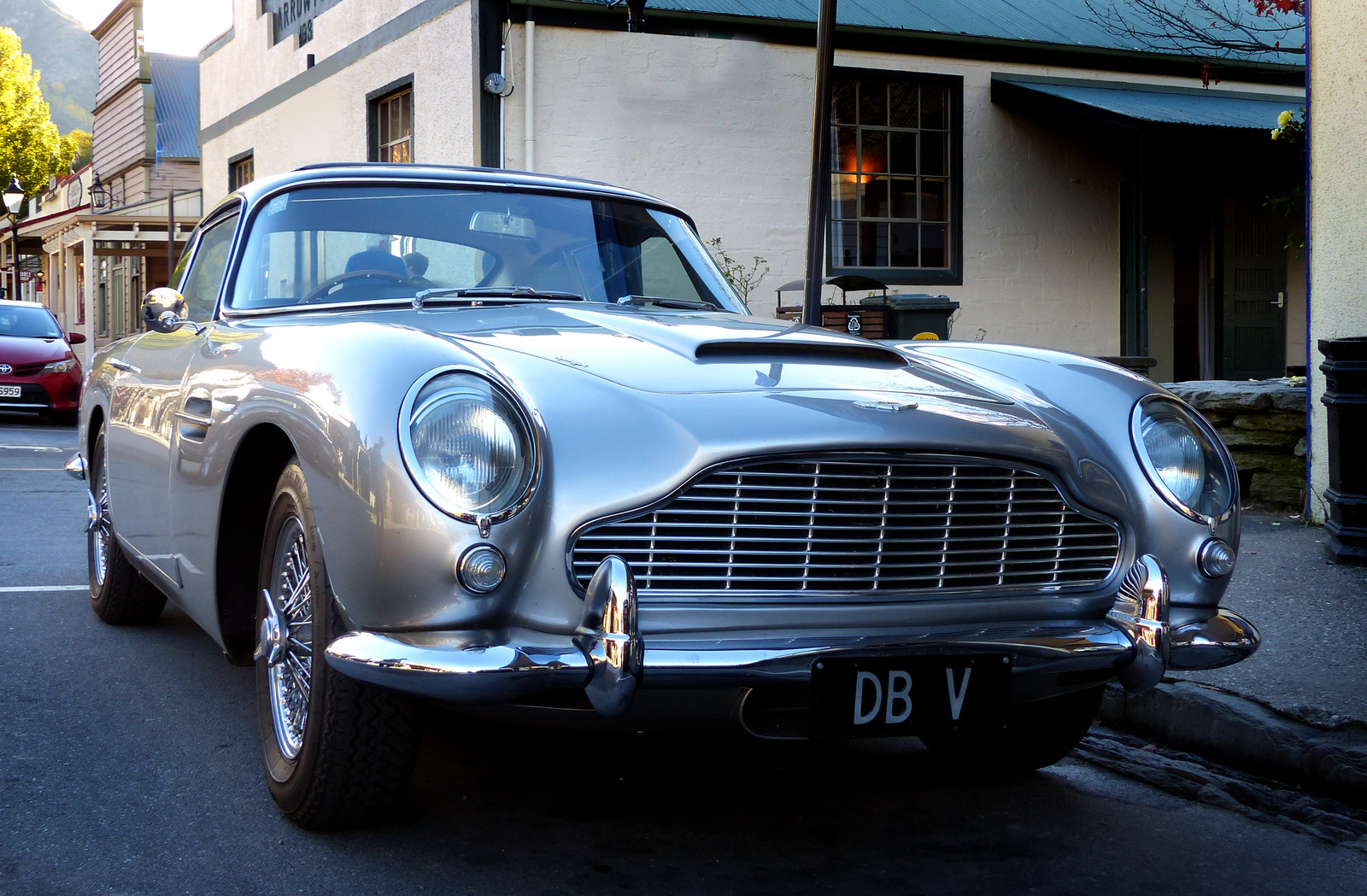
1963 Aston Martin DB5 (16643031603).jpg · Bernard Spragg. NZ · CC0
Research pending
A matching completed auction sale has not been verified for this exact year, body, trim, engine, transmission and market.
Joyride shows this gap instead of substituting an asking price, unsold bid or mismatched special vehicle.
More than a set of wheels.
Aston Martin evolved the late DB4 into the DB5 rather than starting again. The body still used Touring's Superleggera method, while the enlarged straight-six, five-speed ZF gearbox and Girling disc brakes made the new badge more than a film-star costume. This profile fixes the identity at the standard 1963 saloon so later Vantage carburettors and movie gadgets do not leak into the specification.
Look a little closer.
Aston Martin's own history lists electric windows among the DB5's improvements—luxury hardware sharing a dashboard with the instruments that made the cabin famous.
Photos show an example of the model or generation. The pictured vehicle’s year, equipment, or modifications can differ from the specification described here.
A DB4 evolution with a new mechanical center
The DB5 retained much of the Series V DB4's form, but its four-litre engine, full-synchromesh ZF five-speed gearbox and twin-servo Girling disc brakes changed how the car accelerated, shifted and stopped. That combination is the useful engineering story behind the familiar silhouette.
Source: Aston Martin · DB5 & DB5 Convertible ↗Standard and Vantage are not interchangeable
The standard DB5 used three SU carburettors. Aston Martin separately offered a Vantage with three Weber carburettors and different camshafts. Joyride therefore labels this page as the standard launch saloon instead of using the higher-output Vantage identity as a generic DB5 claim.
Source: Hagerty · 1963–1965 Aston Martin DB5 overview ↗Where these facts come from
Selected facts checked for this edition. Some source pages link to broader model families. Last reviewed October 21, 2026.