
BMW R 4
BMW stretched the small-single idea into a 400 cc utility motorcycle, with a stronger frame and a neatly aligned route for power to the back wheel.
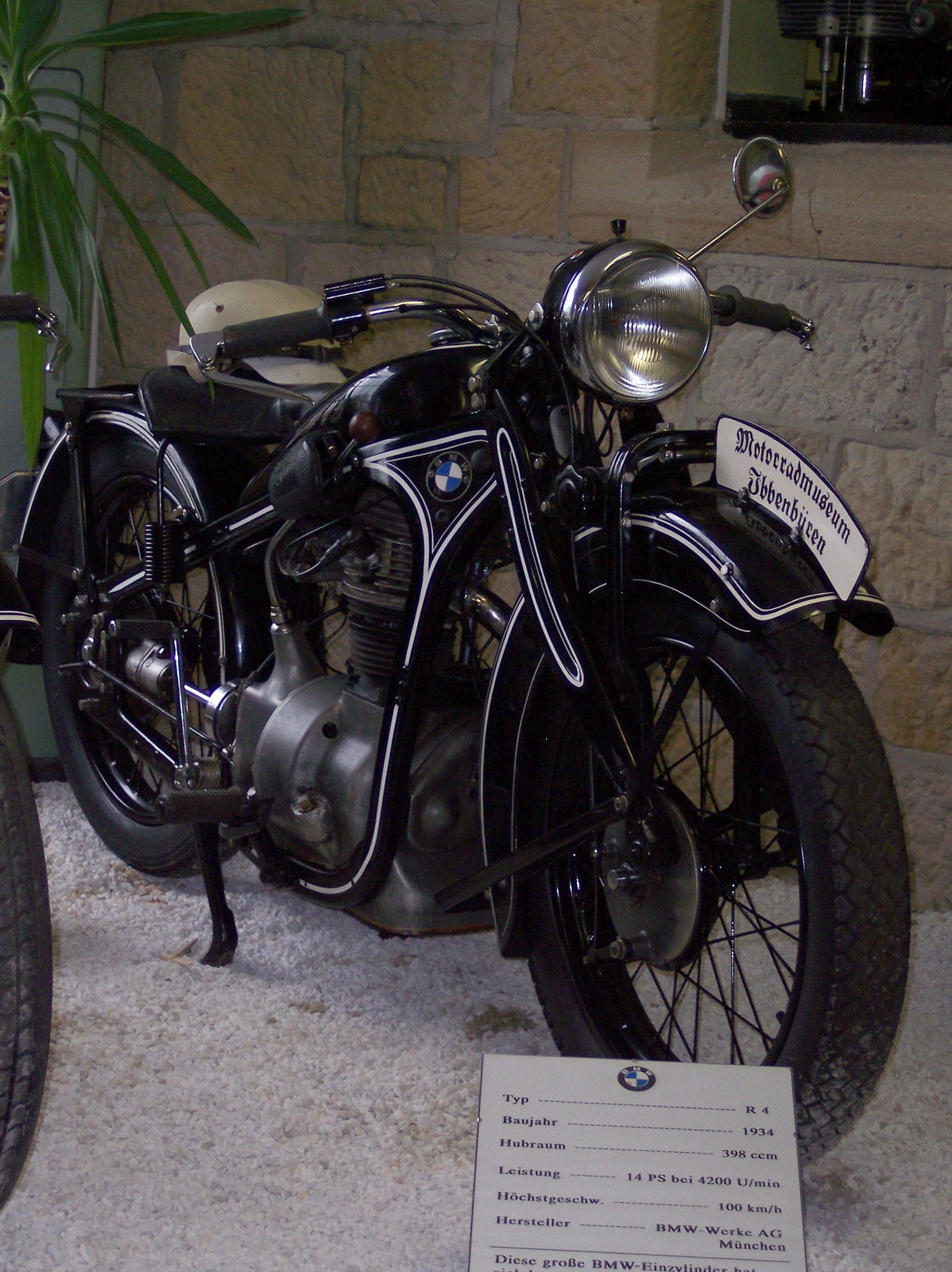
BMW R 4 1934.jpg · Stahlkocher · CC BY-SA 3.0
Research pending
A matching completed auction sale has not been verified for this exact year, body, trim, engine, transmission and market.
Joyride shows this gap instead of substituting an asking price, unsold bid or mismatched special vehicle.
More than a set of wheels.
The R 4 arrived in 1932 between the small R 2 and BMW’s 750 cc twins. It filled a gap left by the discontinued 500 cc models. Its 12 PS output let it compete with larger side-valve motorcycles, and police and military orders became important to its commercial success. Successive updates changed both engine output and transmission, so this profile concentrates on the launch version.
Look a little closer.
The 1932 machine had three forward gears; the second series gained four.
Photos show an example of the model or generation. The pictured vehicle’s year, equipment, or modifications can differ from the specification described here.
Why the crankshaft sits to one side
BMW’s historical description highlights the right-offset crank. Its purpose was to permit a straight power train toward the rear wheel. This is a packaging decision: engineers arranged the working parts so the machine could carry power through its chassis with a direct layout.
Source: BMW Motorrad · Motorcycles of the 1930s ↗A model name can hide a changing motorcycle
The first R 4 used a hand-controlled three-speed gearbox. The museum’s series account identifies a four-speed replacement for 1933. BMW’s catalogue then records an output increase to 14 PS from 1934. Those changes explain why a later R 4 specification cannot automatically describe a 1932 example.
Source: Jihočeské Motorcycle Museum · R 4 factory archive and series changes ↗Where these facts come from
- BMW Group Classic · BMW R 4
- BMW Motorrad · Motorcycles of the 1930s
- Jihočeské Motorcycle Museum · R 4 factory archive and series changes
Selected facts checked for this edition. Some source pages link to broader model families. Last reviewed 2026-10-02.