
BMW R 75 sidecar
This heavy three-wheeler could send engine power to its sidecar wheel as well as its rear wheel, with low ratios and reverse gear for difficult ground.
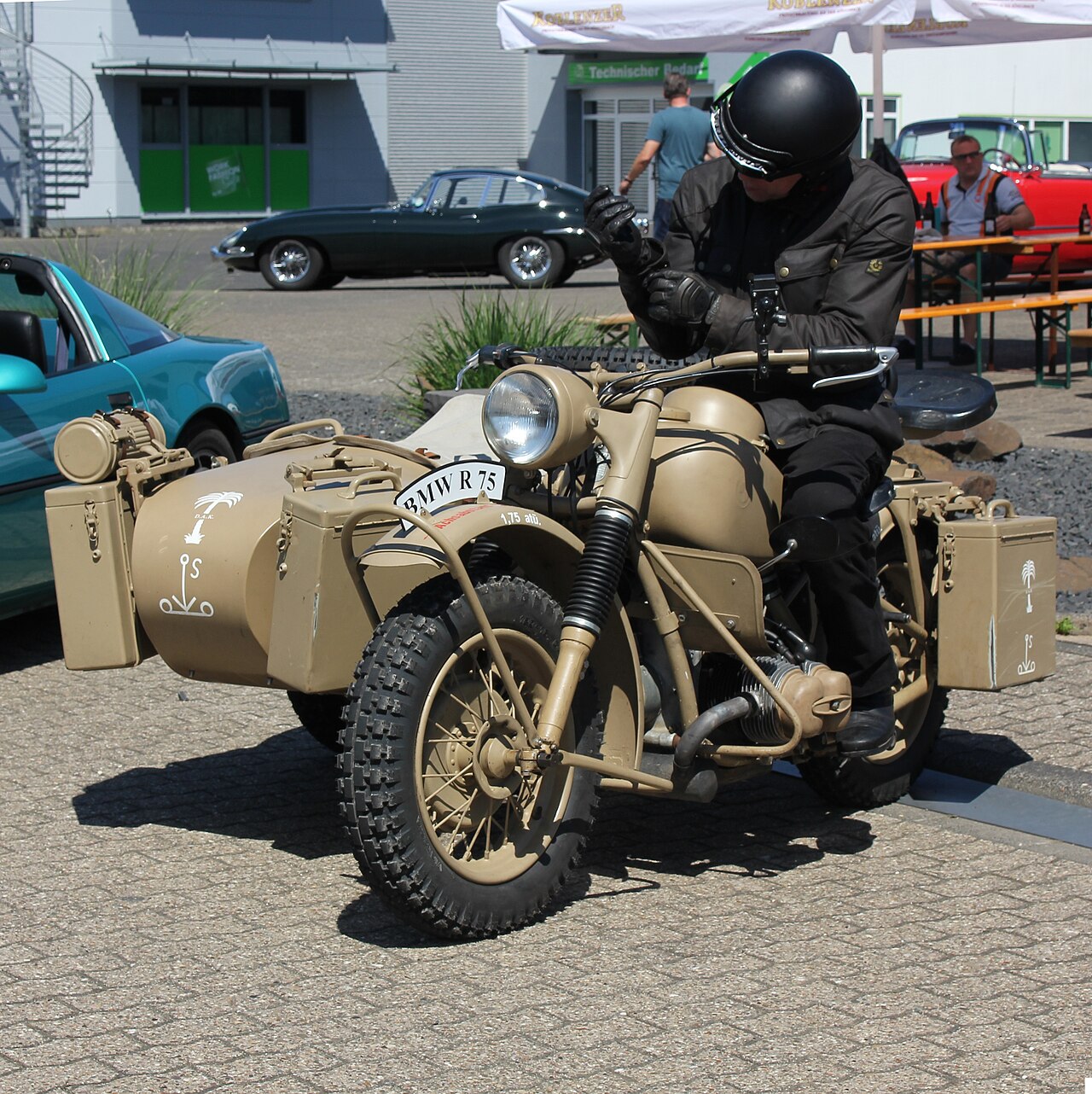
BMW R 75 (2019-06-02 Sp).JPG · Lothar Spurzem · CC BY-SA 2.0 DE
Research pending
A matching completed auction sale has not been verified for this exact year, body, trim, engine, transmission and market.
Joyride shows this gap instead of substituting an asking price, unsold bid or mismatched special vehicle.
More than a set of wheels.
BMW developed the R 75 for the German armed forces during the Second World War, when the company stopped civilian motorcycle production. Production began in Munich in 1941 and moved to Eisenach in October 1942. About 18,000 were built before the run ended in 1944. Its engineering reflects the transport demands of Nazi Germany’s military, rather than the needs of a civilian touring motorcycle.
Look a little closer.
Unlike most motorcycles, the R 75 could move backwards under engine power.
Photos show an example of the model or generation. The pictured vehicle’s year, equipment, or modifications can differ from the specification described here.
A sidecar wheel that does more than roll
The R 75’s sidecar wheel was powered, and its differential could be locked. A sidecar changes the vehicle into an uneven three-wheel layout: its two driven wheels need to cover different distances in a turn. The differential accommodates that difference, while its lock serves difficult low-traction situations.
Source: BMW Motorrad · Motorcycles of the 1940s ↗Built around access and low-speed work
A bolted tubular frame, low-ratio gearing and reverse were practical responses to a heavy outfit’s job. Low gearing trades road speed for useful pulling force; reverse makes manoeuvring possible without relying entirely on pushing. BMW also identifies hydraulic operation of the rear brake, another unusual detail in its wartime motorcycle range.
Source: BMW Motorrad · Motorcycles of the 1940s ↗Where these facts come from
Selected facts checked for this edition. Some source pages link to broader model families. Last reviewed 2026-10-02.