
Citroën BX 4TC Série 200
Citroën stretched a family hatchback around a lengthwise turbo engine, four-wheel drive and its famous fluid suspension to create a road ticket into Group B rallying.
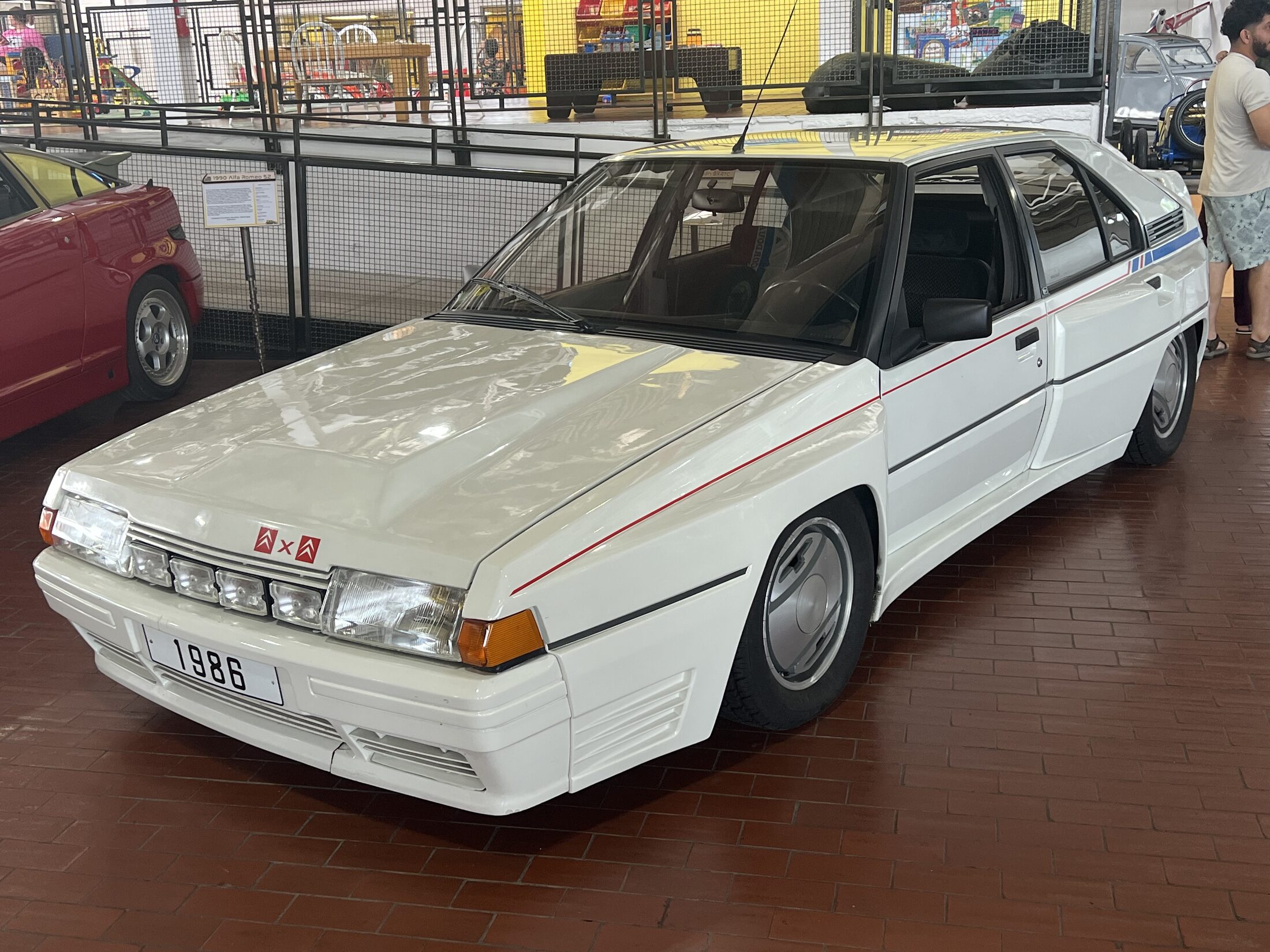
1986 France Citroen BX 4TC road car · TaurusEmerald · CC BY-SA 4.0
Research pending
A matching completed auction sale has not been verified for this exact year, body, trim, engine, transmission and market.
Joyride shows this gap instead of substituting an asking price, unsold bid or mismatched special vehicle.
More than a set of wheels.
Group B rules connected rally cars to a batch of road cars, so Citroën produced a limited series of 200 BX 4TC road versions. The FIA approved the BX 4TC as homologation B-279 from January 1, 1986. Although it wore the BX name and kept five doors, this was not simply a quick ordinary BX: its turbo engine sat lengthwise at the front, a propeller shaft carried power rearward, and both axles could drive the car. This profile stays with the 200 hp road car rather than borrowing specifications from the competition Evolution.
Look a little closer.
The FIA treated the turbo engine as 2,998 cc for its racing class by multiplying the real 2,141.5 cc capacity by the period 1.4 forced-induction factor.
Photos show an example of the model or generation. The pictured vehicle’s year, equipment, or modifications can differ from the specification described here.
A familiar badge hid a different layout
The regular BX family was designed around a transverse engine and front-wheel drive. The FIA form records the 4TC's engine mounted longitudinally at the front and lists both front and rear wheels as driven. That choice explains the long nose and shows how much engineering changed beneath the recognisable five-door shape.
Source: FIA Historic Database · BX 4TC homologation form B-279 ↗Citroën combined rally hardware with its own suspension idea
The homologation record lists hydropneumatic suspension at both ends, a five-speed manual gearbox and limited-slip final drives. In simple terms, the car mixed all-wheel traction and rally-focused mechanical parts with the fluid-and-gas springing that made Citroën road cars distinctive.
Source: FIA Historic Database · BX 4TC model record ↗Where these facts come from
- Citroën/Stellantis Media · BX 40th anniversary
- FIA Historic Database · Citroën BX 4TC
- FISA/FIA · Homologation form B-279
Selected facts checked for this edition. Some source pages link to broader model families. Last reviewed 2026-10-02.