
Citroën Type H
Citroën put the engine, gearbox and driven wheels at the front so a delivery van could have a low, flat floor and enough height to stand inside.
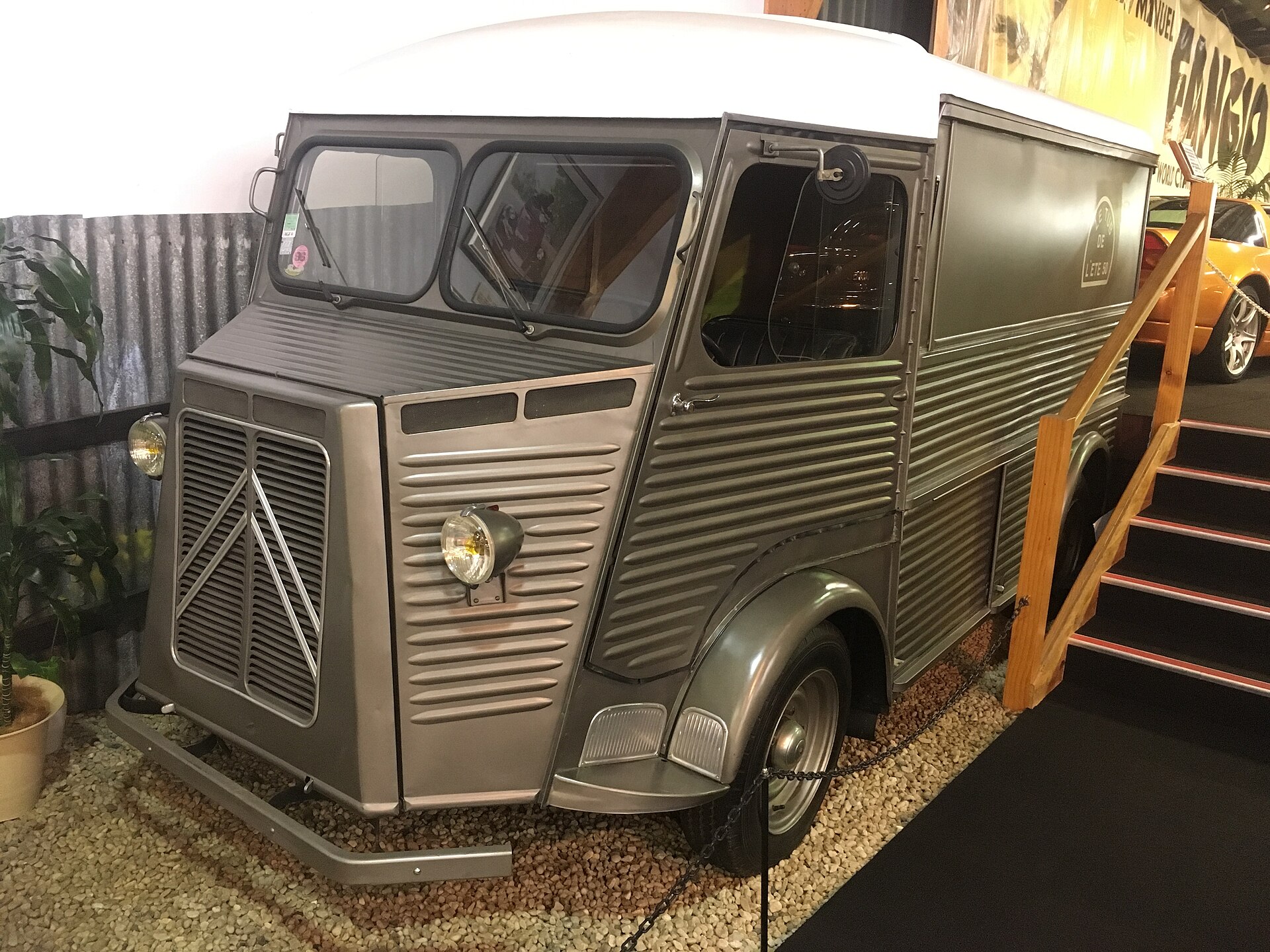
1950 Citroën H Van museum display · Damien Linnane · CC BY-SA 4.0
Research pending
A matching completed auction sale has not been verified for this exact year, body, trim, engine, transmission and market.
Joyride shows this gap instead of substituting an asking price, unsold bid or mismatched special vehicle.
More than a set of wheels.
Citroën presented the Type H at the Paris Motor Show in October 1947 and began customer production in 1948. It reused proven Traction Avant mechanical parts but arranged them for a commercial vehicle with front-wheel drive. With no propeller shaft or rear differential under the load bay, the floor could sit low and nearly flat. Corrugations stiffened thin steel panels without simply making them thicker. Citroën Origins calls it the first mass-produced front-wheel-drive van and records 473,289 built across the full family.
Look a little closer.
Its project letter became its name: Citroën worked through several utility-van studies, and H was the final design chosen for production.
Photos show an example of the model or generation. The pictured vehicle’s year, equipment, or modifications can differ from the specification described here.
A van designed from the load floor outward
Front-wheel drive was not just a technical novelty. It removed the long shaft and rear differential from beneath the cargo area, making loading easier and giving workers useful standing room in a vehicle only about 4.28 metres long.
Source: Citroën Origins · Type H ↗Ribs made thin steel act stronger
A flat sheet bends easily, but pressing repeated ridges into it raises stiffness. The Type H used that idea across its unmistakable body, saving scarce material while building a large, useful box.
Source: Citroën Type H technical history · Citroenet ↗Where these facts come from
Selected facts checked for this edition. Some source pages link to broader model families. Last reviewed 2026-10-02T10:12:59Z.