
Morris Mini-Minor
Four seats in a tiny car: clever packaging made the original Mini a giant of small-car design.
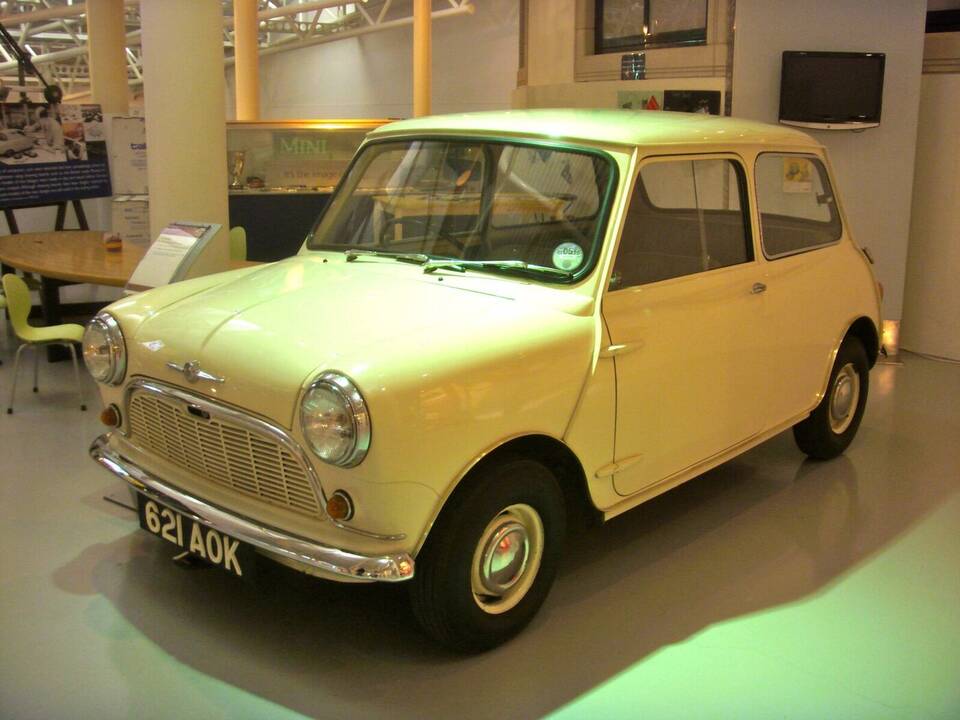
1959 Morris Mini-Minor number 1 Heritage Motor Centre, Gaydon.jpg · Mark Brown · CC BY-SA 2.0
Research pending
A matching completed auction sale has not been verified for this exact year, body, trim, engine, transmission and market.
Joyride shows this gap instead of substituting an asking price, unsold bid or mismatched special vehicle.
More than a set of wheels.
Alec Issigonis designed the Mini to give people useful passenger space in a very small car. BMC introduced it on August 26, 1959 under two names: Morris Mini-Minor and Austin Seven. Its front-wheel-drive layout and sideways engine helped make the most of the cabin. This profile covers the original 848 cc car; later Coopers and the modern MINI have different specifications.
Look a little closer.
Both gallery photographs show 621 AOK, the first Mini built with a Morris badge, preserved by the British Motor Museum.
Photos show an example of the model or generation. The pictured vehicle’s year, equipment, or modifications can differ from the specification described here.
A tiny footprint, room for four
The Mini is just 3.05 metres long. Small ten-inch wheels sit near its corners. Think of packing a suitcase: where you place the large pieces decides how much room remains. The Mini applied that idea to an engine, wheels and passengers.
Source: BMW Group · original Mini dimensions and layout ↗Look inside 621 AOK
In the interior photograph, spot the central instrument cluster, long gear lever and sliding side window. These are visible details of this preserved car. The photo gives us a view of the actual cabin instead of borrowing the interior of a later Mini.
Source: DeFacto · 1959 Morris Mini-Minor interior ↗Springs made of rubber
The original suspension uses rubber spring elements. They become harder to compress as the load increases. Later Minis introduced other suspension arrangements, so a detail from a later car should not be assumed to belong to this 1959 version.
Source: BMW Group · classic Mini suspension ↗Where these facts come from
- BMW Group · Sixty Years of MINI: launch, engineering and dimensions
- BMW Group Classic · Austin Seven sister model: engine and layout
- British Motor Museum · collection includes 621 AOK
- 1959 Morris Mini-Minor interior · photograph and specimen identification
Selected facts checked for this edition. Some source pages link to broader model families. Last reviewed September 29, 2026.