
Ducati 500 Pantah
A web of steel tubes and toothed timing belts made the small Pantah a large turning point in Ducati engineering.
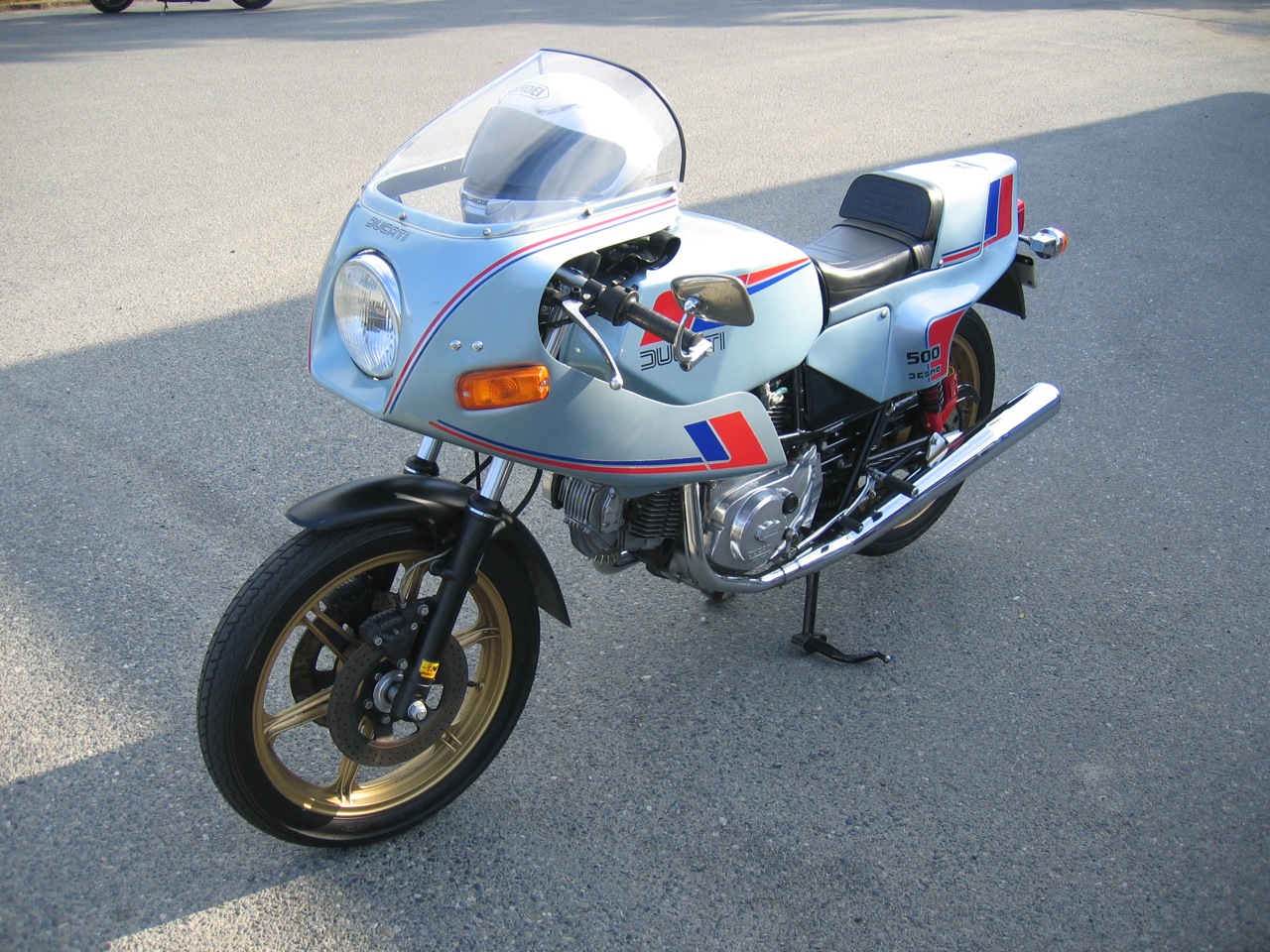
Ducati 500 Pantah.jpg · elenchos from Seattle, USA · CC BY 2.0
Research pending
A matching completed auction sale has not been verified for this exact year, body, trim, engine, transmission and market.
Joyride shows this gap instead of substituting an asking price, unsold bid or mismatched special vehicle.
More than a set of wheels.
The Pantah emerged at the end of the 1970s. Fabio Taglioni and Gianluigi Mengoli reworked the familiar L-twin around belt-driven desmodromic valve timing and combined it with a new trellis chassis. Ducati’s history dates that frame’s debut to 1979; this profile represents the 500 cc road model in its early production period around 1980.
Look a little closer.
Ducati still singled out the 1979 Pantah’s graphics when choosing historic inspirations for its centenary collection in 2026.
Photos show an example of the model or generation. The pictured vehicle’s year, equipment, or modifications can differ from the specification described here.
Timing belts replace a train of bevel gears
The Pantah preserved Ducati’s L-twin arrangement but changed how the valve gear received its timed motion. Rubber belts took the place of the older bevel-gear system. This is an internal timing drive, separate from the system that turns the rear wheel. The two-valve desmodromic heads made this a new route for a familiar Ducati principle.
Source: Ducati Heritage · 500 Pantah ↗Triangles become part of Ducati’s visual identity
The trellis frame uses a network of steel tubes around the engine. Ducati describes the design as both light and stiff: two qualities that help a chassis hold its shape without carrying unnecessary mass. The Pantah introduced this structure to the marque in 1979, and its exposed framework became a recurring feature across later Ducati road and racing motorcycles.
Source: Ducati Heritage · Trellis frame ↗Where these facts come from
- Ducati Heritage · 500 Pantah
- Ducati Heritage · Trellis frame
- Ducati Media House · Collezione 100 historical inspirations
- Ian Falloon / Octane Press · Ducati production charts, printed pp.222–223
Selected facts checked for this edition. Some source pages link to broader model families. Last reviewed 2026-10-02.