
Fiat Panda 30
Flat glass, washable trim and a clever rearrangeable rear seat made this boxy little hatchback a tool for everyday life.
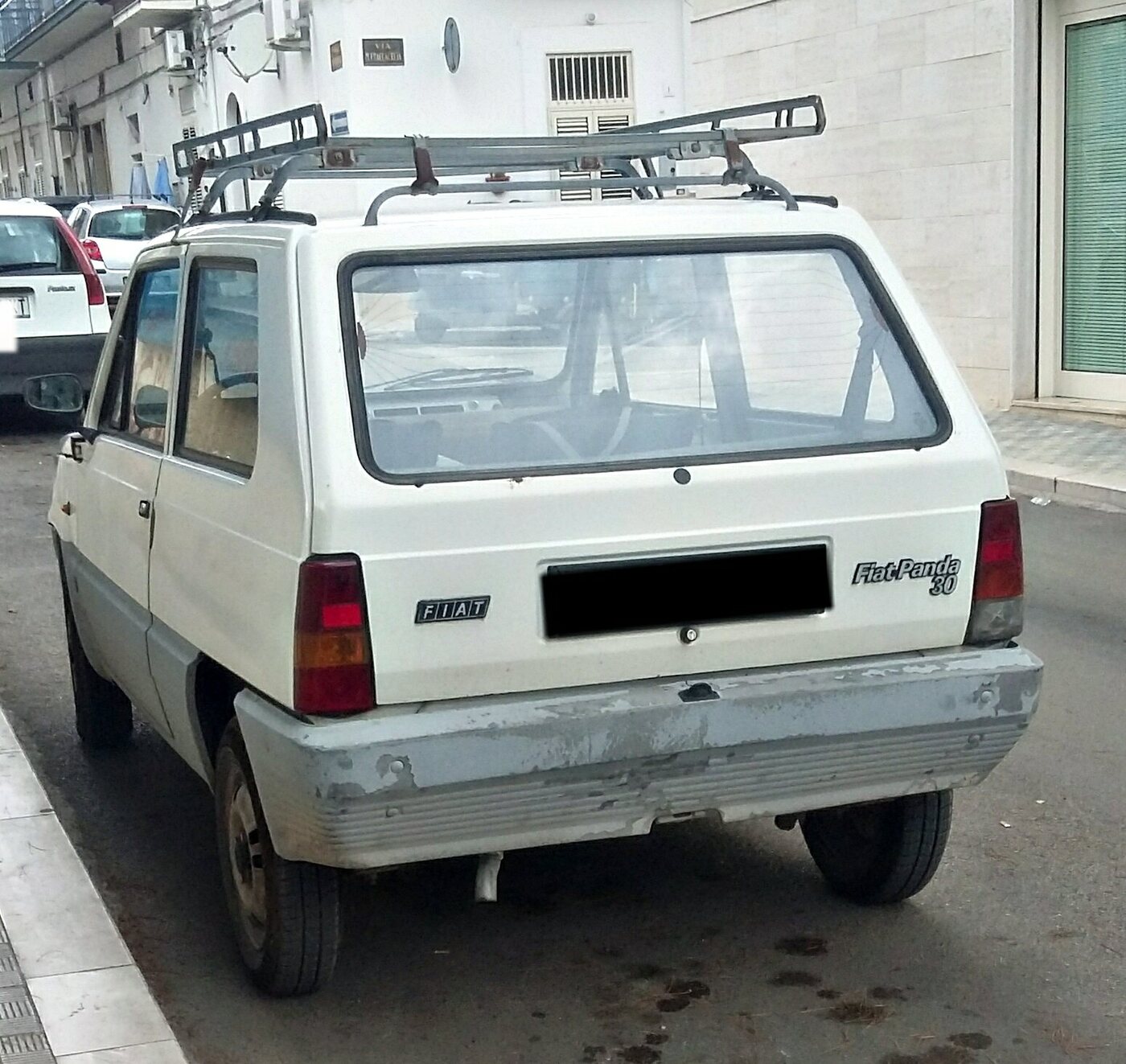
First-generation Fiat Panda 30 · Carluver23 · Wikimedia Commons Attribution template
Research pending
A matching completed auction sale has not been verified for this exact year, body, trim, engine, transmission and market.
Joyride shows this gap instead of substituting an asking price, unsold bid or mismatched special vehicle.
More than a set of wheels.
Fiat presented the Giorgetto Giugiaro-designed Panda to Italy's president on February 29, 1980 and to the international press at Geneva on March 5. The Italian-market Panda 30 used an air-cooled two-cylinder descended from the Fiat 500 and 126 engine. This page keeps that launch model separate from the water-cooled Panda 45 and later four-wheel-drive versions.
Look a little closer.
The rear bench had seven positions and could turn into a hammock, cot or large bed-like platform.
Photos show an example of the model or generation. The pictured vehicle’s year, equipment, or modifications can differ from the specification described here.
Design as practical problem-solving
Giugiaro used flat windows, big bumpers, hard-wearing washable cabin materials and a simple two-box shape. The idea was not decoration; each choice made the small car easier to build, use or clean.
Source: Stellantis Heritage · Fiat Panda turns 40 ↗How to spot the launch Panda 30
The Panda 30's grille slots sit on the right to feed its air-cooling fan. The Panda 45 placed its slots and coolant radiator on the left, a useful visual clue between the launch versions.
Source: Stellantis Media · 500 and Panda at the Triennale ↗Where these facts come from
Selected facts checked for this edition. Some source pages link to broader model families. Last reviewed September 29, 2026.