
Ford Escort Twin Cam Mk1
The Escort Twin Cam put Lotus-developed twin-cam power into Ford's new small two-door shell and became the road-going foundation for a famous competition family.
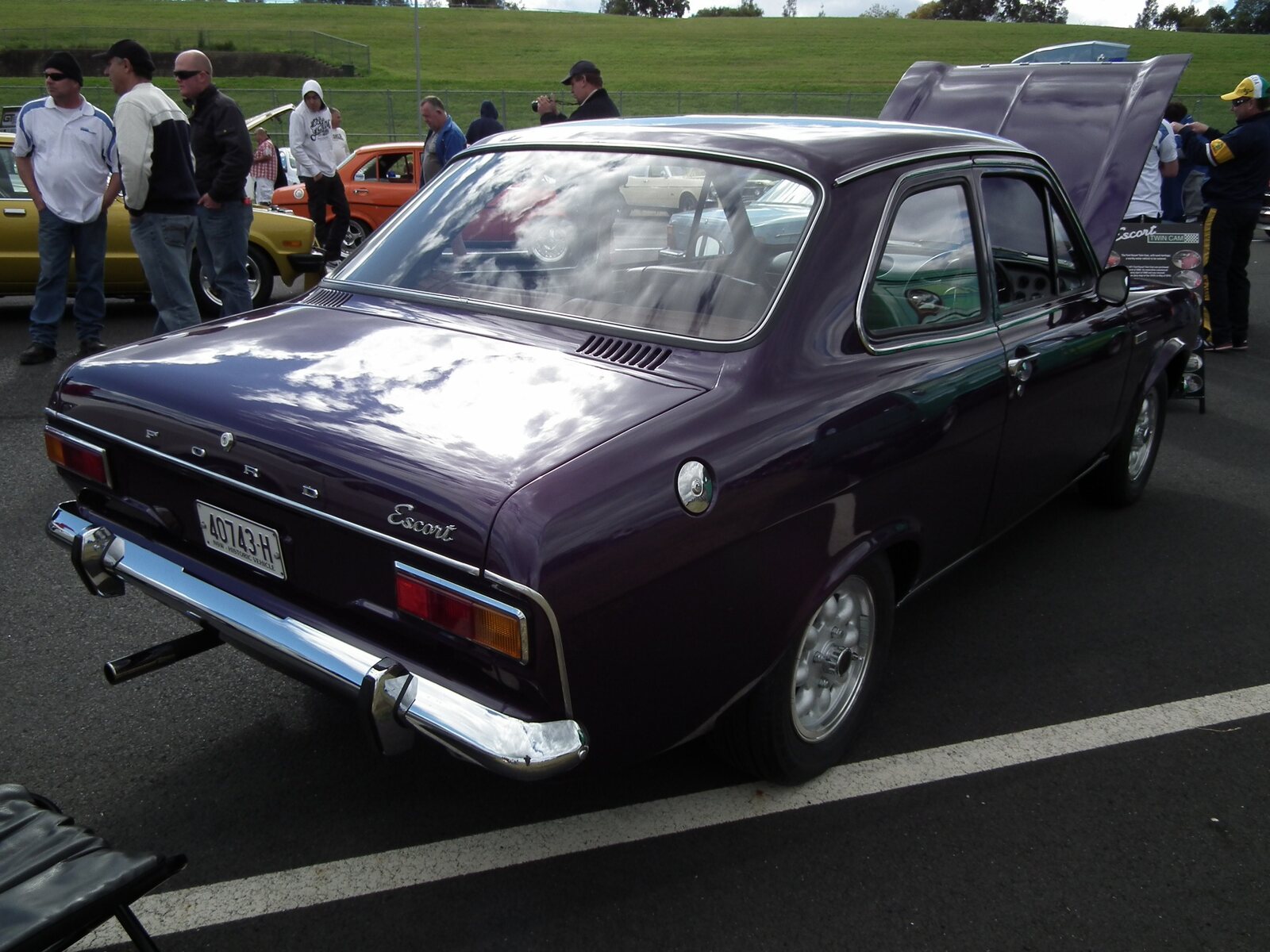
1971 Ford Escort Mk I Twin Cam road car · sv1ambo · CC BY 2.0
Research pending
A matching completed auction sale has not been verified for this exact year, body, trim, engine, transmission and market.
Joyride shows this gap instead of substituting an asking price, unsold bid or mismatched special vehicle.
More than a set of wheels.
Ford introduced the Escort at the start of 1968 and homologated the Twin Cam as a production road car for Group 2 competition. FIA form 1524 fixes its 1,558 cc, four-cylinder, rear-drive identity while also revealing that production and homologation dates are separate milestones.
Look a little closer.
Its road-car specification existed partly so Ford could homologate the Escort for Group 2 competition.
Photos show an example of the model or generation. The pictured vehicle’s year, equipment, or modifications can differ from the specification described here.
A small saloon built around a special engine
Ford combined a light Escort shell with an engine already proven in Lotus road cars. An everyday Ford block and specialist aluminium head produced serious performance without making the whole car exotic.
Source: FIA Historic Database — Escort Twin Cam ↗Homologation explains the road car
Competition rules required a documented production model. The Twin Cam's FIA trail explains why the road car received its engine, brakes and suspension package before rally and racing success made the Escort famous.
Source: FIA Historic Database — Escort Twin Cam ↗Where these facts come from
- FIA Historic Database — Escort Twin Cam
- FIA/RAC homologation form 1524
- Motor Sport — Introducing the New Escort
- Classic & Sports Car — Twin Cam vs RS1600
Selected facts checked for this edition. Some source pages link to broader model families. Last reviewed October 4, 2026.