
Honda CR-V 2.0 4WD
Honda blended a sedan-like drive, wagon-like space and an automatically engaging rear axle into one friendly five-door machine.
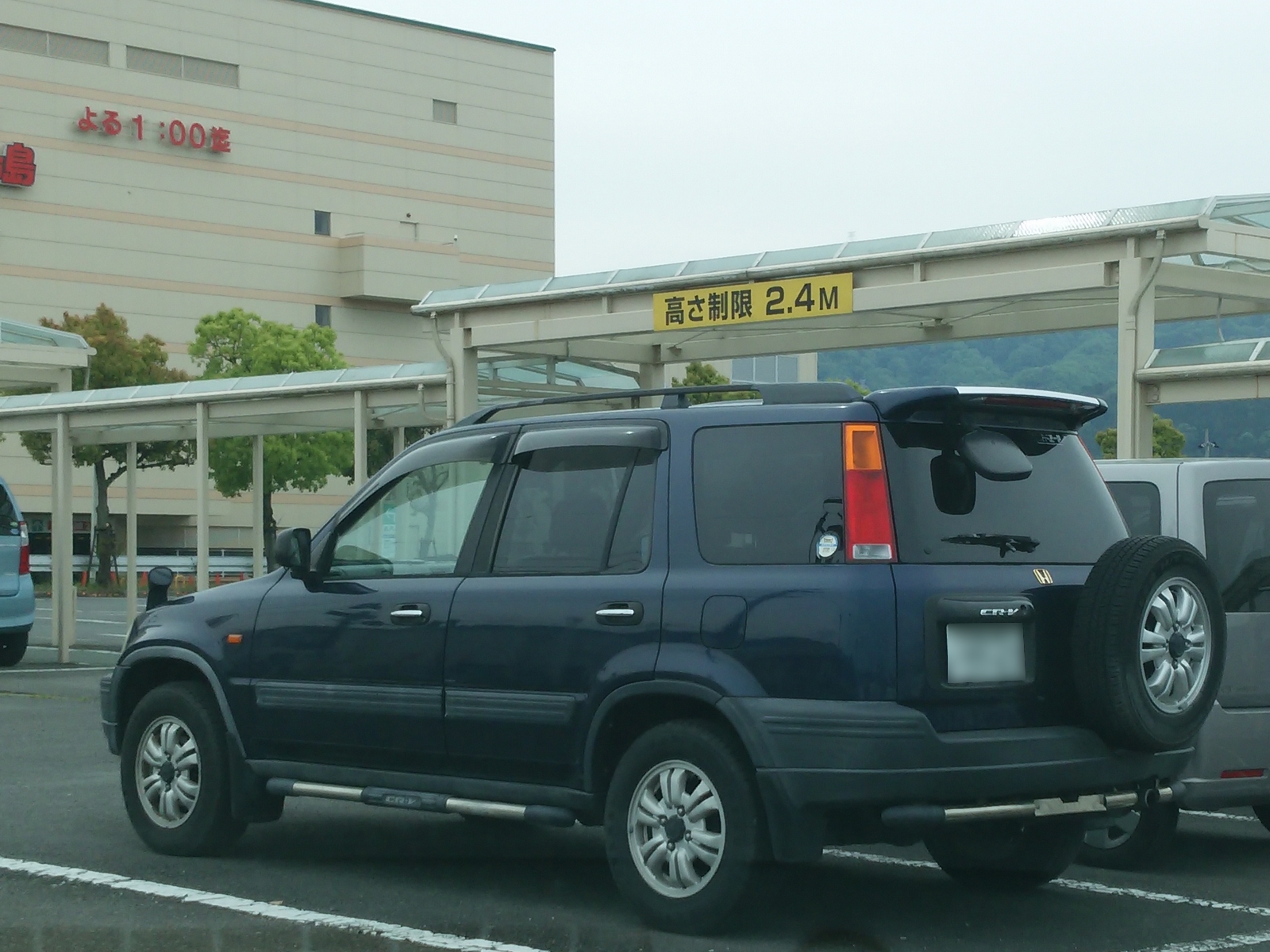
Honda CR-V RD1 base grade, rear three-quarter · Toyotacoronaexsaloon · CC BY-SA 4.0
Research pending
A matching completed auction sale has not been verified for this exact year, body, trim, engine, transmission and market.
Joyride shows this gap instead of substituting an asking price, unsold bid or mismatched special vehicle.
More than a set of wheels.
Honda announced the CR-V in Japan on October 9, 1995 and put it on sale three days later through Primo and Verno dealers. The company described it as the second Creative Mover: a vehicle meant to combine passenger-car comfort, wagon utility and useful mobility on poor surfaces. At launch the Japanese E-RD1 came only with four-wheel drive and a four-speed automatic, so this profile does not borrow later manual or front-drive specifications.
Look a little closer.
Honda hid a folding picnic table in the luggage-floor panel on the original CR-V.
Photos show an example of the model or generation. The pictured vehicle’s year, equipment, or modifications can differ from the specification described here.
Four-wheel drive without a lever
Honda's dual-pump Real Time 4WD was designed to stay unobtrusive in ordinary driving. A speed difference between the axles changes hydraulic pressure and brings the rear wheels into the job. That helped Honda keep the controls passenger-car simple while still giving the CR-V extra traction when the surface became slippery.
Source: Honda · 1995 CR-V launch release ↗A cabin designed around movement
The 1,245 mm interior height, flat floor and centre walk-through were part of the design brief, not accidental bonuses. A column-mounted selector left the floor open, while the rear seat could fold into a flat arrangement. The mechanical package and the cabin plan were developed together.
Source: Honda · CR-V press information and specifications ↗Where these facts come from
- Honda · 1995 CR-V press information: principal specifications
- Honda · Japanese launch release, October 9, 1995
Selected facts checked for this edition. Some source pages link to broader model families. Last reviewed 2026-10-02.