
Mazda Cosmo Sport 110S
Mazda put its new two-rotor engine into a low, space-age sports car and proved the unusual idea could work on the road.
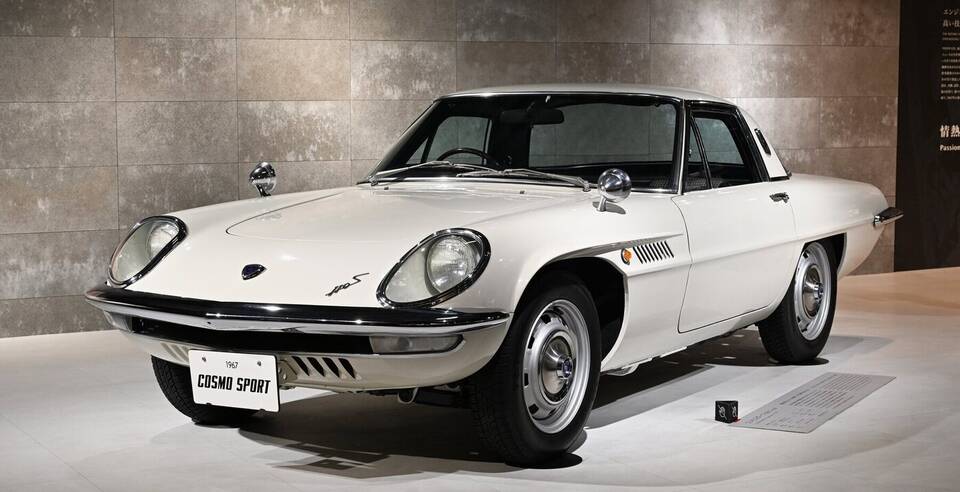
1967 Mazda 110S L10A museum car · TTTNIS · CC0 1.0 Universal
Research pending
A matching completed auction sale has not been verified for this exact year, body, trim, engine, transmission and market.
Joyride shows this gap instead of substituting an asking price, unsold bid or mismatched special vehicle.
More than a set of wheels.
Mazda began selling the Cosmo Sport on May 30, 1967. It was the company's first rotary-powered production car and the world's first production car with a two-rotor rotary engine. This page follows the original short-wheelbase L10A with 110 PS, not the longer and more powerful 1968 Series II. The cover is an exact 1967 L10A, but its archive record identifies it as UK-spec rather than Japanese-market.
Look a little closer.
Mazda's launch history records a price of 1,480,000 yen and says the company sold only around 30 cars per month.
Photos show an example of the model or generation. The pictured vehicle’s year, equipment, or modifications can differ from the specification described here.
Six years of rotary work
Mazda says it took six years to commercialize the rotary engine. Engineers had to solve durability problems before the dream engine was ready for customers.
Source: Mazda · Cosmo Sport centenary profile ↗Independent front, De Dion rear
Double-wishbone front suspension lets each front wheel move independently. At the back, a De Dion arrangement keeps the driven wheels linked while reducing some unsprung weight compared with a conventional live axle.
Source: JSAE · Mazda Cosmo Sport L10A ↗Where these facts come from
Selected facts checked for this edition. Some source pages link to broader model families. Last reviewed September 29, 2026.