Peugeot J7 petrol van
The J7 put the engine and driven wheels up front so a delivery driver could have a long, low, almost box-shaped cargo room behind the cab.
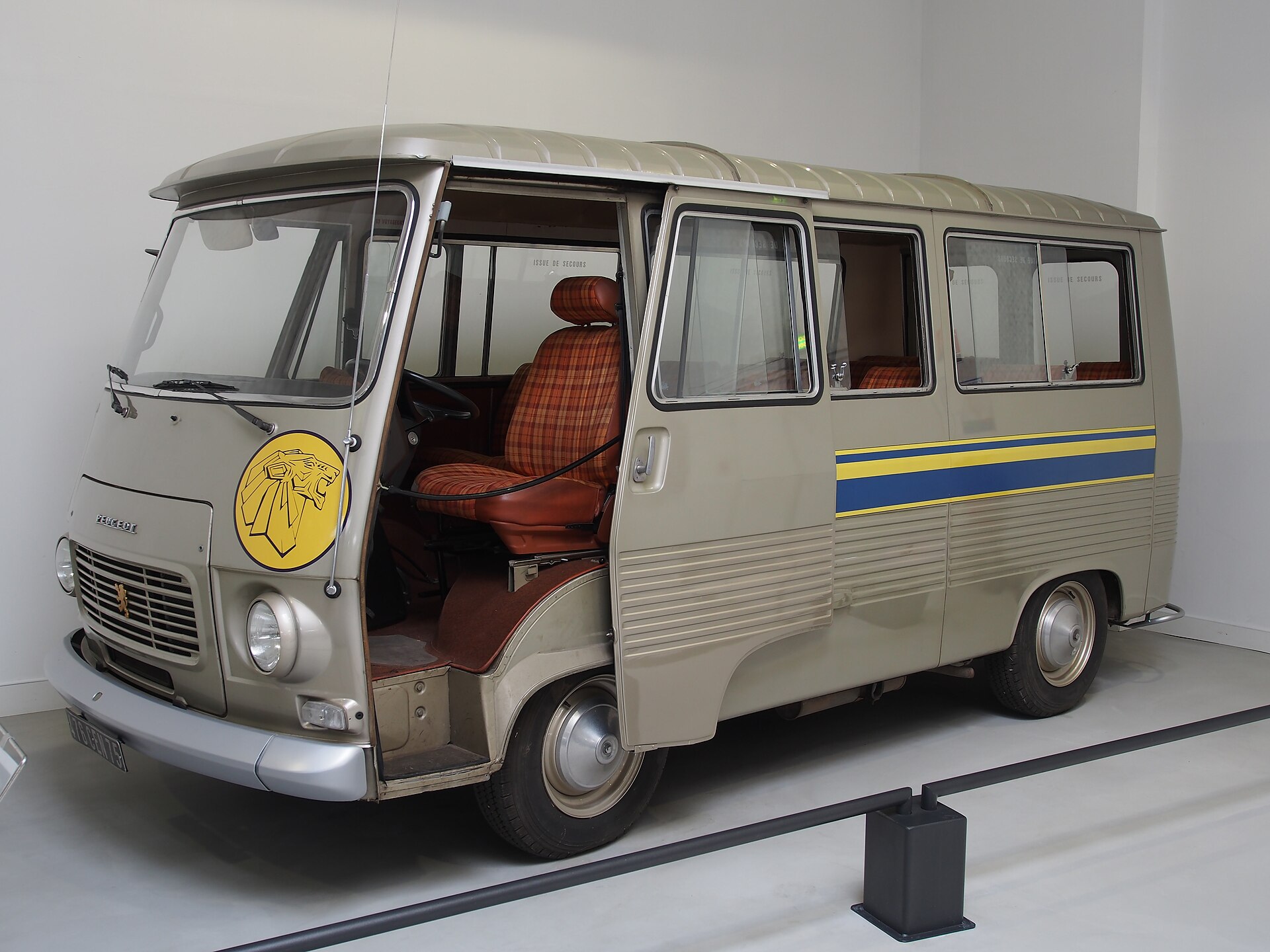
Peugeot J7 at the Musée de l'Aventure Peugeot · Alf van Beem · CC0
Research pending
A matching completed auction sale has not been verified for this exact year, body, trim, engine, transmission and market.
Joyride shows this gap instead of substituting an asking price, unsold bid or mismatched special vehicle.
More than a set of wheels.
Peugeot introduced the J7 in June 1965 as the successor to the D4. It carried forward front-wheel drive but wrapped it in a modern corrugated body with panoramic glass and a side sliding door. Peugeot offered an enormous menu of factory configurations, from a simple panel van to ambulances, school buses and mobile shops. This profile stays with the early French petrol panel van rather than mixing in the better-known diesels or later engines.
Look a little closer.
Peugeot said buyers could choose from roughly 200 specifications and trade-body versions—almost like ordering a giant metal toolbox to fit a job.
Photos show an example of the model or generation. The pictured vehicle’s year, equipment, or modifications can differ from the specification described here.
Why front-wheel drive mattered to a van
A delivery van earns its keep with usable space, not a fancy engine tunnel. Sending power to the front wheels let Peugeot devote more of the long rectangular body to cargo and helped keep the floor low. The same layout also contributed to a remarkably tight seven-metre turning circle between walls, useful in old French streets and busy loading yards.
Source: Peugeot · 50 years of the J7 ↗A factory answer for nearly every job
The J7 was more than one van shape. Peugeot listed chassis, pickup, high-volume, panel, passenger, school-bus, ambulance, livestock, mobile-shop and camper forms. That variety explains why two surviving J7s can look very different even when their basic cab and front-drive engineering are related.
Source: Peugeot · J7 body and payload history ↗Where these facts come from
Selected facts checked for this edition. Some source pages link to broader model families. Last reviewed 2026-10-02.