
Plymouth Voyager LE 2.6
Chrysler made a van low enough for a home garage, easy enough to drive like a car and roomy enough for seven—then families changed the market around it.
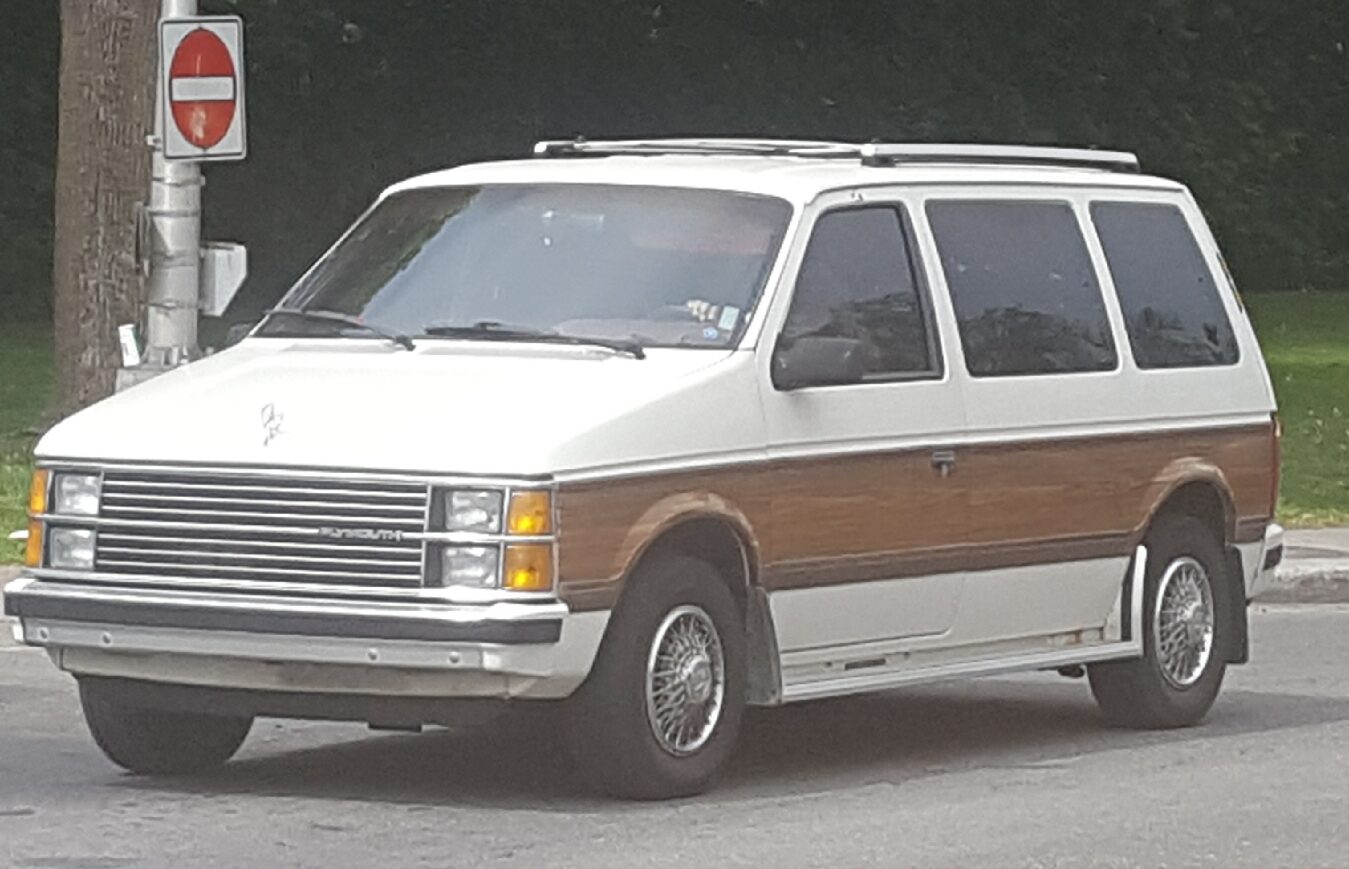
1984-86 Plymouth Voyager.jpg · Bull-Doser · Public domain
Research pending
A matching completed auction sale has not been verified for this exact year, body, trim, engine, transmission and market.
Joyride shows this gap instead of substituting an asking price, unsold bid or mismatched special vehicle.
More than a set of wheels.
The Plymouth Voyager and Dodge Caravan entered production for the 1984 model year, with the public rollout at Windsor on November 2, 1983. Lee Iacocca and Hal Sperlich had carried the idea of a 'garagable van' from earlier Ford work to Chrysler. Front-wheel-drive K-car engineering helped provide a low floor and car-like step-in height while a sliding side door and liftgate preserved van usefulness. Chrysler sold every one it could build—210,000 Caravans and Voyagers by the end of 1984.
Look a little closer.
Chrysler called the first rollout van 'Magic Wagon No. 1'; Lee Iacocca predicted the minivan would matter to the 1980s the way the Mustang had to the 1960s.
Photos show an example of the model or generation. The pictured vehicle’s year, equipment, or modifications can differ from the specification described here.
The garage was part of the design brief
Earlier vans were often tall, trucklike machines. The T-115 project aimed for something that fit a normal suburban garage and drove with passenger-car familiarity. Using front-wheel-drive K-car thinking lowered the floor and eased entry, while the boxy roof preserved family room. The result did not invent every van ingredient, but it assembled them into the format that defined the modern North American minivan.
Source: National Historic Vehicle Register · 1984 Plymouth Voyager ↗Period testing shows the honest tradeoff
Car and Driver's launch-year LE was spacious and novel rather than sporty. Its optional 104 hp Mitsubishi four took 14.0 seconds to reach 60 mph in the magazine's test, but the seven-passenger cabin, low overall height and sliding door were the point. The measured numbers help keep today's description honest: this was a packaging revolution, not a performance claim.
Source: Car and Driver archive · 1984 Plymouth Voyager LE test ↗Where these facts come from
- National Historic Vehicle Register · 1984 Plymouth Voyager
- Car and Driver archive · 1984 Plymouth Voyager LE test
- The Henry Ford · 1984 Plymouth Voyager collection record
- 1984 Plymouth Voyager factory brochure scan
Selected facts checked for this edition. Some source pages link to broader model families. Last reviewed October 1, 2026.