
Porsche 911 Turbo 3.0
Porsche's first series-production 911 Turbo wrapped a 260 PS turbocharged flat-six, race-bred chassis ideas and a surprisingly luxurious cabin into the wide-winged Type 930.
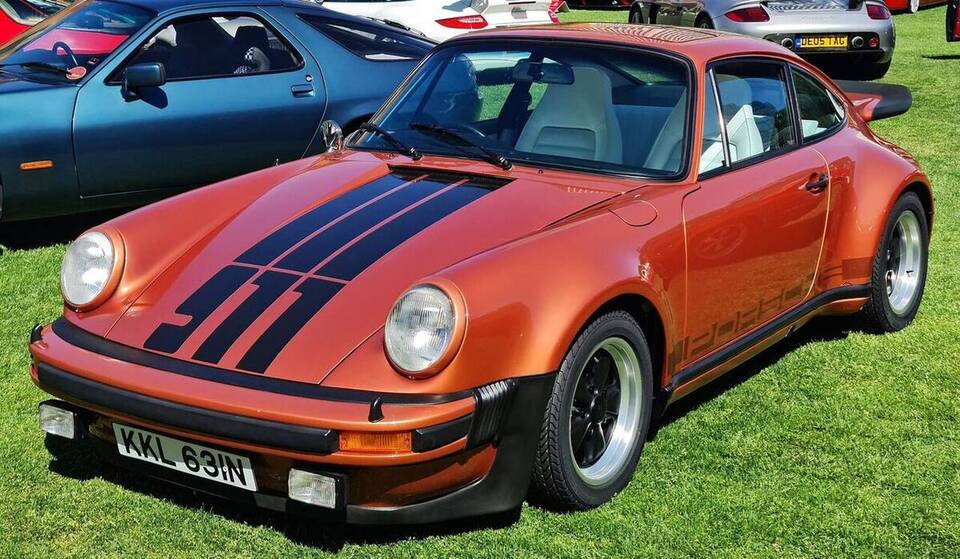
1975 Porsche 911 Turbo 930.jpg · MrWalkr · CC BY-SA 4.0
Research pending
A matching completed auction sale has not been verified for this exact year, body, trim, engine, transmission and market.
Joyride shows this gap instead of substituting an asking price, unsold bid or mismatched special vehicle.
More than a set of wheels.
Porsche previewed a turbocharged 911 with the RSR Turbo concept in Frankfurt in September 1973, then built a narrow-body 2.7-litre experimental one-off for Louise Piëch in August 1974. Neither was the production car. The series 3.0-litre Turbo appeared at the Paris Motor Show on 3 October 1974 and reached customers around the world in spring 1975. Known inside Porsche as Type 930, it combined 260 PS with wider wings, a fixed rear spoiler and racing-derived chassis details. This profile stops with the original European 3.0-litre model; the 3.3-litre, intercooled second generation belongs to model year 1978.
Look a little closer.
Its huge rear wing was not just decoration: the engine lid beneath it used glass-fibre-reinforced material, while the wing's polyurethane border formed the Turbo's unmistakable outline.
Photos show an example of the model or generation. The pictured vehicle’s year, equipment, or modifications can differ from the specification described here.
Three early Turbos, only one series 3.0
The 1973 Frankfurt display car announced the idea in RSR-inspired form. Turbo No. 1, Ferry Porsche's 1974 gift to Louise Piëch, was a narrow-bodied one-off with an experimental 2.7-litre engine and even wore a Carrera badge. The customer model was a third, clearly defined step: the widened 3.0-litre car unveiled in Paris and launched in spring 1975. Keeping those identities separate prevents prototype specifications and anniversary stories from leaking into the production profile.
Source: Porsche Newsroom · The beginning of the series ↗Why race-car hardware mattered on the road
The Type 930 did more than add a turbocharger. Porsche says it borrowed rigid wheel hubs from the 917 and front- and rear-axle kinematics from the 911 Carrera RSR, then paired that foundation with harder springs and thicker anti-roll bars. Those changes helped the chassis cope with power that arrived abruptly, while full leather, automatic heating and heated glass made the flagship usable away from a circuit.
Source: Porsche Newsroom · The 911 Turbo generations ↗Where these facts come from
- Porsche Museum · 911 Turbo 3.0 Coupé technical data sheet
- Porsche Newsroom · The beginning of the series
- Porsche Newsroom · The 911 Turbo generations
Selected facts checked for this edition. Some source pages link to broader model families. Last reviewed October 1, 2026.