
Porsche 924 2.0
A low nose, pop-up lamps and a huge glass hatch announced a different kind of Porsche: the front-engined 924.
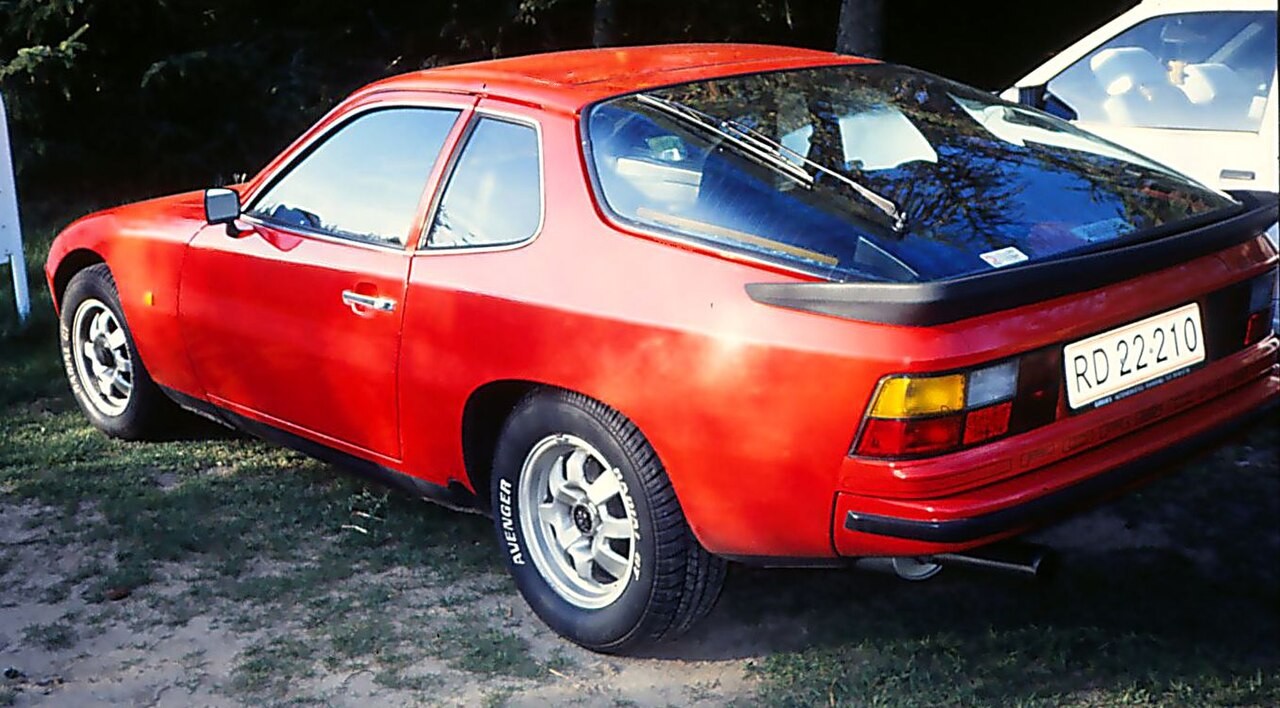
1976 Porsche 924.jpg · BKP · CC BY-SA 3.0
Research pending
A matching completed auction sale has not been verified for this exact year, body, trim, engine, transmission and market.
Joyride shows this gap instead of substituting an asking price, unsold bid or mismatched special vehicle.
More than a set of wheels.
Volkswagen commissioned project EA 425 in 1972, then cancelled it before sale. Porsche bought the design rights and introduced the 924 in 1976, with production at Audi’s Neckarsulm factory. Sharing components helped make the new entry-level car possible.
Look a little closer.
The 924’s big rear window is also a lifting hatch for reaching the luggage space.
Photos show an example of the model or generation. The pictured vehicle’s year, equipment, or modifications can differ from the specification described here.
Why the gearbox lives at the back
A front engine does not require a front-mounted gearbox. Porsche separated them and linked them through a rigid driveline. Moving the transmission rearward helps distribute weight between the axles, an engineering choice that became central to the later 944 and 968.
Source: Porsche Newsroom · When the 924 redefined Porsche’s DNA ↗A useful shape
The 2+2 cabin and glass hatch gave the 924 everyday practicality. Its front struts and rear semi-trailing arms worked with the transaxle layout to make a compact sports car suited to ordinary roads. The low bonnet and retracting lamps also helped shape its aerodynamic outline.
Source: Porsche · Transaxle cars explained ↗Where these facts come from
- Porsche Classic · 924
- Porsche Museum · The Porsche 924
- Porsche · Transaxle cars explained
- Porsche Newsroom · When the 924 redefined Porsche’s DNA
Selected facts checked for this edition. Some source pages link to broader model families. Last reviewed 2026-10-02.