
Renault 15 TL
A practical coupe that put glass and everyday manners ahead of overt aggression.
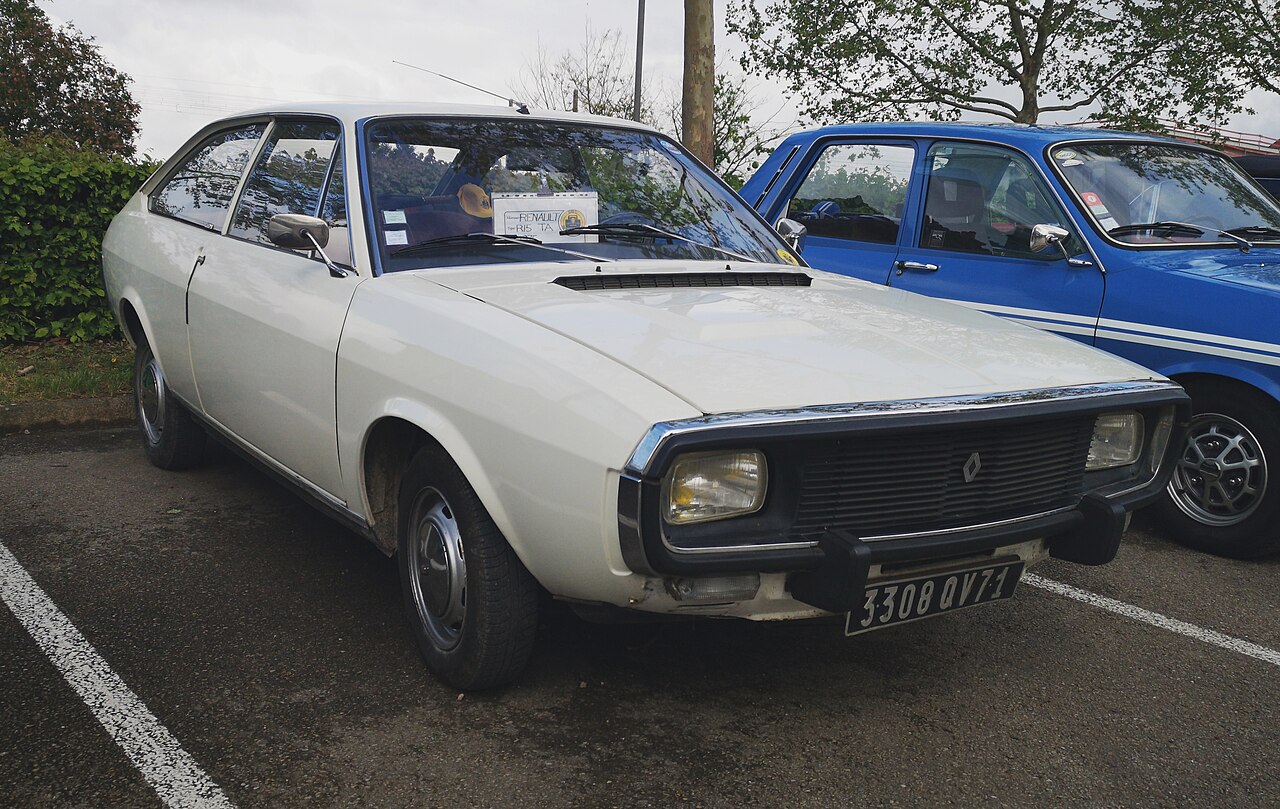
Renault 15 — representative later automatic · Guillaume Vachey · CC0 1.0
Research pending
A matching completed auction sale has not been verified for this exact year, body, trim, engine, transmission and market.
Joyride shows this gap instead of substituting an asking price, unsold bid or mismatched special vehicle.
More than a set of wheels.
Renault introduced the related 15 and 17 in 1971. The 15 offered generous side glazing, while its sibling used a more assertive four-lamp face and rear-side grilles. This profile follows the 1972 TL manual, before the family’s 1976 restyle.
Look a little closer.
Renault’s 209,887 sales figure covers the whole 15 family, not this year or trim.
Photos show an example of the model or generation. The pictured vehicle’s year, equipment, or modifications can differ from the specification described here.
A coupe without the sporting disguise
The broad side glass made the 15 visually lighter than the 17. Those differences were deliberate styling choices, not evidence of a different basic purpose: the TL offered a distinctive body around familiar family-car mechanical ideas.
Source: The Originals Renault Museum — R15 family history ↗Two horsepower labels, one engine
The period test lists 60 DIN and 68 SAE. They describe different measurement conventions, not two tunes to mix together. Its account of a twin-choke carburettor and 9.5:1 compression explains how the related Renault 12 engine gained output without a larger displacement.
Source: Autopista No. 710, 16 September 1972 — Renault 15 TL road test, transcribed by Piel de Toro ↗Where these facts come from
- The Originals Renault Museum — R15 family history
- Autopista No. 710, 16 September 1972 — Renault 15 TL road test, transcribed by Piel de Toro
Selected facts checked for this edition. Some source pages link to broader model families. Last reviewed 2026-10-16T00:10:48.079Z.