
Renault 30 TS
Renault made its new V6 flagship unusually practical: a large front-drive hatchback with four round lamps and a full-height tailgate.
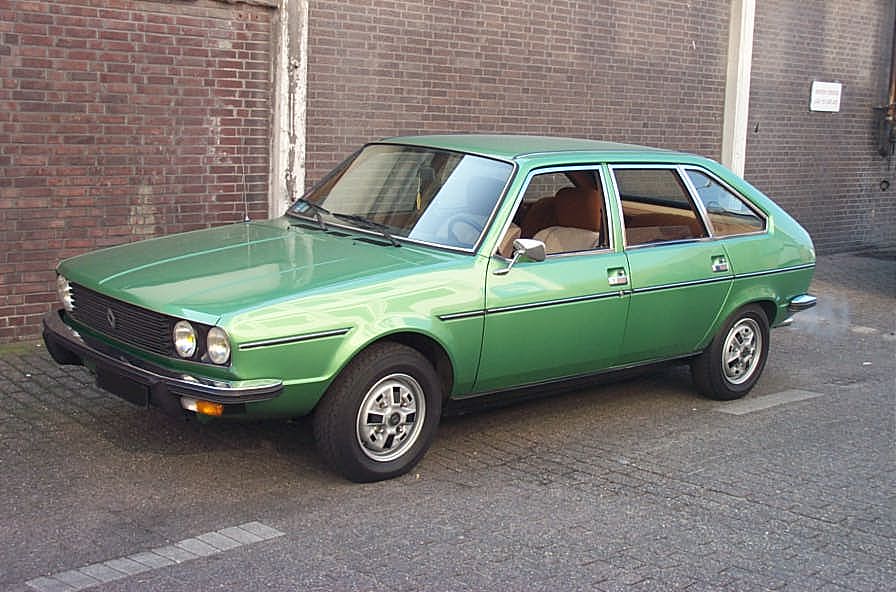
1975 Renault 30 TS V6 · Unknown photographer affiliated with Garage de l’Est; digitally modified and uploaded by User:328cia · CC BY-SA 3.0
Research pending
A matching completed auction sale has not been verified for this exact year, body, trim, engine, transmission and market.
Joyride shows this gap instead of substituting an asking price, unsold bid or mismatched special vehicle.
More than a set of wheels.
Presented at Geneva in 1975, the Renault 30 returned Renault to six-cylinder passenger cars and put a large V6 ahead of the front wheels in an unusually practical flagship hatchback. Gaston Juchet's two-box shape and four round headlamps separated it from conventional three-box executive saloons and, later, from the four-cylinder Renault 20. The launch landed just after the oil crisis, an awkward moment for a thirsty prestige V6.
Look a little closer.
The shared PRV V6 powered three very different prestige cars: Renault used it with front-wheel drive, while Peugeot and Volvo chose rear-wheel drive.
Photos show an example of the model or generation. The pictured vehicle’s year, equipment, or modifications can differ from the specification described here.
A flagship shaped like family luggage
Renault treated prestige differently from many rivals. Instead of adding a separate boot to a formal saloon, it stretched the Renault 16 idea upward: a quiet, richly equipped cabin behind a full-height tailgate. The important historical point is not that hatchbacks were new, but that Renault believed a top-of-range car could be both executive transport and a flexible load carrier.
Source: theoriginals.renault.com ↗One shared V6, three national characters
The PRV engine is a useful lesson in industrial cooperation. Peugeot placed it in a conventional rear-drive 604, Volvo used it in the 264, and Renault turned it sideways in purpose by driving the front wheels from an engine placed ahead of them. The same basic power unit therefore sat inside three very different ideas of a European luxury car.
Source: presse.renault.de ↗Where these facts come from
Selected facts checked for this edition. Some source pages link to broader model families. Last reviewed October 4, 2026.